If you have too many baby names, don’t keep browsing - score them, compare them, and cut to a top 3.
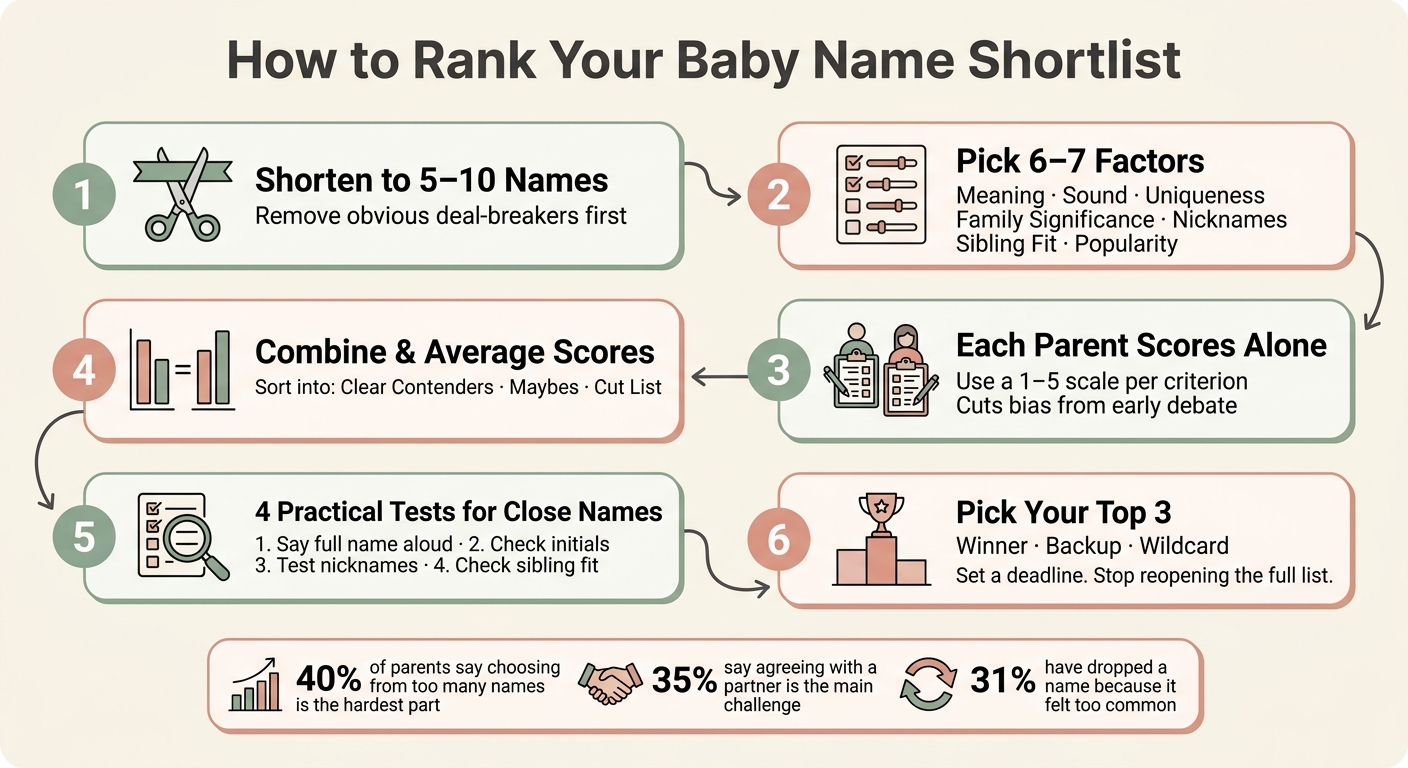
I’d use a simple plan: trim the list to 5–10 names, score each one on the same 6–7 factors, average both parents’ scores, then use a few plain tie-break tests. That matters because 40% of parents say the hard part is choosing from too many names, 35% say agreeing with a partner is the main issue, and 31% have dropped a name because it felt too common.
Here’s the whole process in one glance:
- Pick the same scoring factors for every name
- Rate each name on a 1–5 scale
- Score names separately first
- Combine and compare totals
- Cut weak options
- Break ties with full-name, initials, nickname, and sibling checks
- Keep a winner, backup, and wildcard
| Step | What I’d do | Why it helps |
|---|---|---|
| Shorten the list | Get down to 5–10 names | Less overload |
| Set criteria | Use meaning, sound, nickname use, family link, sibling fit, popularity, and rarity | Keeps scoring consistent |
| Score alone | Each parent scores first | Cuts bias from early debate |
| Compare totals | Put scores side by side | Makes tradeoffs easier to see |
| Test close names | Say them out loud, check initials and nicknames | Catches issues numbers miss |
| Pick top 3 | Winner, backup, wildcard | Gives you a final short list |
One small fix from the article: the close should say rank the last names on your list into a top 3, not “rank the last names.” From there, I’d set a deadline and stop reopening the whole list unless a new problem comes up.
How to Rank Baby Names: A Step-by-Step Scoring System
Build a Shared Scoring System Before You Compare Names
Use one set of criteria, one scale, and one scorecard for every name. That keeps your comparisons steady and makes tradeoffs much easier to spot.
Pick 6-7 Criteria That Reflect How You Actually Decide
Most name choices come down to a small set of factors, even if you haven’t written them down before. For many U.S. parents, a strong starting set is meaning, sound, uniqueness, family significance, nickname potential, sibling fit, and popularity.
A quick note here: sound is about daily use, not just how the name looks written out. And uniqueness and popularity should stay separate. They’re not the same thing. One looks at rarity. The other looks at how trendy a name is.
Take Lila Johnson. It flows in a natural way. That kind of everyday fit is exactly what the sound category should catch. For uniqueness and popularity, the SSA’s annual baby name data is a solid national baseline. It’s drawn from a 100% sample of Social Security card applications. For 2025, Liam and Olivia held the No. 1 spots for the seventh consecutive year, so a name like Olivia would score low on uniqueness but high on familiarity and pronunciation clarity.
You can also add a few practical U.S.-specific checks if they matter to you:
- Pronunciation clarity: will most Americans say it right on the first try?
- Initials: avoid combinations like PMS or DUI
- Full-name flow: test the full first-middle-last name out loud
Say the full name in settings that feel real: a school roll call, a doctor’s office, or a job application. Awkward rhythm tends to show up fast.
Use the same criteria for every finalist. Otherwise, the totals don’t mean much.
Use One Scorecard for Every Name
Rate each criterion on a 1–5 scale where 1 = poor fit and 5 = excellent fit. Then use the same scorecard format for every finalist.
| Name | Meaning | Sound | Uniqueness | Family Sig. | Nicknames | Sibling Fit | Popularity | Total | Notes |
|---|---|---|---|---|---|---|---|---|---|
| Elena | 4 | 5 | 3 | 2 | 4 | 5 | 3 | 26/35 | Flows well with our last name; may get mispronounced. |
Add a short notes column for anything a number misses, like a strong monogram or a clipped sound with your last name.
If one factor matters more to you, weight it. For example, you might score family significance ×3 or uniqueness ×2.
One tip that helps a lot: score on your own first, then compare. Each parent fills out a scorecard before sharing results.
Use NameHatch to Narrow the Pool Before Scoring
Before you even start scoring, get the list down to a size you can handle, as traditional baby name lists often fail couples. Scoring 30 names is draining. Scoring 8 is much more useful.
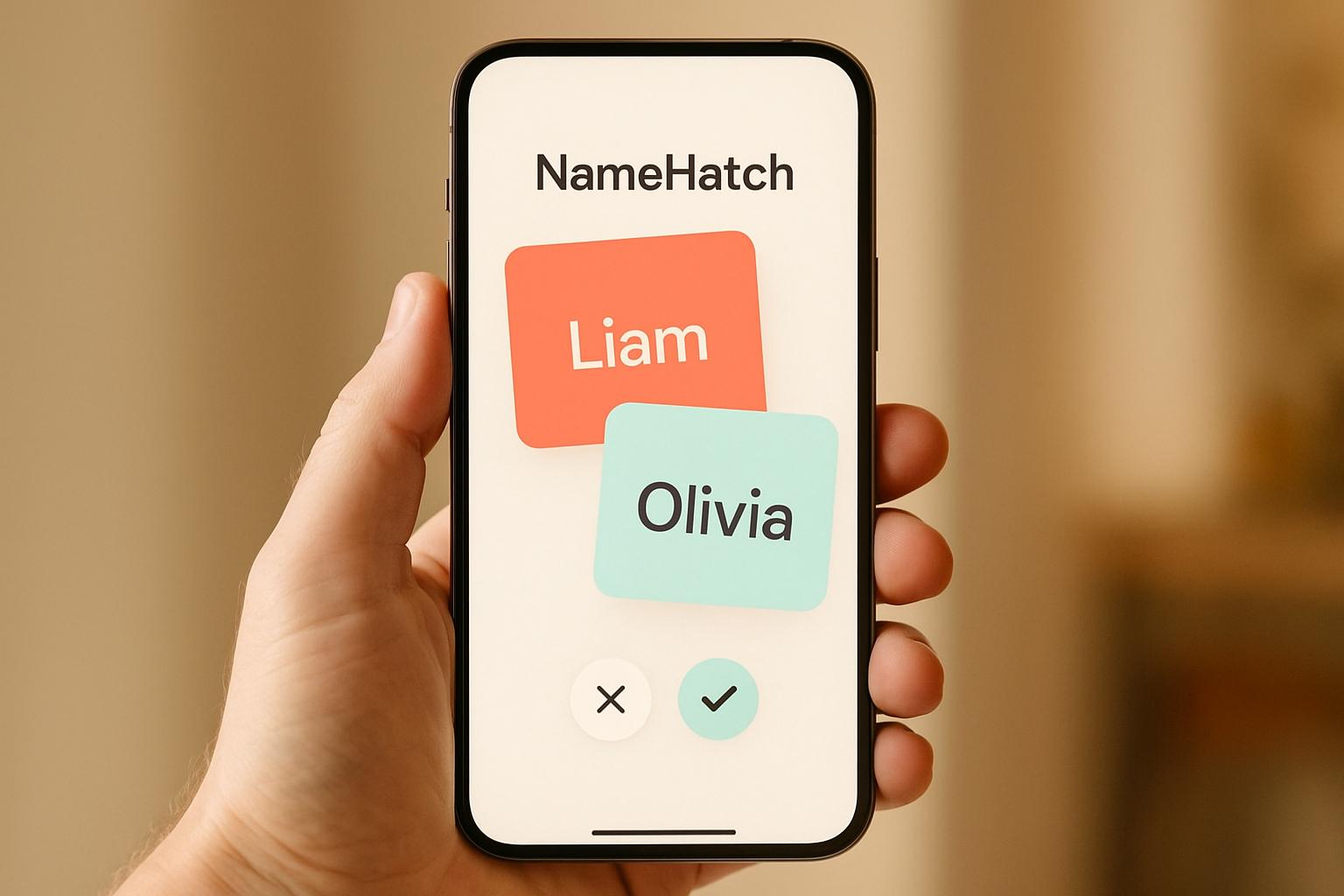
Use NameHatch so both partners can swipe through names on their own, without talking through each one yet. The app then surfaces the names you both liked, which gives you a shared list without all the back-and-forth.
NameHatch also includes style filters like classic, modern, vintage, nature-inspired, unisex, and culturally rooted. That helps you focus on names that already match your family’s taste. From there, cut the mutual list to 5–10 finalists by removing obvious deal-breakers, like initials issues, pronunciation problems, or names that feel too close to one another.
Once the list is that short, score each finalist separately before you compare totals.
sbb-itb-f13f980
Score Each Finalist and Compare the Results Side by Side
Score every finalist using the same criteria in one sitting. That way, each name gets the same kind of look.
Do a Quick First Pass, Then Review Together
Have each parent score the names on their own first, then compare totals. Once both of you are done, add the totals to one shared sheet and average the score for each name.
Then sort the names into three groups: clear contenders, maybes, and names to cut. The cut list is usually the simplest part. Read the notes out loud, make sure the reasons still make sense, and remove those names. Keep the discussion tied to day-to-day fit - nickname feel, sibling fit, full-name flow, or how the name might age over time. Notes like nickname feels forced or too similar to a cousin's name help keep things plain and useful.
If one factor matters more than the rest, decide on that weighting before you score.
If two names still end up close after you fill out the table, use tie-break checks to sort them out.
Compare Your Top Names in One Table
Use the same criteria from your scorecard, then compare only the finalists side by side.
| Name | Meaning & Origin | Sound With Last Name | Uniqueness | Family Sig. | Nicknames | Popularity (US) | Sibling Fit | Total Score (/35) |
|---|---|---|---|---|---|---|---|---|
| Maeve | Intoxicating (Irish) | Strong, clean flow | High | Low | Mae | Moderately rare | Strong next to Nora | 28 |
| Eliza | Pledged to God (Hebrew, via Elizabeth) | Soft, balanced flow | Moderate | Moderate | Liz, Ellie | Classic, not trendy | Matches Henry's style | 26 |
| Aria | Air, melody (Italian, Hebrew) | Smooth, but more common | Low | Low | Ari, Ria | Very popular | Flows with Ethan | 25 |
The top total doesn't win by default. Look at which names hold up in the columns that matter most to you, and pay attention to how the scores are spread across those columns before making a call.
Break Ties With Practical Tests and Fair Partner Rules
If the scorecard leaves two names almost even, stop scoring and try a few day-to-day checks instead.
When two names are nearly tied, switch from scoring to real-world tests.
Run Four Tie-Breaker Checks Before the Final Vote
Use the same four checks, in the same order, for every tied name. That keeps the process simple and cuts down on second-guessing.
Say the full name out loud - first, middle, and last. Then try it as a calm introduction and as a firm call across a room.
Write the initials and look for awkward words, acronyms, or monogram issues.
Test likely nicknames. Write down the nicknames people will probably use, not just the one you like most. Say each one with the surname and picture it on a resume or in an email address.
Check the full name with the surname and sibling names for rhyme, repetition, tongue-twisters, or style clashes.
A short test-drive can settle what those checks don’t. Write a mock birth announcement for each finalist - something like We joyfully announce the birth of Nora Elise Parker, born September 15, 2026 - and read it out loud. One name often starts to feel more like your name.
Combine Preferences Without Turning It Into a Fight
If the tie is between two names you both like, use one shared method so the choice doesn’t drift into a debate.
Start with private ranked lists. Then compare them and pull out the mutual likes. Names that show up on both lists move forward right away.
Each partner can also mark a small number of hard noes. If either person marks a name as a hard no, that name leaves the pool. No debate needed.
Then work only with what’s left. If you still have more than two or three names, do a quick paired comparison: put two names side by side, pick the one you’d honestly be happier with, and keep going until one comes out on top.
Conclusion: Pick a Winner and Keep a Backup Name
Now it’s time to cut the list down, score each finalist, compare the results, and use tie-breakers if the top choices are neck and neck. Once you’ve narrowed things down, rank the last names into a clear top 3.
That top 3 should include:
- A winner: the name with the highest score and the one both partners feel good about
- A backup: a strong second choice from the same scorecard
- A wildcard: a third option that one or both of you love, even if it still comes with one small concern
Your backup matters more than people think. Late second-guessing happens all the time, and having a second choice ready can save you from scrambling.
Keep a backup name in your pocket so you don’t have to start over when the pressure is on.
If the finalists are still close, run the practical checks one more time. Say the full name out loud. Look at the initials. Test possible nicknames. Check how the name sounds with the last name and alongside siblings. Those small tests often make the last decision much easier.
Once the close calls are settled, set a deadline and stop going back to the full list.
Set a soft deadline before the third trimester ends, and don’t reopen the full list unless a major new issue comes up.
FAQs
How do we weight the most important naming factors?
Start by identifying your must-have criteria, like family heritage or sound, and give those more weight. Then compare your top names side by side by category. That makes your priorities easier to see.
For popularity, don’t stop at national rank. Check birth counts, state-by-state use, spelling variants, and long-term trends. It also helps to think about day-to-day fit: nickname options, how the name sounds with your last name, and how it will work at different life stages.
What score difference makes one name the clear winner?
There’s no single score gap that makes one baby name the obvious pick.
So instead of waiting for a magic number, use your ranked shortlist to help shape the conversation with your partner. Talk through your comfort level, how the name will land in your social circle, and practical stuff like spelling, local popularity, and long-term trends.
What should we do if we still can’t agree on a top 3?
If you still can’t agree on a top three, go back to your shared match list and talk through what each name means to you and why it made the cut. Then give your finalists a simple test: say them out loud, write them down, and picture using them in daily life. That can make it easier to spot the one that feels like the best fit.
Still stuck? You could let one partner pick the first name and the other pick the middle name, choose a favorite from the shortlist at random, or ask a trusted third party to make the call.