No - your baby name does not need to “match” your last name. It just needs to sound good, feel easy to use, and avoid obvious problems.
When I look at a full name, I keep it simple:
- Say the full name out loud
- Check the rhythm and syllables with a baby name compatibility checker
- Look for repeated sounds or blur-together endings
- Test the initials
- Try likely nicknames with the last name or swipe baby names together with your partner
- Ask whether the style feels on purpose
That matters because a full name gets used everywhere: school forms, doctor visits, email addresses, and introductions. And people care about this more than you might think. The article points to survey data showing 63% of people say how a first name sounds with a last name matters, and 42% of new parents say how a name will sound later in life is their top concern.
A good full name does not need to be perfect. It should just be easy to say, easy to live with, and free from things like awkward initials, rhymes, or name pairs that run together.
Here’s the short version: if the full name sounds smooth, looks fine on paper, and still works with nicknames, you’re probably in good shape.
I’d treat the name as one unit, not two separate parts.
Where first and last names tend to clash
First and last names usually clash in three main ways: sound, structure, and style. Start with how the full name sounds out loud. Then check the initials and the overall feel.
Awkward rhythm, repeated sounds, and hard-to-pronounce pairings
Sound is often the first place a name goes wrong. Sometimes nothing looks odd on the page, but the full name feels clunky the moment you say it.
Rhythm plays a big part here. Mae Robinson works well because a short first name pairs nicely with a longer last name. On the flip side, repeated sounds can start to grate. A pairing like Bailey Baker may sound a little too cute and distracting. And when one name ends with a consonant and the next starts with another, the full name can be awkward to say fast.
Length, initials, and nickname checks
Length matters too. A very long first-and-last name combo can feel like a mouthful in day-to-day life.
It’s also smart to check the initials. They can turn into accidental words, especially in monograms, school records, and auto-generated email addresses. Watch for combinations like ASS, BUM, WTF, or PMS.
Before you make a call, say the last name with the nicknames people are most likely to use. A name may seem fine in full but feel off once it gets shortened.
Style and origin mismatch
Style clashes are more personal. A very modern first name with a formal last name might feel sharp and on-purpose, or it might seem like the two parts don’t belong together.
That’s why the best test is simple: does the full name sound intentional and match, and is it easy to say?
Once you know what kind of clash you’re dealing with, it gets much easier to test new names against your surname.
sbb-itb-f13f980
How to check whether a baby name works with your last name
How to Check If a Baby Name Works With Your Last Name
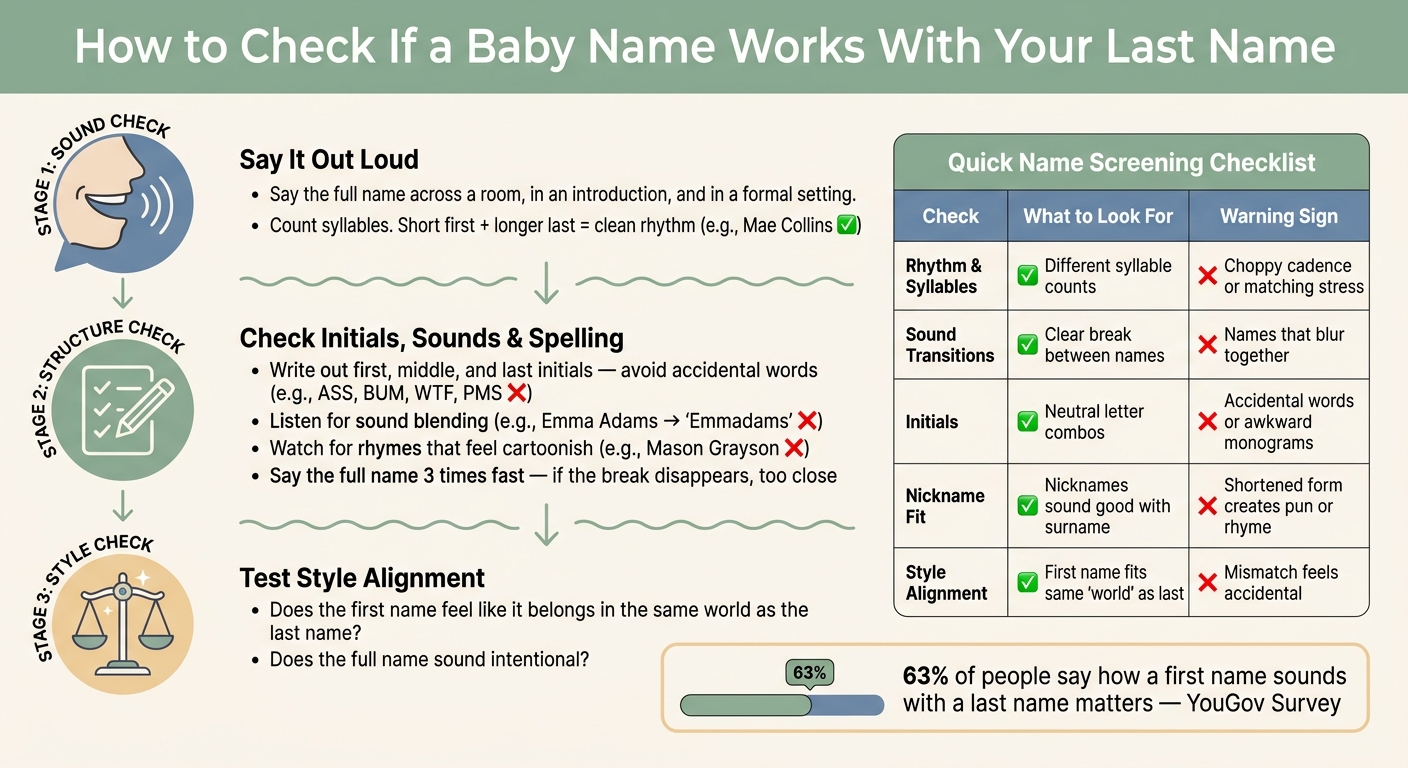
You can turn those clash points into a simple screening step before a name makes your shortlist. Use the same three checks here: sound, structure, and style.
Say it out loud and count the syllables
Start with the test that catches the most issues: say the full name out loud.
Use it in a few everyday situations, like calling across a room, making an introduction, and saying it in a formal setting. If it feels cramped, awkward, or tough to say, flag it.
Then count the syllables and listen to the rhythm. A short first name with a longer last name - like Mae Collins - often feels clean and easy to say.
Check initials, repeated sounds, and spelling
Once the spoken test feels good, move to the written details. Write the first, middle, and last initials in order and see what they spell. In the U.S., monograms usually put the last initial in the center. Ava Sophia Stevens becomes ASS in standard initial order; switching to Ava Claire Stevens fixes that right away.
Next, listen for sound blending where the first name ends and the last name begins. If the first name ends with the same sound the last name starts with, the two can run together. Emma Adams can slide into Emmadams at normal speed.
Also watch for rhymes or near-rhymes. Mason Grayson may sound playful at first, but over time it can feel a bit cartoonish. Say the full name three times fast. If the break between the names starts to disappear, they’re probably too close.
Use a quick comparison table before building your shortlist
Before you build a shortlist, run each name through this baby name decision checklist:
| Check | What to Look For | Warning Sign |
|---|---|---|
| Rhythm & Syllables | Different syllable counts between first and last | Choppy cadence or matching stress |
| Sound Transitions | A clear break between the first and last name | Names that blur together |
| Initials | Neutral or clean letter combinations | Accidental words or awkward monograms |
| Nickname Fit | Nicknames that also sound good with the surname | A shortened form that creates a pun or rhyme |
| Style Alignment | A first name that feels like it belongs in the same "world" as the last | A mismatch that feels accidental |
Names that clear these checks are ready for side-by-side comparison. After that, you can compare your top options more quickly with a shortlist tool. Using a baby name swipe app can help you and your partner narrow down these choices together.
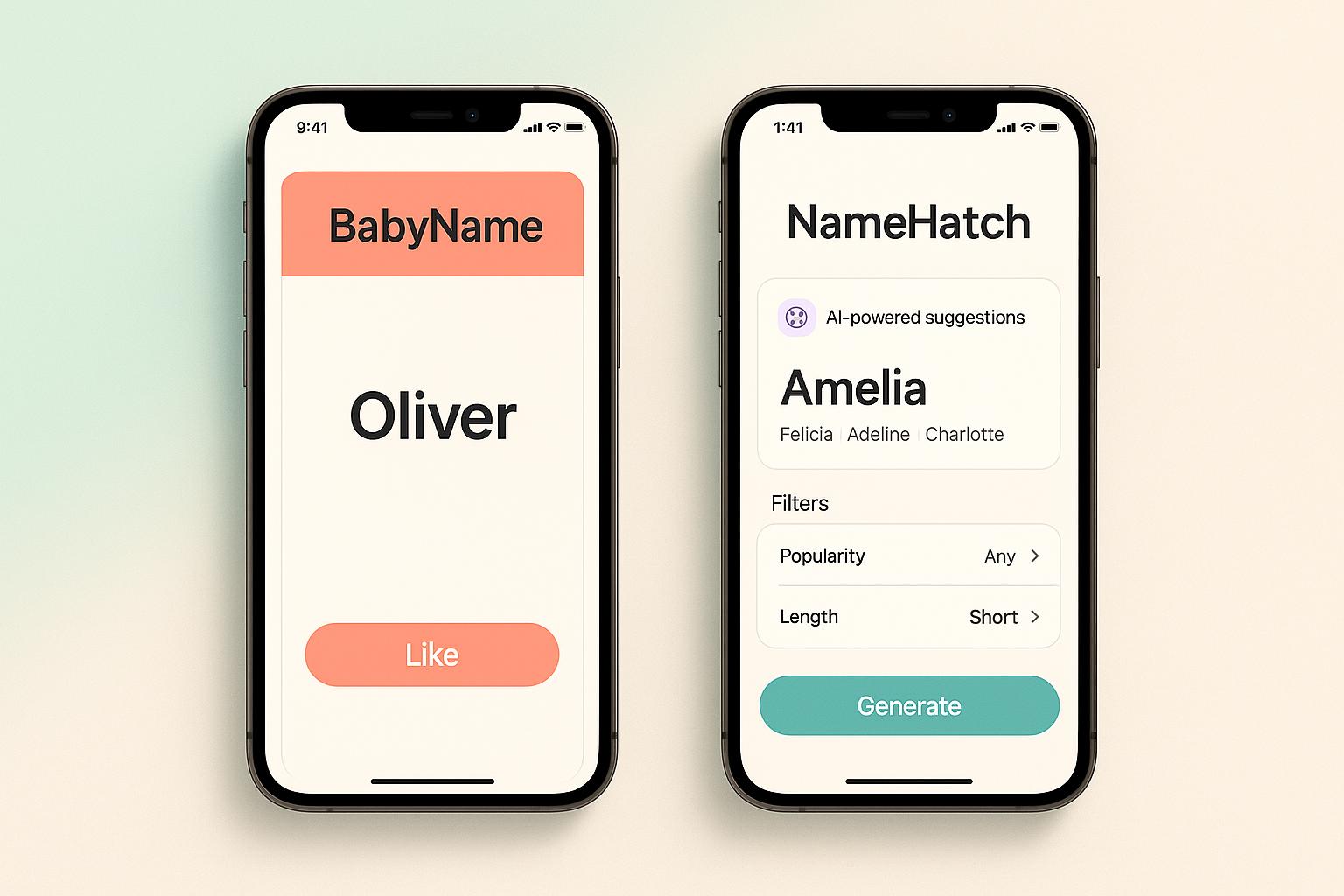
How to use NameHatch to find first names that work with your surname
Use NameHatch to turn your checklist into a shorter, stronger shortlist. The process is simple: filter, match, and test.
Filter by style, origin, and vibe before you start swiping
Start with filters inside NameHatch before you look at names one by one. Style filters like Classic, Modern, Soft, and Strong help you line up the tone of a first name with the feel of your surname.
This saves time. Instead of sorting through a huge pool of names, you begin with options that already fit the mood you want. Then you can test rhythm and length on the names that make it through. If origin matters to you, use that filter too. You might want the first name to echo your surname, or you may want the contrast. Either way, your list gets tighter fast.
Use partner matching to narrow the list faster
After that, look at names as full pairs, not by themselves. NameHatch shows the complete first-and-last-name combo at once, which makes it much easier to judge how it all sounds together.
Each partner swipes on their own, and the app pulls out mutual matches for you. That takes two separate opinions and turns them into one shared shortlist.
According to a YouGov survey, 63% of respondents said how a name sounds paired with a last name is important, including 28% who said it was very important. So when it’s time to talk through your options, you’re not starting from zero or arguing for pet picks. You’re looking at names you both already said yes to.
Test your favorites in rounds instead of deciding all at once
Once your shortlist is small, test the finalists in rounds instead of trying to make one big final call.
- Round 1: Swipe broadly over a few sessions and keep your filters in the same style lane. The goal here is to spot patterns, not pick the winner.
- Round 2: Say each mutual match out loud and keep only the ones that still sound smooth. Check that the name works in everyday U.S. situations too.
- Round 3: Review initials, nicknames, and spelling for the last few names.
Use a free or paid plan based on how many rounds you want to run.
Conclusion: A baby name does not need to be perfect - it just needs to work
A first-and-last-name pairing doesn't have to be perfect. It just has to feel natural and hold up in day-to-day life. The fastest way to judge first name compatibility is simple: test the full name with a few practical checks.
One 2024 survey found that 42% of new parents said how a name would sound later in life was their top priority. That makes sense. A name has to work at school, at work, and during medical appointments - not just on a baby announcement.
Before you make the call, give the full name one last pass. Check the sound, rhythm, initials, and nickname fit. Say it out loud. Write it down. Picture someone using it in everyday moments.
If you're still stuck between two or three strong picks, NameHatch can help you compare them as full-name pairs and cut your list faster.
It just needs to work.
FAQs
How do I know if a first and last name flow well together?
Check the name’s sound, rhythm, and length. Names tend to flow better when there’s some balance, like a longer first name with a shorter last name, or the other way around.
Say the full name out loud in everyday situations. Listen for awkward rhythm, tough pronunciation, unintended meanings, and initials that turn into awkward acronyms or monograms.
Should I worry more about initials or nicknames?
Yes - check both. Initials and nicknames can shape your child’s day-to-day life and social experiences.
Say the full name out loud. That simple step can help you spot awkward initials or accidental acronyms.
It also helps to think through the nicknames that may come from the name. Do the short forms sound good? Do they feel like something your child would enjoy hearing? And could any of them open the door to teasing?
What if I love a name that doesn’t seem to match my last name?
If you love a name that feels slightly off with your last name, don’t write it off too fast. Flow matters, but it isn’t the only thing that counts.
Say the full name out loud in a few different situations and see how it sounds. Try it like you’re calling across a playground, introducing your child to a teacher, or saying the full name in a more formal moment. That quick test can tell you a lot.
You can also smooth things out by changing the middle name’s length or rhythm. And if you want to dodge awkward initials, the NameHatch Initials Matcher can help with that too.