About 1 in 5 parents say they regret their child’s name. That’s why I’d keep this simple: agree on what “rare” means, set a few hard rules, make separate lists, compare names the same way, and test finalists in daily life before you decide.
If I wanted a name both parents could feel good about, I’d focus on five things:
- Pick your range first: top 100, about 300–800, or outside the top 1,000
- Set rules early: pronunciation, spelling, length, family or faith fit
- Make lists on your own: about 30–50 names each
- Use a plain rating system: Love, Maybe, No
- Test the finalists: initials, sibling match, roll call, forms, and adult use
Here’s the main idea: don’t try to win the argument. Build a short process that helps both of you sort names by taste, ease, and day-to-day use. That gives you a better shot at landing on a name that feels a little less common without turning into a hassle later.
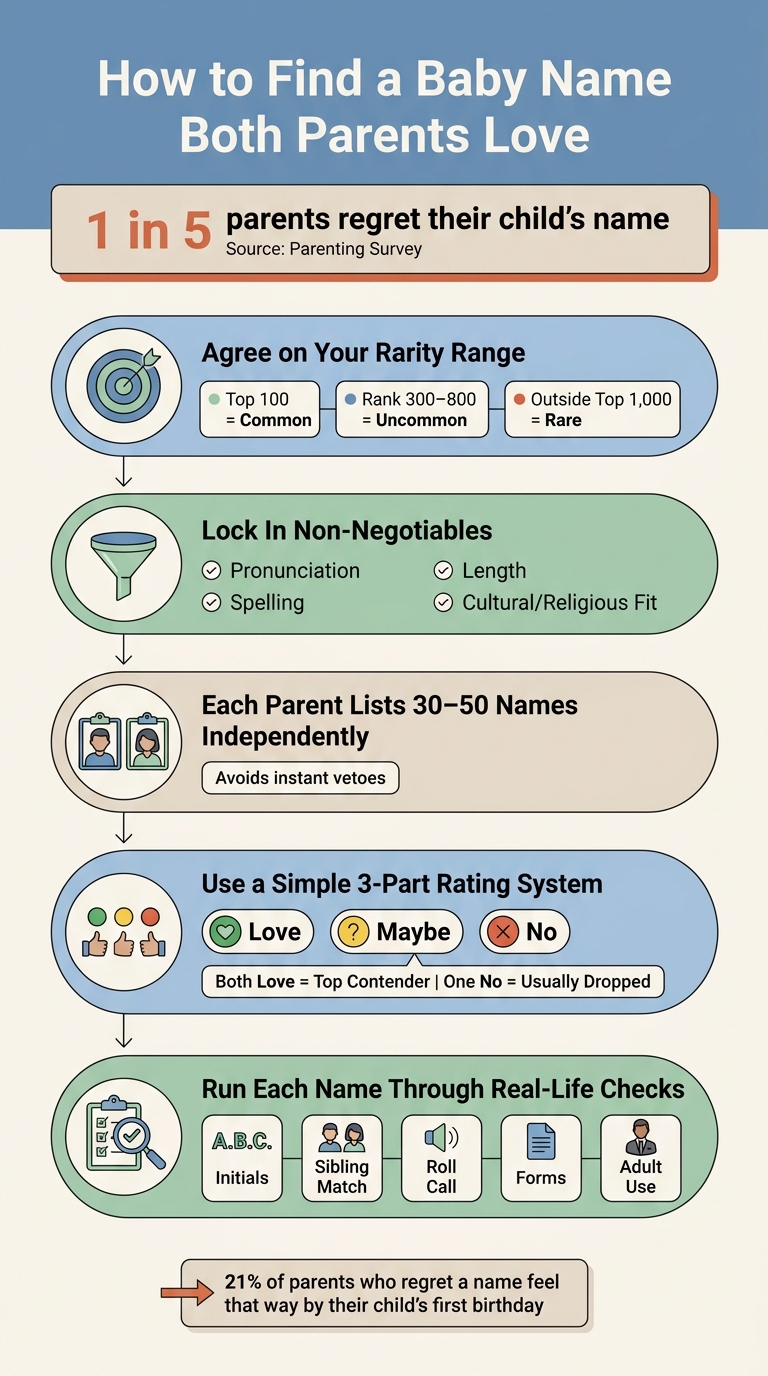
How to Find a Baby Name Both Parents Love: 5-Step Process
Quick Comparison
| Step | What I’d do | What I’m checking |
|---|---|---|
| Define the target | Agree on how rare you want the name to be | Shared standard |
| Set filters | Choose rules for spelling, sound, length, and fit | Fewer dead-end debates |
| Build lists | Each parent makes a list of 30–50 names | More overlap |
| Rate names | Mark each one Love / Maybe / No | Clear shortlist |
| Break ties | Compare concerns and use the same checks | Less back-and-forth |
| Test finalists | Say full names out loud, check initials, try daily-life cases | Fewer future regrets |
I’d use this article as a simple plan: first line up on style and limits, then cut the list with calm rules instead of gut reactions alone.
sbb-itb-f13f980
1. Agree on What 'Unique' Means Before You Start
Set your target range before you get stuck arguing over names. The U.S. Social Security Administration publishes yearly rankings of the top 1,000 baby names, and that gives you a shared baseline.
You can use those rankings to define what each of you means by unique:
- Top 100: common
- Around 300–800: uncommon but still familiar, so your child is less likely to share the name often
- Outside the top 1,000: rare, though spelling and pronunciation may be less obvious
That one step makes the whole process smoother. Instead of debating from two different standards, you're both working from the same map. Agree on the target zone first.
Set Your Non-Negotiables First
Think of non-negotiables as the filter you use before any name even makes it onto the list. A few are worth sorting out early:
- Pronunciation: Will people be able to say it easily in day-to-day life? Names that follow common American English sound patterns usually need less correcting.
- Spelling: If a name has four likely spellings, expect years of fixes on forms, emails, and name tags. Decide now how much of that you're okay with.
- Length: Very long names can get awkward on forms and records.
- Cultural or religious fit: If you want a Biblical name, a heritage name, or one that works across two languages, settle that before you start trading ideas.
Check How the Name Works With Your Last Name
A first name never stands alone. It gets said with your last name over and over - at school, in waiting rooms, at work. That’s why rhythm matters more than many parents expect.
A short last name like Lee or Smith can sound a bit weighed down with a long, multi-syllable first name. On the flip side, a long surname paired with a long first name can turn into a mouthful, especially over the phone. Many of the most popular U.S. names - Liam, Noah, Emma, and Luna - are one or two syllables, which is part of why they pair well with so many surnames.
Here’s the easiest test: say the full name out loud, at a normal pace, five times in a row. Then say it like a teacher taking attendance, a nurse calling from a waiting room, and your child saying it in a job interview. If it feels clunky or runs together, that tells you something. Also listen for accidental rhymes, over-the-top alliteration, or a first-and-last combo that sounds like a phrase.
Use NameHatch to Align on Style Before Debating Names
If you’re not even sure where your taste overlaps, check how compatible you both are on a name first. NameHatch lets each parent swipe on names separately and filter by style - Classic, Modern, Soft, Strong, Nature-Inspired, Global, Mythical, or Unique - so you can compare taste before arguing over specific picks.
When both people review names on their own and then compare results, the shared matches become your shortlist. Once you agree on the style range, make separate lists inside that lane.
2. Build a List of Uncommon but Usable Names
Once you agree on the general style, the next step is simple: make separate lists that are big enough to show real overlap. You're looking for names that feel a bit less common, but still sound natural in daily life. Fresh is good. Hard to pronounce or spell every single time? Not so much.
Start With Separate Lists to Avoid Instant Vetoes
Each parent should make their own list of 30 to 50 names they'd be happy to use. Not names that are just “kind of interesting.” Names you'd honestly say yes to.
It also helps to group names by feel instead of putting them in A-to-Z order. For example:
- vintage: Mabel, Cora, Etta
- nature-based: Rowan, Wren, Juniper
- literary: Celia, Sylvie
- heritage-inspired: Anya, Maeve
This makes the comparison stage much easier. When you line up both lists, patterns tend to jump out. You may notice that you both lean toward old-fashioned names, or softer nature names, even if you didn't pick the exact same ones at first.
Use AI Filters to Find Names Beyond the Usual Lists
If both lists still seem a little too familiar, widen the search with filtered suggestions. Use NameHatch filters to find names outside your usual go-to picks. The tool automatically shows your mutual matches, which turns the whole thing into a much simpler matching exercise. This is one of many AI tools for baby name disagreements that can help break a stalemate.
Keep One Shared Shortlist With a simple rating system
When some overlap starts to show up, move those names into one shared shortlist and score them fast. A plain three-part system works well: Love, Maybe, or No.
Names that get Love from both parents are your top contenders. A Love from one person and a Maybe from the other can still stay in the mix. A single No is often enough to drop a name, unless you've already agreed on a clear override rule.
Keep updating that shared list after each round. That way, you can see the real overlap at a glance instead of circling back to the same names again and again. It also makes the next round feel less emotional and more like sorting than arguing.
3. Resolve Disagreements Without Stalling
When your shared shortlist still leaves you split, don’t restart the whole argument from scratch. That usually just burns time and puts everyone in a bad mood. A better move is to do a quick reason check. Once each person says what the actual issue is, you can compare the finalist names using the same standards.
Talk Through Why Each Name Works or Does Not Work
Put objections into three simple buckets: taste, practical issues, and family or cultural concerns.
Then have each parent share:
- Three top picks
- One sentence on why each name matters
- The exact concern behind any hesitation
That small shift helps a lot. Instead of saying “I just don’t like it,” you get something more useful, like “It sounds too close to a cousin’s name” or “I think people will mispronounce it.”
Use Objective Checks to Compare Finalist Names
If the conversation starts going in circles, stop leaning on opinion alone and use a shared check. After you’ve both explained your reasons, check your first name compatibility to compare finalists with a neutral guide. And if initials matter to you, check the initials before you lock in the shortlist.
Use a quick comparison table:
| Name | Uniqueness Level | Pronunciation Ease | Initials | Flow With Last Name | Parent A Rating | Parent B Rating | Compatibility Result |
|---|---|---|---|---|---|---|---|
| Example Name | Familiar / Uncommon / Distinctive | High / Medium / Low | A.B.C. | Good / Fair / Poor | Love / Maybe / No | Love / Maybe / No | Match / Maybe / No Match |
Names that both parents rate at least a Maybe are the ones worth keeping on the table. Those are your actual working candidates, not the ones one person is trying to drag over the finish line.
Use Compromise Rules That Still Protect Quality
Compromise doesn’t mean picking a name neither of you likes. It means setting a few ground rules that keep the process moving without lowering the bar.
A few that tend to work well:
- Pair a familiar first name with a bolder middle name
- Use vetoes only for serious concerns
- Keep only names both parents rate at least Maybe
If two names still feel tied, move them to family-pattern and real-life testing.
4. Test the Name Against Family Patterns and Everyday Life
Once your shortlist clears the first compatibility check, the next step is simple: compare baby naming apps or see how each name works in daily life.
A name can look great on paper and still feel off once you start using it out loud, writing it on forms, or pairing it with the rest of your family.
Check Initials, Sibling Patterns, and Family Naming Style
Start with family fit. That’s usually where hidden issues show up first.
Check the initials in both standard order and monogram order. You’re looking for awkward words, odd letter pairings, or acronyms you’d rather avoid.
Then put the name next to your other children’s names. Say them all out loud the way you’d call them in from the backyard. That simple test tells you a lot. At this point, the shared style of the full sibling set becomes much easier to hear.
Try to keep a similar style, length, and level of formality across siblings, along with a similar amount of complexity. A set like "Emma, Lucas, and Marigold" can feel like it belongs together, while a name that sits far outside that pattern can leave one child feeling like the odd one out.
If you want a fast way to spot clashes, use a baby name compatibility checker to compare candidate names with siblings' initials.
Try the Name in Common U.S. Situations
If a name passes the family-fit test, move on to everyday use.
Run each finalist through four quick checks:
- playground
- roll call
- forms
- adult-life use
This is where small annoyances tend to pop up. Does the name sound clear when shouted across a park? Is it easy for a teacher to read from a class list? Will it fit neatly on forms? Does it still work for a grown adult?
It’s also smart to test a likely email address, such as firstname.lastname@gmail.com, and look for awkward letter combinations.
Narrow the List to Three to Five Serious Options
As names keep failing the same checks, take them off the list.
Drop any finalist that repeatedly runs into problems with initials, pronunciation, or sibling fit, even if one parent is still attached to it. If a name you love keeps stumbling here, move it to the middle-name spot instead of tossing it out right away.
At this stage, keep only three to five names that both parents can picture using every day.
Conclusion: Make the Final Choice Together
You’ve done the work. The hard part is already behind you: you defined your baby name style, narrowed the field, and tested your finalists. Now it’s time to cut that list one last time.
Nearly 10% of parents report baby name regret, and 21% of those who regret it say they feel that way by their child’s first birthday. That’s exactly why this last step matters. A clear process can help lower the chance that you’ll second-guess the name later.
Run your final names through the Baby Name Compatibility Checker one more time. Put your top choices side by side, look at the results together, and use that final review to help make the call.
If initials matter in your decision, check those too with the Baby Name Initials Matcher. It’s a simple way to make sure the full name doesn’t spell something awkward by accident.
The goal is simple: pick a name you both feel good saying every day. If one option keeps coming out on top in your ratings, your real-life tests, and the Compatibility Checker, that’s a strong sign you’ve found a name that works and that both of you like.
If you’re down to a few strong options, compare them one last time here. Check how compatible you both are on a name and make the final call together with confidence.
FAQs
How rare should a baby name be?
How rare a baby name should be is a personal choice. You and your partner get to decide what rare means for your family.
For some, that means a name outside the top 1,000. For others, it might mean an uncommon spelling, a name tied to family heritage, or even a familiar name that just isn't used all the time.
If you don't agree at first, it helps to set your shared line early and talk through why certain names stick with each of you.
What if we both like different name styles?
Different name styles are common. A good place to start is figuring out why certain names appeal to you in the first place.
Maybe you lean toward classic names. Maybe you like something more modern, nature-inspired, or tied to family heritage. Once you spot the pattern, things usually get easier. You can look for shared sounds, meanings, or even just the feeling a name gives off.
If you hit a wall, check how compatible you both are on a name to test mixes from both styles. You can also use the Initials Matcher to see how names line up with your family’s naming patterns.
How can we test a baby name before deciding?
Say the full name out loud with your last name. That’s the easiest way to test rhythm, flow, and pronunciation. Then check the initials too, so you don’t end up with an awkward abbreviation by accident.
If you and your partner can’t agree, check how compatible you both are on a name. And if you want the name to match siblings’ initials or follow family naming patterns, use the initials matcher for a better fit.