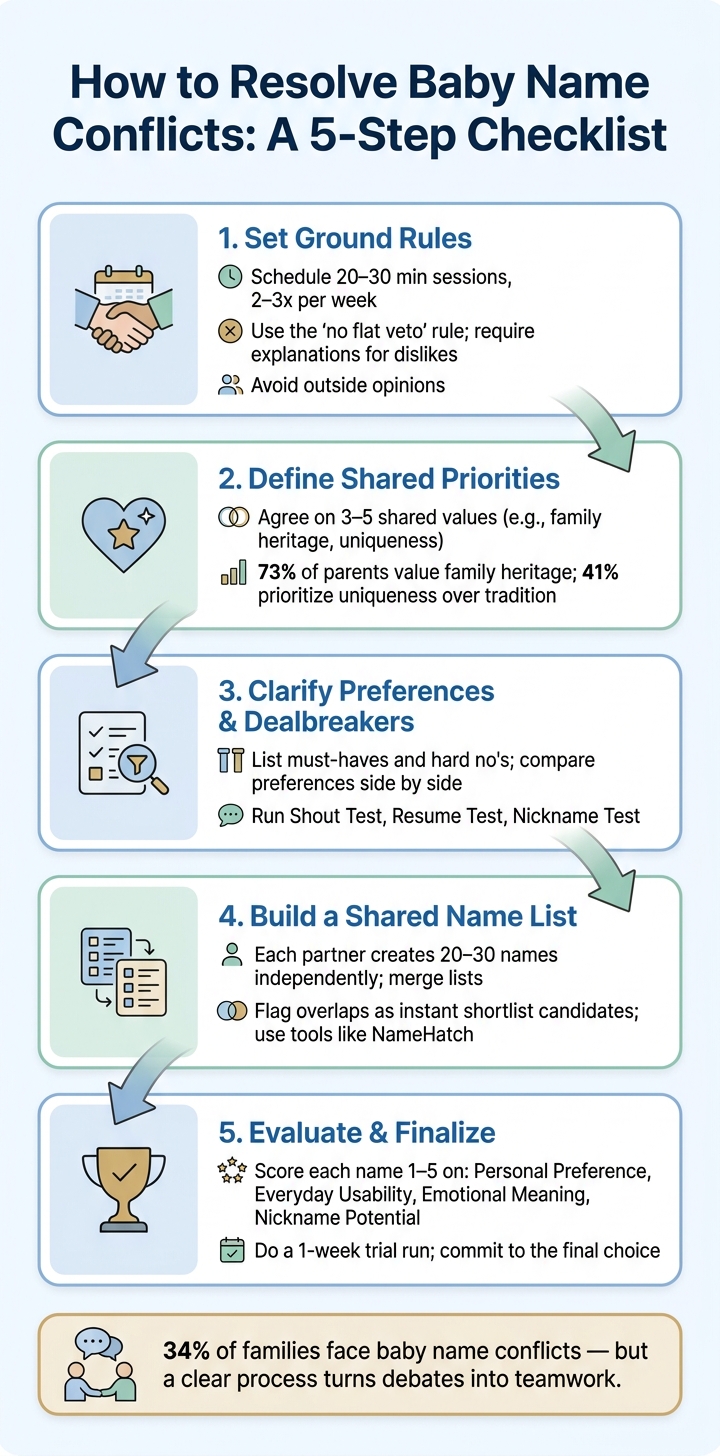
- Set ground rules: Schedule focused discussions, avoid vetoing without explanation, and skip outside opinions.
- Define shared priorities: Identify 3–5 values (e.g., family heritage, uniqueness) to guide decisions.
- Clarify preferences: List must-haves, dealbreakers, and practical factors like initials and nicknames.
- Build a shared list: Start with individual lists, merge them, and use tools like NameHatch to expand options.
- Evaluate and finalize: Test names in real-life scenarios, score them on key factors, and commit to a final choice.
Disagreements are common - 34% of families face them - but respectful communication and clear steps can turn debates into teamwork. Follow this baby name decision checklist to choose a name with confidence and set the tone for future parenting decisions.
How to Resolve Baby Name Conflicts: A 5-Step Checklist
Set the Ground Rules for Name Discussions
Before diving into name ideas, it's important to establish some ground rules for how these conversations will unfold. Without a bit of structure, even lighthearted discussions can spiral into disagreements.
Agree on Discussion Rules
To keep things productive, set aside specific times for these discussions - 20 to 30 minutes, two or three times a week - in a quiet space without distractions. Keeping sessions short and focused helps avoid burnout and ensures the process stays enjoyable.
There are two essential rules to agree on from the start: the "no flat veto" rule and the "explanation rule." If one of you dislikes a name, explain why - whether it’s the way it sounds, a particular association, or how it’s spelled. This approach not only keeps the conversation moving but also sheds light on each other's preferences.
| Discussion Rule | Why It Helps |
|---|---|
| Time limits (20–30 mins) | Prevents burnout and keeps discussions productive |
| Swipe baby names together to create independent lists first | Avoids immediate reactions that could derail the conversation |
| Explanation rule | Reveals style preferences instead of creating deadlocks |
| No outside crowdsourcing | Avoids being swayed by external opinions from family or social media |
With these rules in place, you’ll be better prepared to focus on what really matters when choosing a name.
Find Your Shared Naming Priorities
Before diving into specific names, take some time to discuss what matters most to both of you. Is honoring family heritage a priority? Do you want a name that’s easy to spell? Or are you hoping to find something that stands out from the crowd? Surveys show that 73% of parents value family heritage, while 41% prioritize uniqueness over tradition.
Try to agree on three to five shared values that will guide your decision-making process. Writing these priorities down in a shared document or note can help keep you both on track and provide a reference point during tougher discussions.
Plan for Moments When Emotions Run High
Even with clear guidelines, emotions can sometimes take over. To prepare for these moments, agree on a signal - a word or phrase - that either of you can use to pause the conversation if tensions rise. If things feel too heated, consider taking a break of two to three days before resuming. This pause can give you both the space to reset and return to the discussion with fresh perspectives.
Clarify Each Partner's Preferences and Dealbreakers
Once you've set some ground rules, it's time to dive into individual preferences. This step is crucial - skipping it often leads to endless debates that go nowhere because traditional lists lack personal context.
List Your Must-Haves and Hard No's
Both partners should jot down three to five non-negotiable criteria and dealbreakers. These might include things like a connection to family, the number of syllables, cultural significance, or avoiding names with negative associations. A few common dealbreakers? Names tied to exes, people you dislike, or ones that rhyme with inappropriate words. Also, check for awkward initials - no one wants to end up with monograms like A.S.S. or S.T.D.. Always write out the full name to catch these potential issues.
To keep things fair, allow each person to veto one name without needing to explain. This can save you from drawn-out arguments.
Think Through Practical Factors
Before falling in love with a name, make sure it works in real life. Run it through these quick tests:
- Shout Test: Say the name out loud as if you're calling it across a playground. Does it sound natural and project well? Names with open vowel sounds, like Clara or Leo, tend to carry better than those with nasal or closed endings.
- Resume Test: Write the name on a sample resume. Does it look professional and suitable for a lifetime?.
- Nicknames: Consider whether any common nicknames (e.g., Liz for Elizabeth) are acceptable. Even if you avoid them, nicknames often develop organically.
Compare Preferences Side by Side
Once you've both outlined your criteria, put them next to each other. Start by identifying overlaps - these are your easiest wins. Then, look at the differences. Are they dealbreakers, or can you bend a little?
| Preference Area | Partner A | Partner B |
|---|---|---|
| Style | Classic/timeless (e.g., James, Eleanor) | Modern/unique (e.g., Remi, Mila) |
| Origin | Family heritage-based | Open to any origin |
| Popularity | Outside the Top 100 | Outside the Top 10 |
| Nicknames | Must like the common nickname | Nickname doesn't matter |
| Initials | No embarrassing acronyms | No embarrassing acronyms |
Laying everything out like this makes it easier to find common ground and start building a shared shortlist.
Build and Narrow Down a Shared Name List
Start with Your Own Lists
Before diving into discussions, both partners should create their own name lists independently. Aim for 20–30 names each. Working separately helps avoid immediate reactions or influence from the other person. A good way to begin is by jotting down five names you already love and looking for patterns - do the names share a similar origin, length, or vibe? Recognizing these patterns can clarify your personal style and make it easier to find common ground later. Once your list is ready, sort the names into two categories: favorites and maybes. This gives you a solid foundation for the next step.
Merge Lists and Cut the Clear No's
Once both lists are ready, combine them to spot overlaps and eliminate obvious no's. Any name that appears on both lists can go straight to your shared shortlist - no arguments needed. For the names in the "maybe" pile, have a quick chat about why each one appeals to you. Sometimes, understanding the reasoning can turn a "maybe" into a shared favorite.
At this stage, it’s smart to remove names with awkward initials, tricky spellings, or any negative associations. And remember: either partner has the right to veto a name outright to keep things moving forward.
Use NameHatch to Discover and Sort Names Together
If your merged list feels too short, digital tools can help you discover more options. One great choice is NameHatch, an ad-free baby name app tailored for couples. Here’s how it works: each partner independently swipes through name suggestions - liking, passing, or saving to a "maybe" list. When both of you like the same name, NameHatch flags it as a match, streamlining the process and reducing potential disagreements.
The app also lets you filter names by categories like style (Classic, Modern, Soft, Strong), origin, or popularity trends. This ensures suggestions align with your preferences. The free version includes 30 swipes and basic filters, but upgrading to the premium plan - $3/month or $12 for six months - unlocks unlimited swipes and advanced filters like Nature-Inspired or Mythical themes. It’s available on both mobile and desktop, making it convenient for any setup.
sbb-itb-f13f980
Review and Choose from Your Shortlist
With your shared shortlist ready, it's time to take an objective look at each name and narrow it down further.
Check Each Name Against a Set Criteria List
When you’ve narrowed your list to 5–10 names, evaluate each one using specific criteria. This helps ensure the decision is balanced and not swayed by one partner’s emotional attachment to a particular name.
| Evaluation Area | What to Check |
|---|---|
| Phonetics | Does it pair well with the last name? Is it easy to pronounce naturally in everyday conversation? |
| Practicality | Is it easy for others to understand, like a barista calling it out? Do the initials form any awkward or unfortunate acronyms? |
| Social | Could it be turned into an unflattering nickname by kids on a playground? Does it fit well with a sibling’s name without creating an unintended rhyme or theme? |
| Identity | Does the name’s meaning align with your family’s values or heritage? Will it age well in both personal and professional settings? |
For an extra check, write out the full name, including first, middle, and last initials. Say the entire name out loud to catch any awkward combinations or clunky rhythms that might not be obvious on paper.
Score Each Name on Key Factors
To minimize bias, score each name independently. Both partners should rate every name on the shortlist separately, then compare scores. Use a simple framework like this:
| Factor | Description | Rating (1–5) |
|---|---|---|
| Personal Preference | How much do you personally like the sound and feel of the name? | |
| Everyday Usability | Is it easy to spell, pronounce, and use in daily life? | |
| Emotional Meaning | Does it carry significance, like honoring family heritage or shared values? | |
| Nickname Potential | Are the natural nicknames or shortenings acceptable to both of you? |
Add up the scores for each name and rank them. The top two or three names that both partners rate highly can move forward as your finalists. This process ensures that both of you feel involved and heard.
Break Ties and Reach a Final Decision
If your scores are too close to call, try a one-week trial for each name. Use one name in everyday situations for a week - say it out loud, imagine introducing your child with it, and see how it feels. Many couples find that this "test run" helps one name stand out as the clear choice.
Still stuck? Consider assigning one of the finalist names as a middle name, especially if one partner has a strong attachment to it. This compromise allows both preferences to be honored while avoiding potential disagreements, ensuring both partners feel satisfied with the final decision.
Keep Things Positive After the Decision
Once you've narrowed down your options and made a final choice, it's time to embrace and celebrate that decision.
Commit to the Choice
Stick with the name you've chosen without overthinking it. It's completely normal to feel a bit unsure at first, but avoid reopening the discussion unless absolutely necessary. Give yourself a few days - 3 to 5 is a good range - to reflect on the name by using it in conversations. This can help you feel more connected to it. As Sophie Kihm, a perinatal therapist and name consultant, explains:
"A name becomes meaningful because you associate it with your child. Until then, you have to tolerate any uncertainty and take the leap."
Before finalizing the paperwork, double-check every detail on the birth certificate. This includes spelling, any special characters or accent marks, and the order of names. It's much easier to catch errors when you're calm and focused.
Decide How and When to Share the Name
Consider announcing the name after your baby is born. This approach can help you avoid unwanted opinions and external pressure before the decision is set in stone.
"Reveal the name after birth - when it's a done deal, people respond very differently."
Once the name is shared, manage any external feedback with confidence. The key is to keep your excitement about the choice intact.
Check In with Each Other After the Decision
After dealing with outside opinions, take a moment to reconnect as a team. Make sure both partners are still excited about the name. This step reinforces the collaborative effort you’ve both put into the process.
Drew, a parenting writer known as the New Pragmatic Dad, highlights the importance of this teamwork:
"Naming your child is one of the first collaborative decisions you make as parents. How you handle it sets a pattern for everything that follows."
If one of you still has lingering doubts, talk through the reasons behind your choice - its meaning, sound, or the story it tells. Sometimes, understanding the deeper context can turn a name you like into one you both genuinely love.
Conclusion: Finding a Name You Both Love
Choosing a baby name is more than just picking something that sounds nice - it's about the shared journey of deciding together. The steps outlined here aim to bring fairness and structure to the process: setting ground rules, identifying dealbreakers, building a shared shortlist, testing your top choices, and ultimately committing with confidence.
It's important to ensure that neither partner feels like they're settling. A quick practical check on initials, nicknames, and sibling compatibility can save you from second-guessing later. This helps prevent baby name regrets that can arise from rushed decisions. These small steps reflect the advice of seasoned parents and experts.
As the NamesPop Editorial Team wisely states:
"A name becomes right when it feels right to the people who will say it every day for the rest of their lives."
The process of choosing a name also sets the stage for how you'll approach parenting together. With 34% of families facing some level of conflict over baby naming, it's clear that disagreements are normal. What truly matters is how you navigate them. Open and respectful communication during this time can pave the way for future co-parenting decisions.
As PickTheBestName.com notes:
"The name selection process is really your first major decision as co-parents. Approaching it with patience, respect, and open communication sets a positive precedent for all the parenting decisions you'll make together in the years to come."
FAQs
What if we still can’t agree on a name?
If you're feeling stuck, it might be time to step away for a bit and come back later with fresh eyes. You could explore compromises, like combining a more classic first name with a more daring middle name - or the other way around. Another option is to take turns naming future children or let one parent decide on the first name while the other picks the middle. Sometimes, the right name becomes clear only after meeting your baby.
How do we handle family opinions without starting drama?
Setting boundaries early is key to avoiding confusion and stress. Be gracious when family members share their thoughts - thank them for their input - but make it clear that you and your partner will ultimately decide what works best for your baby. It's also wise to limit how many opinions you seek, whether from others or through social media. Too much input can quickly become overwhelming. At the end of the day, your focus should be on what’s best for your partner and child, not on trying to satisfy everyone else.
When should we stop debating and lock in the name?
Lock in the name once you and your partner both feel confident about it. Try out your top choices by saying them aloud, imagining them on forms, or using them in everyday conversations. Still unsure when the baby arrives? Sometimes seeing your newborn can make the perfect name clear. If the decision process feels stuck, take a break and come back to it with a fresh perspective.