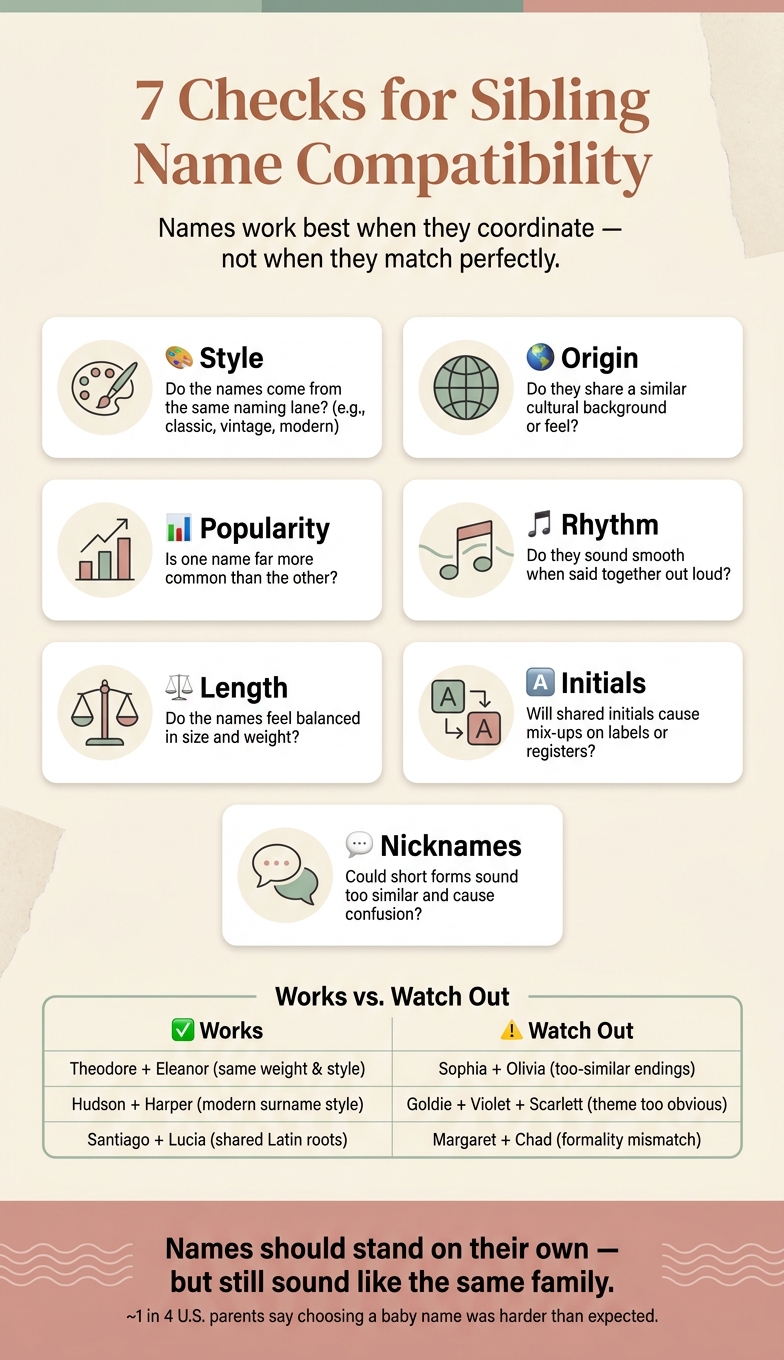
Yes - sibling names go together when they feel balanced, not when they look like a set. I’d check 7 things right away: style, origin, popularity, rhythm, length, initials, and nicknames. If the names sound natural together in daily life and don’t blur into each other, you’re probably on the right track.
Here’s the short version:
- Match the tone, not the pattern. Names do better when they share a similar feel, like Eleanor and Beatrice, instead of sounding forced with rhymes or the same first letter.
- Look at style first. A pair can feel off when one name sounds old and formal and the other sounds new or casual.
- Say both names out loud. This catches rhythm problems, sound clashes, and nickname mix-ups fast.
- Watch popularity gaps. A super common name next to a very rare one can feel uneven.
- Keep themes light. One small link works better than a full pattern, especially if you may name more kids later.
A few quick examples:
- Theodore + Eleanor = similar weight and feel
- Hudson + Harper = same modern surname style
- Sophia + Olivia = same ending, which can sound too close
- Goldie + Violet + Scarlett = theme feels too obvious
About 1 in 4 U.S. parents say choosing a baby name was harder than expected in surveys about naming stress and decision-making. That makes sense. Once you name a second or third child, you’re not picking one name anymore - you’re judging how names sound as a group.
Sibling Name Compatibility: 7 Checks to See If Names Go Together
Quick Comparison
| Check | What I’d ask |
|---|---|
| Style | Do the names come from the same general naming lane? |
| Origin | Do they sound in step in background and feel? |
| Popularity | Is one far more common than the other? |
| Rhythm | Do they sound smooth when I say them together? |
| Length | Do the names feel balanced in size and weight? |
| Initials | Will matching initials cause mix-ups? |
| Nicknames | Could short forms sound too close? |
| Theme | Is there a light link, or does it feel overplanned? |
My rule of thumb: if the names stand on their own but still sound like they belong in the same family, they work.
sbb-itb-f13f980
Start With Style, Origin, and Popularity
Start with a quick filter: style, origin, and popularity. If a name clears that first pass, then check rhythm and sound.
Compare Name Style First
Names usually fall into familiar style groups: classic, vintage, modern/surname-style, botanical, romantic/literary, and more. When sibling names come from the same group, they tend to feel like they fit. When they don’t, the mismatch can stand out, even if it’s hard to put into words.
"The best sibsets are those with names that hit the same style notes." - Sophie Kihm, Nameberry Editor
Take Theodore and Eleanor. Both feel classic and weighty. Now replace Eleanor with Kynzleigh. Theodore and Eleanor sound in step; Kynzleigh brings a modern, invented-spelling feel that rubs against Theodore’s older roots. Same style = a smoother match. Different style = more friction.
You can run into the same issue with formality. Margaret feels formal and old-school. Put it next to Chad, and the pair can seem uneven: one name sounds dressy, the other casual.
Use Origin and Popularity to Avoid Mismatch
Names with similar roots or tone, like Mateo and Lucia, or Hazel and Olive, often sound better together. If one name is tied closely to one naming background and the other comes from a very different one, the pair may feel less in sync.
Popularity matters too. A very common name next to a much rarer one can create an odd imbalance, especially when the names also seem to come from different eras or naming pools. If a name lands in a different style group than your other children’s names, that’s a good reason to pause and see whether the set still feels even.
Use this as a quick sorting tool, not a hard rule.
| Style Category | Sibling Name Examples | Origin / Vibe | Popularity Level |
|---|---|---|---|
| Classic | Henry, Thomas, & Samuel | Biblical/Traditional | High/Stable |
| Vintage | Theodore, Silas, & Edmund | Classical/Formal | Rising |
| Modern/Surname | Hudson & Harper | English Surnames | High/Trendy |
| Botanical | Hazel, Olive, & Willow | Nature-coded | Moderate |
| Romantic/Literary | Evangeline & Aurelia | Romantic/Lyrical | Rare to Moderate |
| Vintage/Classic | Eleanor, Beatrice, & Ophelia | Literary/Intellectual | Moderate |
| Short & Simple | Grace, Hope, & Ruth | Virtue/Biblical | Stable |
If the set still feels balanced, move on to how the names sound together.
Say the Names Out Loud: Rhythm, Length, and Sound
Once style and origin feel right, the next step is simple: say the names out loud. Use them the way you actually would in daily life. Say them in one sentence. Call them from another room. Introduce them together.
"Call the names out loud. Do they flow naturally?" - Jessie Paquette, Baby Name Consultant, Dream Baby Names
That quick test tells you a lot. If the names blur together or feel awkward when said fast, that matters. This isn't only about pronunciation. It's about whether the names sound like they come from the same family.
Check Syllable Count and Length for Balance
Theodore and Catherine both have three syllables, so they carry a similar rhythm and weight. Hudson and Harper are both two syllables and both have that surname-style feel, which helps them sit well together without sounding overly matched. A bit of contrast can work too. Olivia and Sebastian don't have the same syllable count, but they share a classic tone, so the difference feels deliberate.
Things can start to feel off when one name is long and formal and the other is very short and clipped, especially if the styles don't connect. A one-syllable name can still pair well with a longer one when the tone lines up, like Theodore and Mae. But if the length difference and style difference pile up at the same time, the pair can feel less like a set and more like two separate choices.
Watch for Sound Clashes, Initials, and Nickname Overlap
Length is only part of it. You also want to hear how one name ends and how the next one starts. A few small checks can save a lot of day-to-day mix-ups:
- Sound overlap: names that run into each other when said fast
- Rhyming endings: pairs like Sophia and Olivia share the "-ia" ending, which can make them sound more like a theme than two separate people
- Shared initials: this can get annoying on labels, lunchboxes, and school registers
- Nickname overlap: pairs like Marli and Marni can lead to constant confusion
If the names sound balanced, then it's worth checking whether any shared pattern feels intentional instead of pushed.
Use Shared Themes Without Overdoing It
Once the style and sound feel right, there’s one last check: does any shared theme feel natural, or does it feel a little too planned? Shared themes usually work best when they stay in the background. You want just enough connection to make the names feel like they belong in the same family, but not so much that they sound like a matched set.
Pick One Light Connection, Not a Full Theme Set
The safest move is to choose one light connection and stop there. A shared meaning often works well. Stella and Leo, for example, both connect to light and stars. That gives the pair a quiet link without making the theme too obvious.
Things usually start to fall apart when the theme gets too on-the-nose. Naming siblings Goldie, Violet, and Scarlett - all colors - moves past subtle and into a much more fixed pattern.
"Subtlety goes a long way. If your theme is too niche, it can come across as cheesy." - Colleen Slagen, Naming Consultant
A loose connection also gives you more room later. A strict pattern with two children can make it harder to name a third. If you like the idea of a shared thread but don’t want it front and center, tuck it into the middle name instead. Something like Elsie Otter and Charlie Wolf lets the first names stand on their own while still keeping a family link in the middle.
Run a Simple Compatibility Checklist Together
Use this last check to make sure the link stays light and leaves space for future siblings.
| Check | What to Ask |
|---|---|
| Theme visibility | Does the shared thread feel like a quiet nod or an obvious pattern? |
| Future-sibling flexibility | Does this name lock you into a pattern you’d need to keep for every child after? |
Use NameHatch to save and compare shortlists side by side.
Pick the Right Sibling Set for Your Naming Goal
Sibling Name Examples for Classic, Modern, Vintage, Multicultural, and One-of-a-Kind Styles
Once you’ve checked style, sound, and theme, this table helps with the last gut-check. If two names already work on the basics - style, origin, sound, and theme - compare them side by side and see which set lines up with your family’s goal.
| Naming Goal | Example Sibling Set | Why It Works |
|---|---|---|
| Classic | Eleanor & Catherine | Same rhythm and old-school feel. |
| Modern | Beckett & Sloane | Same surname-style, current feel. |
| Vintage | Edie & Delilah | Same retro, feminine feel. |
| Multicultural | Santiago & Lucia | Shared Spanish/Latin roots and smooth sound. |
| One-of-a-Kind | Aspen & Brynn | Both are short, less common, and nature-leaning. |
No matter which naming goal you lean toward, go for names that coordinate instead of match. That’s usually where the sweet spot is.
Conclusion: Choose Names That Belong Together and Still Stand Alone
If the pair still feels balanced in day-to-day use, you’re probably there. The best sibling names feel linked in tone and rhythm, while each child still gets a name that feels like their own.
Save your shortlists in NameHatch and compare them side by side.
FAQs
How close is too close for sibling names?
“Too close” usually means sibling names feel like a set, not just names from the same family. That can happen when they share the same first letter, lean too hard into one theme, or use some obvious matching trick.
You’ll also want to skip names that sound almost the same or follow nearly the same pattern, like Aiden/Caden or Mia/Lia. A better goal is the same overall feel with enough space for each name to stand on its own.
Do sibling names need the same origin?
No. Sibling names don't need to come from the same origin.
Using names from similar language or background groups can make the set feel more consistent, but it's not a rule. Lots of parents mix origins and focus on a shared style instead, like classical, vintage, or nature-inspired names.
In most cases, the overall feel matters more than matching roots.
What if one sibling’s name is much more popular?
You don’t need to force an exact match. The goal is simpler than that: check whether the names feel like they belong in the same world.
Look at the style, era, tone, and overall feel. If those line up, the difference between the names is less likely to seem random or out of place.
A simple way to think about it is to start with the basics:
- Rhythm: Do the names have a similar flow when you say them out loud?
- Length: Does one name feel much longer or heavier than the other?
- Aesthetic: Do they give off a similar mood or vibe?
After that, you can decide how much of a gap in popularity feels right to you. Some people want names that are equally familiar. Others like pairing one common name with one less-used pick on purpose.
Popularity and rarity data can help here. They give you a clearer sense of whether the pairing feels balanced, familiar, unusual, or somewhere in between.