No - your middle name choice does not have to match the first name in style, origin, or theme. In the U.S., there’s no rule that says the two names need to line up. What matters most is whether the full name sounds good out loud, looks fine on paper, and has clean initials.
Here’s the short answer:
- Sound comes first: pay attention to flow, rhythm, and syllables
- Style match is optional: classic + modern names can still work
- Meaning can matter more: family and honor names often outweigh style fit
- Initials matter: check for awkward words or letter combos
- Say it out loud: many rough pairings show up fast when spoken
A 2023 BabyCenter survey found that more than 40% of parents considered family meaning a top factor in naming. That helps explain why many middle names don’t “match” in a neat style sense - and still work just fine.
Think of it this way: a middle name doesn’t need to copy the first name. It just needs to support it. Sofia June works. Jackson Mateo works. Even a less expected pair can work if the full name feels smooth and clear.
If I were choosing, I’d use one simple test:
- Say the full name out loud
- Write the full name down
- Check the initials
- Pick the one that feels balanced and personal
| Check | What I’d look for | Why it matters |
|---|---|---|
| Sound | Easy to say at normal speed | Stops clunky pairings |
| Rhythm | Different syllable lengths often help | Keeps the name from sounding flat |
| Meaning | Family, faith, or personal ties | Gives the name a clear reason |
| Initials | No odd acronyms or words | Avoids future hassle |
| Overall feel | Balanced, not forced | Makes the full name easier to live with |
So if you’re stuck, I’d keep it simple: don’t chase a perfect match - look for a name pair that sounds right, feels right, and carries the meaning you want.
What actually makes a first and middle name work together
What matters most is whether the two names sound balanced together. A middle name doesn't need to match the first name in style or origin. Start with flow, syllables, sound transitions, and initials. Treat style and origin as second-tier checks.
Once the full name sounds right, look at the details that tend to cause trouble.
Flow, rhythm, and how the names sound together
Syllable count is one of the easiest things to fix. A full name can feel flat when each part has the same beat. A short first name often pairs well with a longer middle. Grace Olivia moves well. The reverse can sound just as smooth: Elena Mae.
It also helps to listen for how one name moves into the next. If a first name ends with the same sound a middle name starts with, the names may run together in a clunky way. "Noah Aaron" is a clear example when you say it out loud at a normal pace. If the sound feels clean, then it makes sense to check style and initials.
Style, origin, initials, and overall balance
Sound comes first, but the other parts still shape the final feel. Style and origin matter only after the name works aloud. "Elizabeth Nova" mixes a classic first name with a more current middle, and it still works because the sounds stay separate and the rhythm is clear. The aim is balance, not a perfect match. Using a baby name swipe app can help you test these combinations quickly.
Always check initials. Write the first, middle, and last initials together and see what they spell. Some sets turn into slang, negative words, or common acronyms, and plenty of parents don't notice until the monogram is already printed on a backpack. If the initials feel off, switching the middle name often fixes the issue without changing the first name.
sbb-itb-f13f980
When Personal Meaning Matters More Than Style Fit
Sometimes, meaning wins. When a middle name honors a grandparent, carries a family surname, or reflects faith or heritage, style fit matters less. That’s why honor names are the clearest case where meaning should come first.
How to Use Honor Names Without Forcing a Style Fit
With an honor name, the goal isn’t to make everything match perfectly. It’s to keep the tribute clear while making sure the full name still feels easy to live with. Aria Gertrude might look a little unexpected on the page, but an honor name can still land well. What matters more is how the full name sounds and feels as a whole.
If the exact honor name feels a bit awkward next to the first name, a variant can solve that problem without losing the tribute. Margot can honor Margaret with less friction. A family surname like Ellis can also pair easily with many first names, even when the styles don’t line up neatly. After that, the next step is simple: check whether the full name works both on paper and out loud.
How Much of a Mismatch Is Actually Acceptable
A style mismatch only turns into a problem when the full name creates an odd phrase or feels clunky when spoken. A contrast in era or origin is usually no big deal. Mila Genevieve and Noah Francisco may seem like they come from different naming worlds, but both flow well when said aloud.
Trouble starts when the names compete instead of sitting side by side. That can happen when both names are long and ornate, when the ending of one runs into the start of the next, or when the pairing feels random instead of chosen with care. A name pair with a clear reason behind it, even if the styles differ, will usually feel more intentional than a matched set picked with little thought.
A simple way to decide if a name combination works
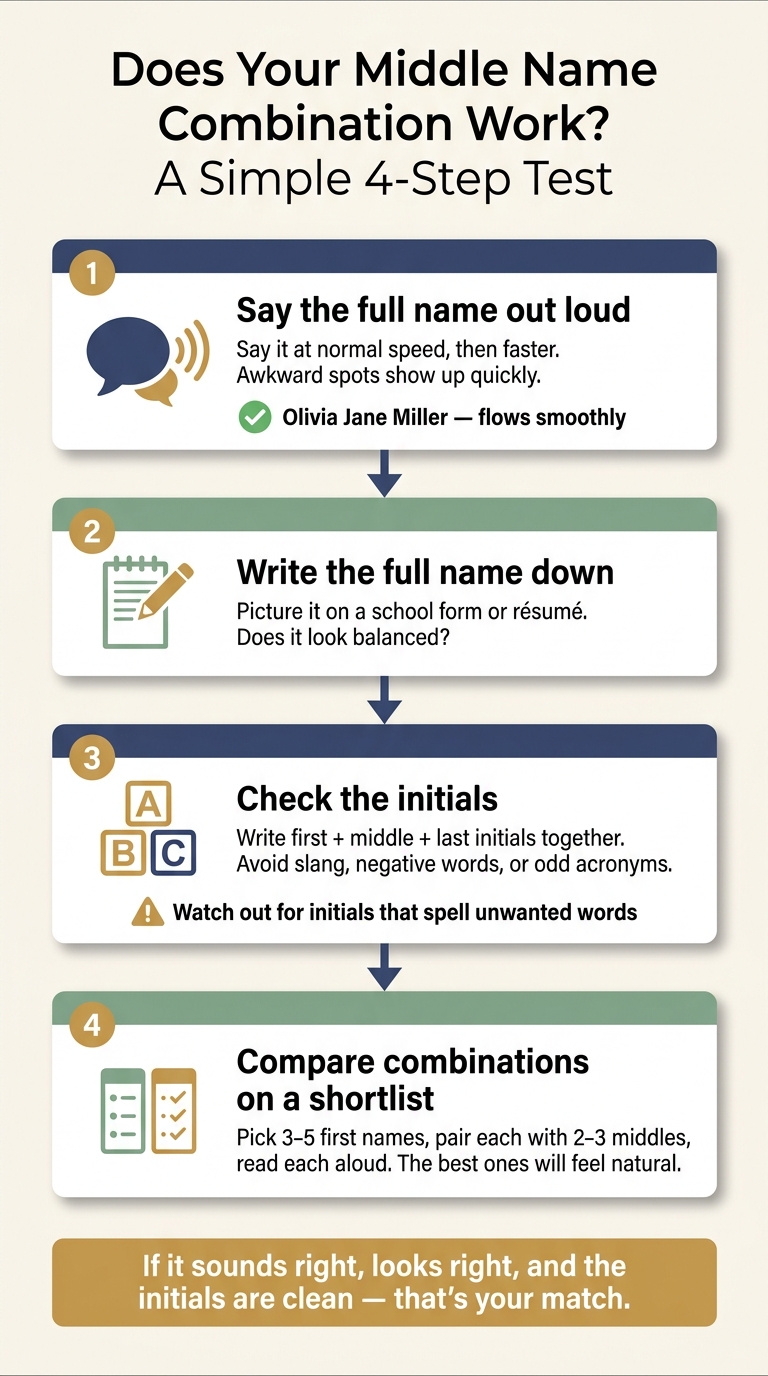
How to Pick the Perfect Middle Name: A 4-Step Test
Once you have a shortlist, use this quick test.
Say it aloud, write it down, and check the initials
Say the full name out loud at a normal pace, then say it again a little faster. Awkward spots tend to show up fast when the speed changes. For example, Olivia Jane Miller flows well because the longer first name moves neatly into a short middle name.
Then write the full name down. Picture it on a school form or a résumé. After that, write just the initials and make sure they don’t spell an unwanted word or acronym. If they do, switch in another middle name from your shortlist and check again.
If you’re still torn between two choices, put them next to each other and compare them directly.
Compare a few combinations side by side using a shortlist
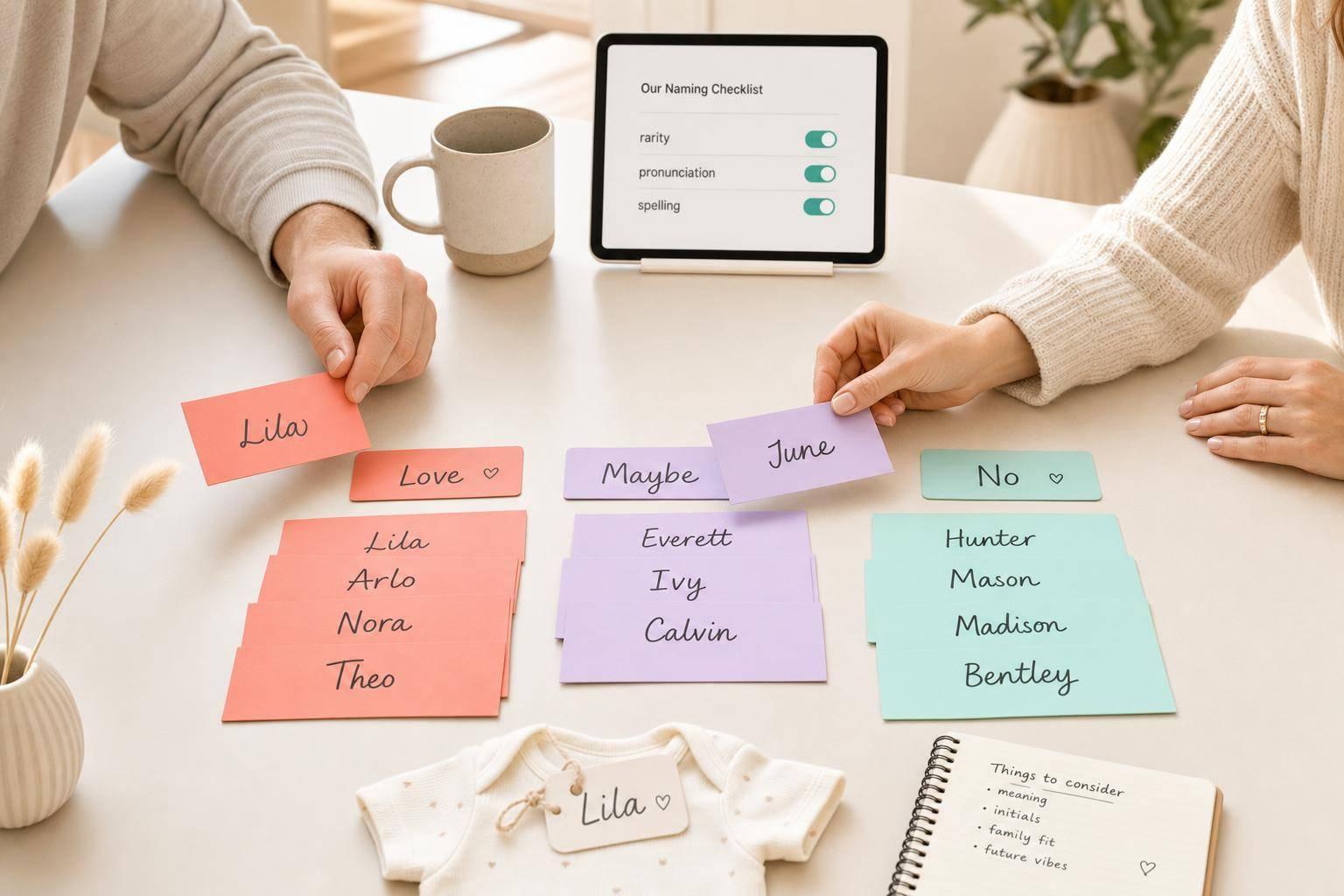
Set a small group of name combinations side by side and look at them as a set. Choose three to five first names you both like, match each one with two or three middle names, and read each full name out loud.
Some combinations will sound easy and natural. Others will feel a bit stiff or forced. Seeing and hearing that contrast usually makes the choice much easier.
Conclusion: The best middle name feels balanced and meaningful
A middle name doesn't need to match the first name perfectly. It just needs to work well with it. What matters most is that the full name sounds balanced and the initials look clean.
Meaning can matter more than style, especially with honor names, as long as the full name still feels easy to say.
Say the full name out loud. Write it down. Check the initials. If the name flows well and the initials are clean, that's a strong match. And if both checks pass, trust the names you and your partner love.
The best middle name is the one that fits the full name, carries meaning, and feels right to you.
FAQs
Can two long names still work together?
Yes - two long names can work well together if the full name has a smooth, balanced rhythm.
The best test is simple: say the whole name out loud and listen to how it flows. A long first name and a long middle name often sound better when paired with a shorter last name. But what matters most is the sound of the full name as a whole, not how each part feels on its own.
Should siblings’ middle names follow a pattern?
Whether siblings’ middle names follow a pattern is completely up to you. Some parents like using a pattern because it gives the names a shared family feel. Others would rather give each child a middle name that stands on its own.
If you decide to use a pattern, there are a few common ways to do it:
- Family honor names
- Nature-based names
- Matching initials
Or you can skip the pattern altogether and pick the first-and-middle name pairing that sounds best to you.
What if we love a meaningful name that sounds awkward?
You can still use it. Sometimes the fix is simple: change where the name appears.
A common move is to place the meaningful name in the middle and pair it with a first name that’s easier to say or just sounds better together. That way, you keep the meaning without forcing the full name to do too much work.
You can also test a different spelling or pronunciation if it makes the name flow better without changing what it means.