Many parents stop looking at top-name charts first and start with what already matters to them. That usually means books, songs, places, nature, family history, or shared values. The point is simple: a name often feels better when it comes with a story.
Here’s the short version:
- Top baby names still lead the charts, with names like Olivia, Sophia, Noah, and Liam staying common.
- Story-based names can surge fast. Arya reached the U.S. top 100 by 2019, and Cassian jumped 1,075 spots after book-series buzz. You can also use a checklist for finding rare baby names to discover unique options.
- Nature names keep growing, with picks like River, Rowan, Sage, and Luna standing out for many families.
- Family meaning does not have to mean copying a name exactly. Some parents keep the link through meaning or use the tribute in the middle-name spot.
- A short theme list helps cut stress. If you both agree on themes like music, travel, mythology, or roots, it gets much easier to sort names.
- Tools like NameHatch turn themes into a shortlist, with a free plan and paid options at $3/month or $12 for 6 months.
At its core, this comes down to one idea: pick a name that still feels right even without trend buzz. If the name connects to your life, your memories, or what you both care about, you’re usually starting in the right place.
My takeaway: I’d begin with shared themes, not giant lists. Then I’d test names for meaning, sound, and day-to-day use before making the final call.
Names feel generic: Start with what you love
Start with passions, memories, and values before you open a giant name list. That gives the search some direction. Instead of scrolling through names that all blur together, you begin with names that already mean something to you.
Books, songs, and stories can turn admired traits into names
Names from books, music, and stories tend to stick because they carry a feeling parents want to pass on. It’s not just about how a name sounds. It’s also about the trait, mood, or idea attached to it.
Arya, popularized by fantasy fiction, entered the U.S. top 100 baby names by 2019 following the success of Game of Thrones. Cassian rose 1,075 places in baby name charts following the popularity of the A Court of Thorns and Roses series. In both cases, the draw came from meaning as much as style.
Before you commit, do one simple thing: check the character’s full story before using their name.
That same thinking works beyond fiction too. Places, nature, hobbies, and family memories can all point you toward a name that feels more personal.
Places, nature, and life experiences can give a name a family-specific meaning
For parents who spent years stargazing, Luna can land very differently than it does on a popularity chart. Ivy might look like a simple nature name at first glance, but for one family it could bring back a hospital room, a favorite garden, or another place tied to a major family moment. That extra layer is what makes a name feel like yours.
Nature-inspired names like River, Rowan, Sage, and Luna have grown because they connect a child to something timeless and grounding. Meaning matters more than rarity.
Archer works in a similar way. It might reflect a love of archery, or it may just carry a crisp, confident feel that fits what parents want.
Some parents use that same idea with family history and focus on meaning instead of an exact copy.
Family traditions and heritage can add identity without feeling forced
When the story comes from family, the goal stays simple: keep the meaning, skip the clutter. Heritage naming doesn’t mean you have to use a family name exactly as it was. If a grandparent’s name feels dated, the meaning can still do the job. For example, honoring a relative named Peter - whose name means "rock" - by using a baby name meaning finder to choose a name with the same meaning keeps the connection alive without forcing an awkward fit.
Using a family name as a middle name is another practical option. It keeps the tribute in place without putting the full weight of a dated name on a child’s everyday life. Heritage naming can give a child a sense of belonging without making the choice feel stiff or forced.
sbb-itb-f13f980
Too many opinions and options: Use shared themes to narrow the list
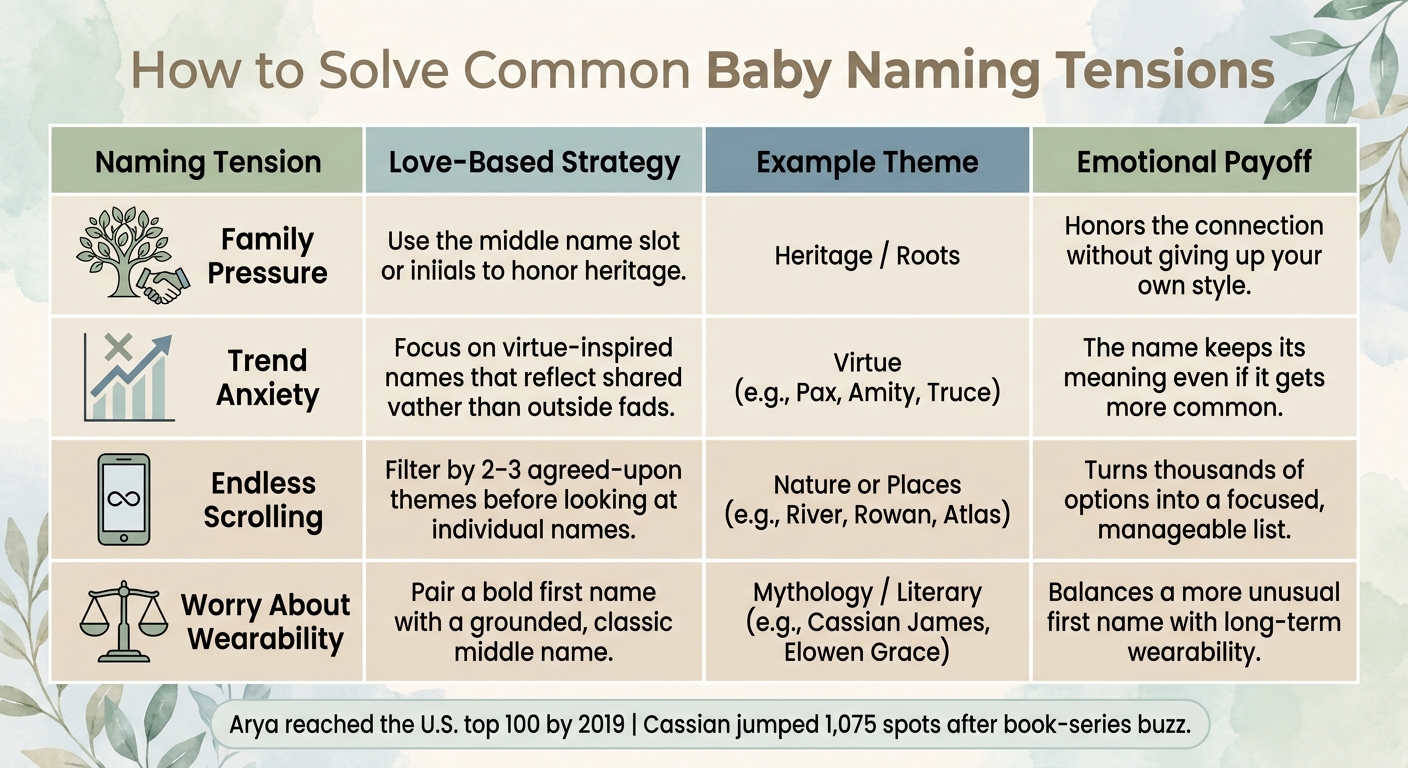
Naming Tensions & Love-Based Strategies: A Visual Guide
Once you announce a pregnancy, opinions tend to show up fast. Family, friends, even casual acquaintances suddenly have name ideas, strong preferences, and stories to go with them. And when that noise starts to drown out your own taste, naming your baby can feel draining instead of fun.
That’s why it helps to narrow the conversation early. Shared themes give you a simple filter. You can tune out the noise without losing the meaning you want the name to carry.
Start with shared themes before debating individual names
Don’t jump straight into arguing over name-by-name picks. Start by agreeing on two or three themes that matter to both of you. Nature. Travel. Family roots. Music. Mythology. Anything that connects to your life together.
That shift changes the whole conversation. Instead of, “I don’t like how that sounds,” you get, “Does this fit what we both care about?”
Dyer Oxley and his wife Nina named their son Clark to reflect the virtues they associate with Clark Kent. That kind of clarity makes the choice feel shared, not split down the middle.
Once you agree on the theme, it gets a lot easier to compare the names still on the table.
A simple problem-and-solution table to clarify what fits
Naming tension usually doesn’t go away by itself. But when you match each problem with a clear plan, it becomes much easier to handle.
| Naming Tension | Love-Based Strategy | Example Theme | Emotional Payoff |
|---|---|---|---|
| Family pressure | Use the middle name slot or initials to honor heritage | Heritage / Roots | Honors the connection without giving up your own style |
| Trend anxiety | Focus on virtue-inspired names that reflect shared values rather than outside fads | Virtue (Pax, Amity, Truce) | The name keeps its meaning even if it gets more common |
| Endless scrolling | Filter by 2–3 agreed-upon themes before looking at individual names | Nature or Places (River, Rowan, Atlas) | Turns thousands of options into a focused, manageable list |
| Worry about wearability | Pair a bold first name with a grounded, classic middle name | Mythology / Literary (Cassian James, Elowen Grace) | Balances a more unusual first name with long-term wearability |
Before you start browsing, write one sentence about what you want the name to mean. Then use those themes to build a shortlist around the names you both like.
You know what you love, but need names you both like: Build a shortlist with NameHatch
Once you’ve landed on a few themes, the next job is turning them into a shortlist you can both get behind. NameHatch helps shrink a big pool of ideas into a shorter, clearer list. That way, your search stays tied to what already matters to both of you.
Use filters to match names to your favorite themes and values
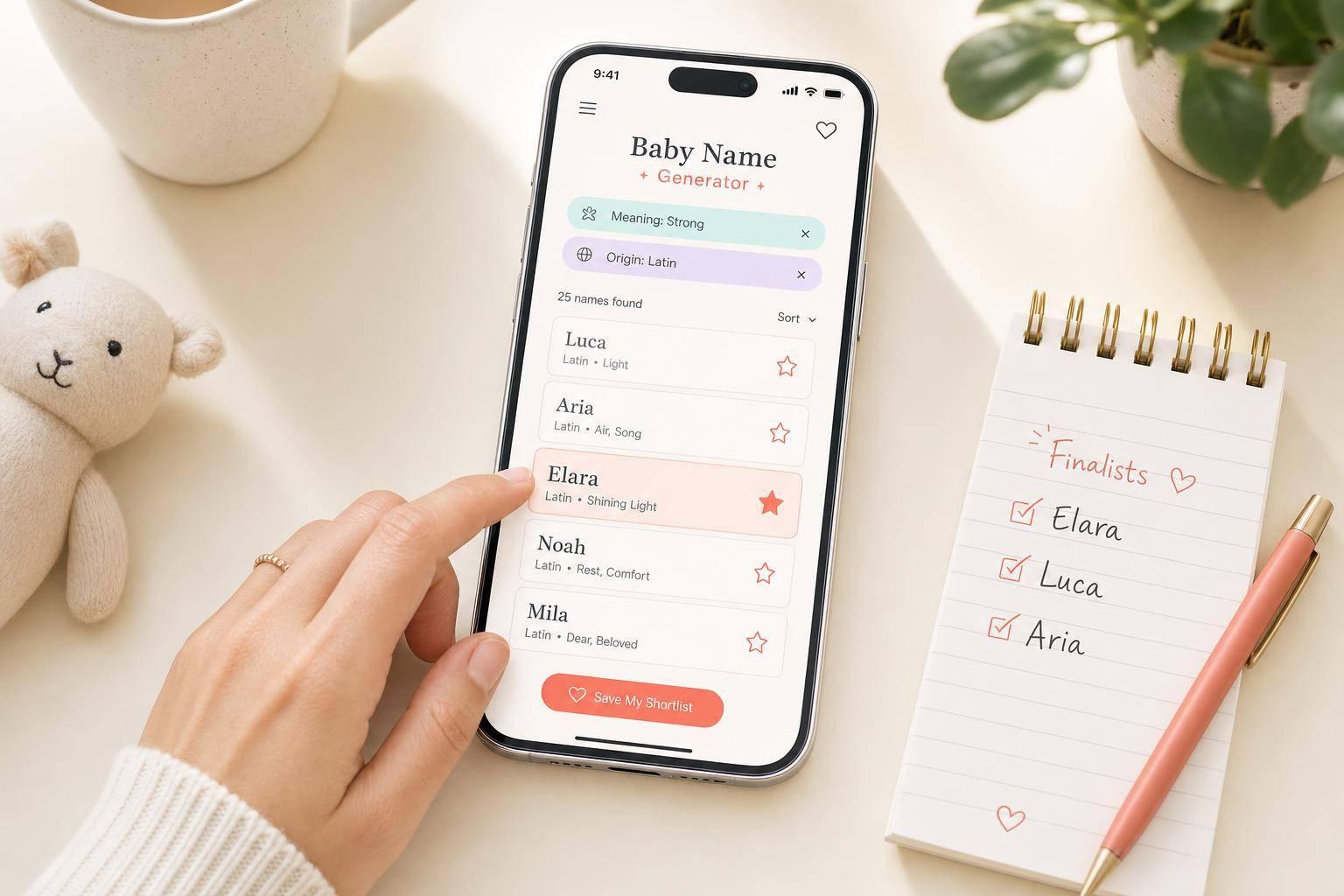
NameHatch uses AI filters to sort names by style, origin, and feel, so you can spend more time on options that line up with your taste. Premium theme filters like Nature-Inspired, Global, Mythical, and Unique narrow things down even more.
Say you love the night sky. A name like Luna may feel like a natural match. If you lean toward fantasy or mythology, names like Cassian or Rhys can help you zero in faster.
Swipe separately, match together, and focus on names with shared meaning
Once you’ve narrowed the theme, the next step is simple: find names you both like. Using baby name swipe apps works well for couples who want to look on their own before talking it through together.
Each partner swipes on their own device, and real-time matching shows the names you both picked. So instead of sorting through one person’s list at a time, you start with names that already have shared interest. Favorites also save across mobile and desktop, which makes it easier to pick back up later.
Choose the right plan for your naming timeline and budget
Pick the plan that fits your timeline and budget. NameHatch’s free plan includes 30 swipes and basic filtering. The Premium one-time plan at $12 for 6 months includes unlimited swipes, unlimited favorites, and advanced filtering. The Premium monthly plan at $3/month gives you short-term access during the final stretch.
If you want more time to keep searching, choose the option that fits how long you expect the process to take.
| Plan | Price | Best For |
|---|---|---|
| Free | $0/month | Testing and early discovery |
| Premium (Monthly) | $3/month | Short-term access during the final naming push |
| Premium (One-time) | $12/6 months | Longer-term planning throughout pregnancy |
Conclusion: Pick a name that reflects your story, not just a trend
Let meaning lead the way. A name tends to feel more personal when it grows out of your story, not just a dictionary definition. That’s why theme-driven names often land better than trend-driven ones.
Shared themes can give you a stronger place to start than a popularity list. If you’d still love the name without the trend factor, it’s probably a good fit. Once you know the theme, the hard part becomes choosing the shortlist together.
NameHatch helps turn those shared themes into a shortlist you can both use. The best name doesn’t need to be unusual. It just needs to mean something to you.
FAQs
How do we choose a name theme together?
Start with open communication and treat naming as something you build together, not something to win. A good first step is for each of you to share the passions, values, or stories you want the name to reflect. That could mean favorite books, a love of nature, or family traditions that still matter to you.
From there, look for common ground and talk about what sits behind each choice. Sometimes the name itself isn’t the whole story - the meaning tied to it is what makes it feel right. Once you have a shared shortlist, weigh each option based on its cultural resonance, emotional meaning, and how easy it will be to use in daily life.
How can we honor family without reusing an old name?
Honor family by focusing on the values, stories, or experiences that connect you to them, rather than using the exact same name again.
For example, you might pick a name linked to a place that matters to your family, a shared language root, a hobby a relative loved, or a trait they lived out every day. That way, the connection still feels personal and deliberate, but it also stands on its own.
How do we know if a meaningful name will age well?
Think about how the name will feel at every stage of life - childhood, the teen years, and adulthood. A good name should work in everyday moments, whether it’s shouted across a playground, typed onto a college application, or printed on a business card.
It also helps to say the full name out loud in a few different settings. Does it sound natural? Is the spelling easy to guess? Those small checks can save a lot of friction later.
If the first name feels bold or a little uncommon, pairing it with a classic middle name can help steady the whole combination.