Streaming platforms like Netflix and Hulu are influencing how parents name their children. Shows with popular characters - like Bridgerton's Penelope or Game of Thrones' Arya - are driving baby name trends, with some names seeing usage spikes of over 98% within a year of a show's release. However, not all names succeed. Fictional or unconventional names like Stranger Things' Eleven rarely gain traction, while names with historical or linguistic roots, such as Penelope or Ezra, tend to stick around.
Key takeaways:
- Popular Names: Penelope rose from #283 to #28 after Bridgerton, and Arya climbed from #413 to #162 due to Game of Thrones.
- Short-Lived Trends: Names like Daenerys and Khaleesi faded after negative associations with their characters.
- Global Influence: Streaming has introduced U.S. parents to names from international media, like Jin and Jun from K-dramas, which saw significant growth in 2025.
- Generational Shift: Millennials and Gen Z are leading this trend, fueled by binge-watching and faster cultural cycles.
Parents are balancing trendy names with timeless ones, often using AI tools like NameHatch to narrow down options. Streaming has accelerated the baby-naming process, blending entertainment with personal choices.
Data on Streaming-Driven Name Trends
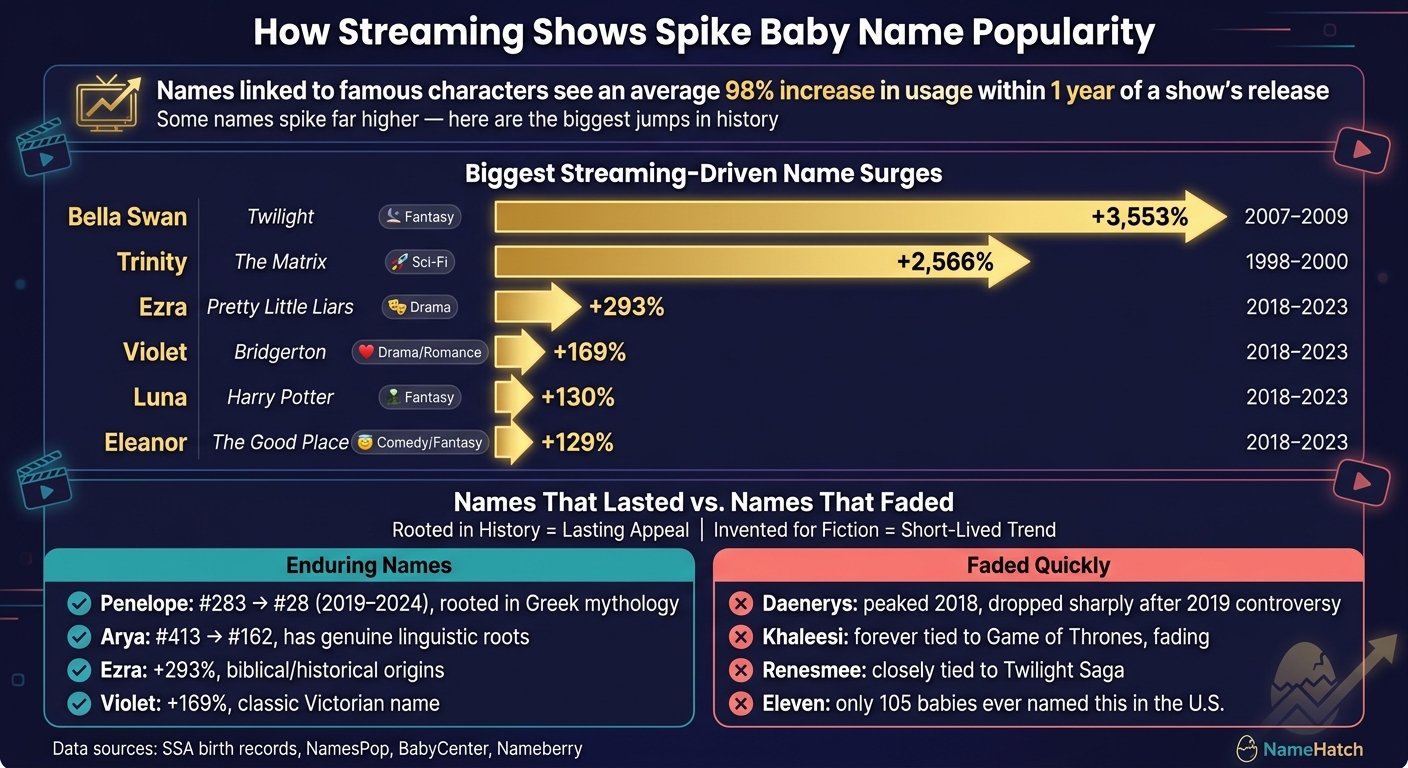
How Streaming Shows Spike Baby Name Popularity
Baby Names That Spiked After Streaming Shows
Streaming platforms have had a noticeable impact on baby name trends, with certain names experiencing remarkable popularity spikes. On average, names linked to famous characters see a 98% increase in usage within a year. Take Bella Swan from Twilight, for instance - her name skyrocketed by an astounding 3,553% between 2007 and 2009. Similarly, Trinity from The Matrix saw a 2,566% jump between 1998 and 2000.
Recent examples show the trend is alive and well. Netflix's 2022 hit, Wednesday, propelled the name Wednesday to peak popularity on the SSA charts in 2023, just months after the show aired. Actress Winona Ryder’s resurgence in Stranger Things led to a revival of Winona, with the number of newborn girls given the name rising from 37 in 2015 to 77 in 2017. Even supporting characters leave their mark: Violet from Bridgerton climbed 169% in the U.S. Top 100 between 2018 and 2023, while Ezra rose by 293% during the same timeframe.
| Name | Source | Popularity Change |
|---|---|---|
| Bella Swan | Twilight | +3,553% (2007–2009) |
| Trinity | The Matrix | +2,566% (1998–2000) |
| Ezra | Pretty Little Liars | +293% (2018–2023) |
| Violet | Bridgerton | +169% (2018–2023) |
| Luna | Harry Potter | +130% (2018–2023) |
| Eleanor | The Good Place | +129% (2018–2023) |
However, not every name from popular culture becomes a hit. Despite Stranger Things' immense popularity, only 105 babies in the U.S. have been named Eleven. Names that are too unconventional - like numbers or invented words - rarely gain traction in real-world naming trends.
These striking shifts highlight how entertainment influences personal choices, particularly baby names, and set the stage for deeper insights into naming patterns.
Correlation vs. Causation in Name Trends
While streaming undeniably boosts name trends, some names are already gaining momentum before shows debut. This phenomenon often ties back to the 100-Year Rule, which suggests names resurface in popularity roughly a century after their last peak. For example, Bridgerton's Eloise and Violet were poised for a comeback, having last been trendy in the 1920s. The show merely sped up the process.
These observations emphasize the role of streaming in accelerating trends rather than creating them from scratch.
How Genre Shapes Name Choices
The genre of a show also plays a big role in determining which names stick and which fade away. Fantasy and sci-fi series often introduce rare or invented names to the mainstream, but their staying power depends on linguistic authenticity. For example, Arya, which has genuine linguistic roots, has remained popular long after the Game of Thrones frenzy. On the other hand, Daenerys, a completely invented name, peaked in 2018 but declined sharply when the character's storyline turned controversial in 2019.
Period dramas like Bridgerton tend to produce names with lasting appeal. Names such as Daphne, Francesca, and Penelope already feel timeless and elegant, making them less tied to the show itself. As Abby Sandel, creator of Appellation Mountain, explains:
"Real life figures can be complicated, but fictional characters offer naming inspiration without as much baggage."
In contrast, sci-fi and supernatural genres often generate short-lived spikes. The Matrix's Trinity serves as a prime example of this fleeting trend. Interestingly, female character names see a much higher average increase in popularity - 162% compared to just 30% for male names.
sbb-itb-f13f980
Global and Cross-Cultural Naming Influences
How Foreign-Language Shows Expose U.S. Parents to Unfamiliar Names
Streaming platforms are doing more than just bringing entertainment into our homes - they're introducing U.S. parents to names they might never have encountered otherwise. Take the influence of K-pop and K-drama fandoms, for example. In 2025, the name Jin climbed 699 spots, and Jun jumped an impressive 1,397 spots in U.S. birth records. These shifts aren't just statistical quirks; they're evidence of a growing cultural exchange happening right before our eyes.
Names with established meanings and histories tend to travel the best. For instance, Arya was relatively obscure in Western naming circles until it gained popularity, not just because of a TV show, but because it already had deep roots in Indian culture. This authenticity gave it staying power, showing that names with genuine origins often resonate more broadly. What we're witnessing is a two-way exchange of naming traditions that’s reshaping trends on a global scale.
"Real etymology helps... Names with genuine linguistic history survive the fade of their source text better than invented ones." - NamesPop Editorial Team
How U.S. and Global Content Influence Each Other
This exchange isn’t one-sided. While U.S. parents are adopting names from global media, American shows have long been shaping naming trends abroad. Back in the '80s and '90s, shows like Dallas and Beverly Hills, 90210 exported names that symbolized wealth and aspiration. Today, however, the influence feels more reciprocal. Streaming platforms have created what researchers call a "linguistic ripple effect," where a character’s name can become a global symbol of strength, elegance, or even rebellion.
The Bridgerton phenomenon is a perfect example. In the U.K., Penelope rose from 539th in 1996 to 36th in 2024, while Violet leapt from 1,031st to 42nd during the same period. As Jamie Robinson, co-founder of BABAB!NG, explains:
"Bridgerton may spark the inspiration, but the appeal lies in names that will age well beyond the trend."
This illustrates how global media doesn’t just inspire fleeting trends - it can introduce names that feel timeless and enduring.
What U.S. Parents Should Consider When Choosing Global Names
While streaming platforms introduce parents to names from all corners of the world, choosing the right one requires thought. Phonetic accessibility is a big factor. Names that flow naturally in Korean or Spanish might face pronunciation challenges in an American classroom. If a name feels awkward to say, it’s unlikely to catch on, no matter how beloved the character is.
It’s also worth considering how a name might age. For example, Daenerys saw a sharp rise in popularity in 2018, only to plummet after the character’s controversial storyline. Robin Hilmantel, Senior Director of Editorial Strategy & Growth at BabyCenter, points out:
"The baby naming process has gotten so much more creative, while also sticking to long-held rules – like if a name is embroiled in controversy, we'll see it drop from the spotlight."
Finally, researching a name’s original meaning is crucial. A name rooted in real cultural history often carries a depth that fictional names can’t match. Plus, it’s less likely to lose its charm once the show or trend that popularized it fades away. Thoughtful consideration can ensure the name feels meaningful and enduring, rather than just trendy.
Who Is Most Influenced by Streaming When Naming Their Baby
How Millennial and Gen Z Parents' Streaming Habits Affect Name Choices
Millennials and Gen Z are leading the charge when it comes to baby names inspired by streaming platforms, and the numbers back it up. Streaming in the U.S. saw a massive 71% surge over a 12-month period leading into mid-2025. Netflix alone reported over 95 billion hours of content streamed in just the first half of 2025. With many in these generations now becoming parents, it’s no surprise they’re turning to their favorite shows for naming inspiration.
Streaming’s binge-release format is a big reason for this trend. Unlike traditional TV, where episodes are released weekly, streaming platforms drop entire seasons at once, creating a rapid cultural ripple effect.
"The streaming effect is faster. A Netflix show releases all at once; viewers binge it in a week; the cultural conversation peaks within a month. This accelerates the naming cycle compared to the week-by-week drip of traditional TV." - NamesPop Editorial Team
This generational shift lays the groundwork for understanding how other factors, like economic and regional influences, further shape naming trends.
Socioeconomic and Geographic Differences in Naming Trends
While generational habits drive the broader trend, economic and geographic factors add another layer. In 2025, many parents, feeling the pinch of financial pressures, gravitated toward aspirational names like Lux, Royce, and Rich, which saw a 52% rise in popularity. These names reflect a desire for success and status, cutting across regional divides.
Streaming also plays a role in expanding cultural horizons, making names from international shows more accessible to parents from all walks of life. For instance, names inspired by K‑dramas and K‑pop, such as Jin (up 699 spots) and Jun (up 1,397 spots) in 2025, have shifted from niche to mainstream, showing up in birth records across the U.S..
Do Streaming-Inspired Names Last or Fade Quickly?
The longevity of a streaming-inspired name depends heavily on its origins. Names with established linguistic or cultural roots often stick around long after the show that popularized them fades. Take Penelope, for example. Thanks to Bridgerton, it jumped from #283 in 2019 to #28 by 2024 - a rise of over 250 spots - while its Greek heritage helps it maintain staying power. Similarly, Ezra experienced a 293% increase between 2018 and 2023, and Violet climbed 169% during the same period.
On the flip side, names created specifically for fictional worlds often struggle to stay relevant. Examples like Khaleesi and Renesmee remain closely tied to Game of Thrones and The Twilight Saga, making them feel dated as their source material drifts out of the spotlight.
"Unlike Khaleesi and Renesmee, which will forever be tied to 'Game of Thrones' and 'The Twilight Saga,' 'Bridgerton' names feel unencumbered by this one television series." - Taylor Humphrey, Baby Name Consultant
The table below highlights how some streaming-inspired names have performed over time, illustrating the contrast between enduring names with historical roots and those created for the screen:
| Name | Source Show | Change (2018–2023) | U.S. Usage (2023) |
|---|---|---|---|
| Ezra | Pretty Little Liars | +293% | 8,437 |
| Violet | Bridgerton | +169% | 6,342 |
| Luna | Harry Potter | +130% | 7,811 |
| Eleanor | The Good Place | +129% | 6,739 |
| Maverick | Top Gun: Maverick | +97% | 6,962 |
Names that were already gaining traction - like vintage or classic options - tend to benefit the most from a streaming boost. These names often maintain their popularity long after the initial buzz fades.
"Shows like 'Bridgerton' don't create naming trends out of thin air - they amplify names that were already culturally primed for revival." - Taylor Humphrey, Baby Name Consultant
Choosing a Baby Name in the Streaming Era
Why Too Many Name Options Can Make Decisions Harder
The streaming era has brought an explosion of content - and with it, an overwhelming number of baby name ideas. Just consider this: Netflix alone logged over 95 billion hours of streaming in the first half of 2025. Each new hit show introduces names like Wednesday, Penelope, or Ezra, sparking inspiration for parents-to-be. But this flood of options can quickly spiral into a list of 50+ potential names, leaving many unsure of how to narrow it down. To cut through the noise, some parents are turning to technology for help.
How AI Tools Like NameHatch Help Parents Filter Name Options
AI tools are stepping in to simplify the baby-naming process. With half of Gen Z and millennial parents already using AI for daily tasks like meal planning or vacation prep, it’s no surprise that apps like NameHatch are gaining traction. NameHatch uses a swipe-based interface to learn your preferences in real time, filtering names by style, origin, vibe, and more. Couples can even sync their accounts and get alerts when they both like the same name. What could easily become a stressful back-and-forth turns into a fun, collaborative experience - whether the goal is to find a name inspired by a favorite show or something more classic.
Balancing Trendy Names With Timeless Ones
While managing the endless options is one challenge, finding the right balance between trendy and timeless names is another. Names with deep cultural or linguistic significance often stand the test of time, while those tied to a specific show or character might feel outdated down the line. A smart compromise? Use pop-culture-inspired names as middle names. As Pam Redmond, founder of Nameberry, puts it:
"You're forever married to the image of that name, that character, that actor. You might outgrow it. It might outgrow you. I personally would not do it. I might do it as a middle name."
This strategy lets parents pay tribute to a beloved character or fandom without locking their child into a name that might lose its appeal, ensuring the choice feels meaningful both now and in the future.
Conclusion: What Streaming Means for Baby Naming Today
Streaming has changed the way baby names gain popularity. The move from traditional weekly TV schedules to bingeable streaming releases has sped up how quickly names from the screen make their way onto birth certificates. As the NamesPop Editorial Team explains:
"The pipeline from streaming to birth record is faster and more measurable than ever before."
Some names with strong linguistic or historical roots continue to thrive. For example, Penelope climbed from #283 to #28 in just five years. On the other hand, names created purely for fictional worlds, like Khaleesi, often remain tied to their original context and struggle to gain widespread, lasting appeal.
This trend highlights more than just a preference for grounded names - it reflects a shift in parental priorities. Today, parents are drawn to names that align with the values and traits they admire, often influenced by the emotional bonds they form with characters on their favorite shows.
With a 71% increase in U.S. streaming usage between late 2024 and late 2025, the range of potential names has grown significantly. Tools like NameHatch make it easier than ever to sort through options and find names that resonate personally while standing the test of time. Streaming doesn’t just speed up naming trends - it blends modern technology with the enduring traditions of name selection.
FAQs
How can I tell if a show really caused a name’s rise?
When trying to figure out if a TV show impacted the popularity of a name, start by comparing Social Security Administration (SSA) birth data with the show's premiere and the timeline of the character's introduction. A noticeable jump in the name's use, especially in the year following the character's debut, can signal a connection. These spikes often match up with search trends or widespread buzz surrounding the show. However, experts point out that naming decisions are frequently subconscious and more about trends in style than direct inspiration from specific characters.
Will a streaming-inspired name feel dated in 10 years?
Names inspired by streaming shows might feel outdated in a decade, but it largely depends on their origin and how they resonate over time. Names with deep linguistic or historical roots tend to hold up better than ones crafted solely for a specific show. Sometimes, a name can become so common that it outgrows its original association - take Madison, for example. Since streaming trends often cater to niche audiences, the chance of a name feeling out-of-date is relatively small.
How can NameHatch help us pick a name we both like?
NameHatch simplifies the process of finding the perfect name while making it a fun, collaborative experience. With its AI-powered swipe interface, it suggests names tailored to your preferences - whether you're looking for a specific style, origin, or overall vibe. You can sync up with your partner, use filters to narrow down the options, and build a shared shortlist together. By aligning your preferences, NameHatch helps you both feel confident and connected when making the final choice.