A baby name poll should give you feedback, not make the choice for you. If I use one well, I keep the list short, ask a small group I trust, set clear rules, and treat the results as input only.
Here’s the full idea in plain English:
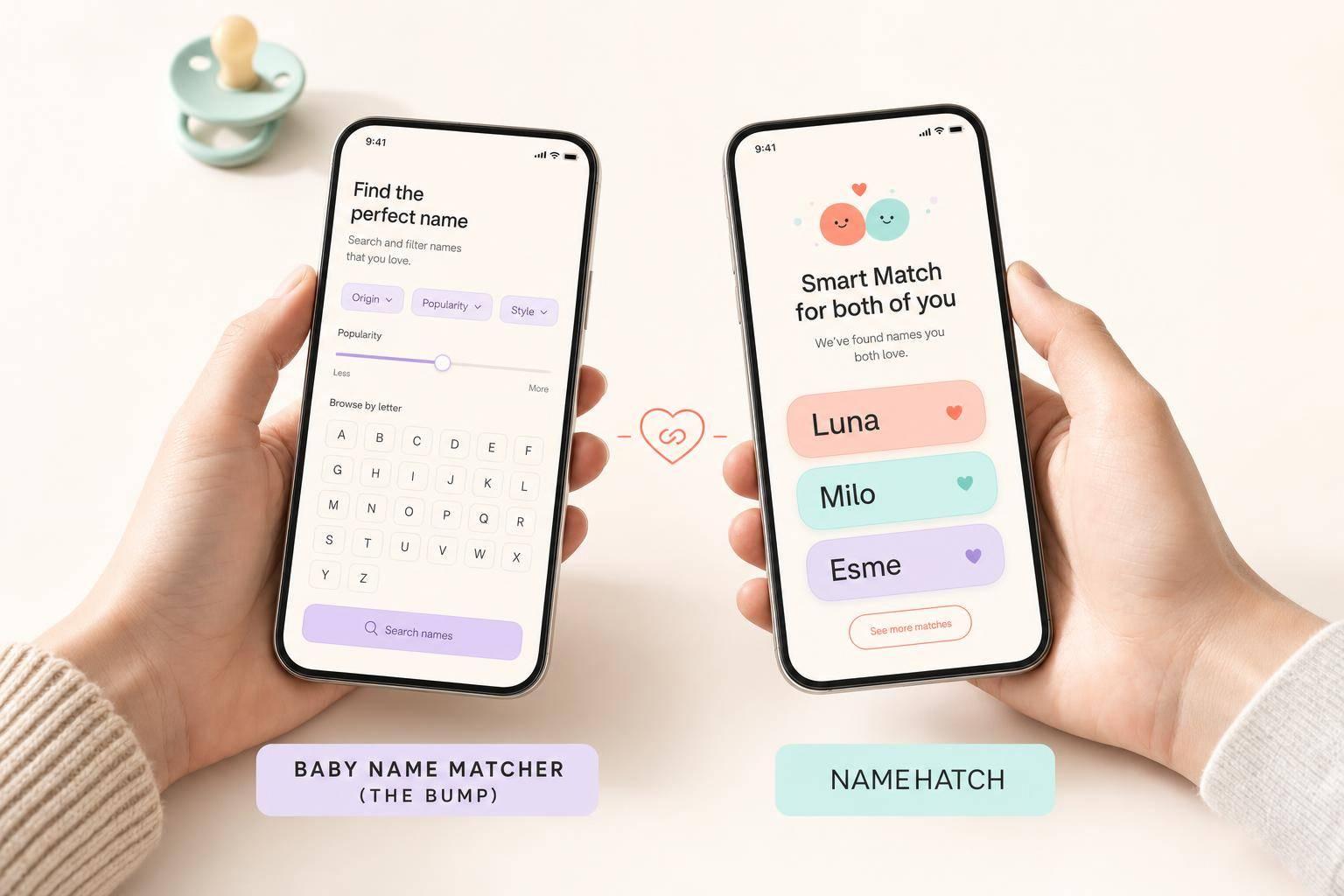
- I start by swiping baby names with my partner to find ones we already like
- I trim the list before asking anyone else
- I lock the spelling and the exact options
- I compare baby naming apps or pick a simple poll format that fits the list
- I send it privately to close family and friends
- I give people a firm deadline, like July 20, 2026, at 8:00 PM ET
- I stop new name suggestions and side debates
- I look for patterns, not just the top vote total
- I make the final call with my partner in private
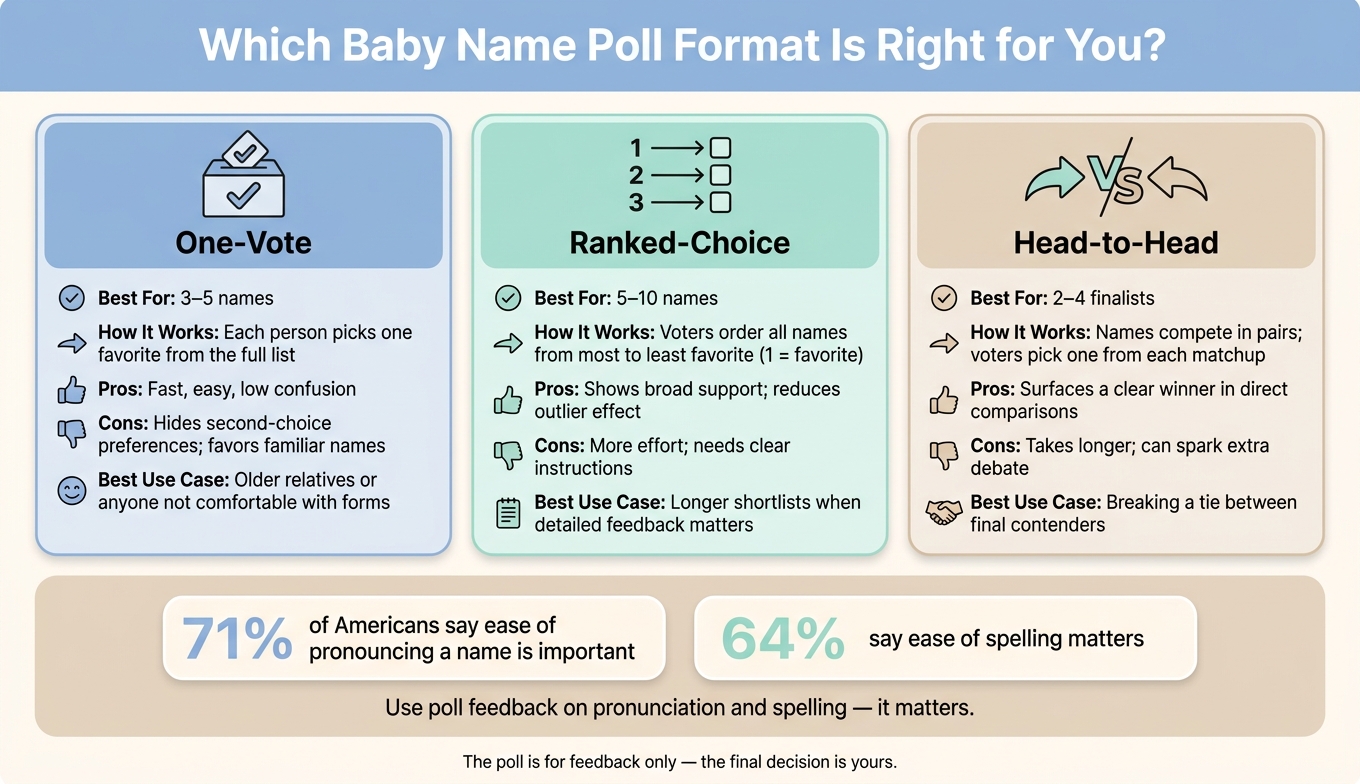
A few details matter more than most people think. The article suggests 5–10 names for a shortlist, or 3–5 full first-and-middle pairings if flow is part of the test. It also notes that 71% of Americans say easy pronunciation matters and 64% say easy spelling matters, so comments about confusion should not be brushed off.
If I want clean feedback, I also need to match the poll type to the job. A one-pick poll is best for a short list and fast replies. A ranked poll helps when I want to see backup favorites too. A head-to-head poll works when I’m stuck between just a few names.
| Poll type | Best for | Main upside | Main downside |
|---|---|---|---|
| One-vote | 3–5 names | Fast and simple | Hides second choices |
| Ranked-choice | 5–10 names | Shows broader support | Takes more effort |
| Head-to-head | 2–4 finalists | Helps break a tie | Can take longer |
Bottom line: the poll should stay small, private, and clear. I’m not asking people to name my baby. I’m asking them to help me spot what lands well, what feels off, and what may cause spelling or pronunciation issues later.
Build Your Shortlist Before You Send the Poll
Start by making your own list of names you genuinely love. Then combine both lists in a shared doc or app and narrow your list together before you send anything to family or friends. If you share too early, you'll spend more time fielding questions than reading useful feedback.
Once you have the shortlist, lock the list before the poll goes out. That means the exact names, the exact spellings, and the exact set of options.
Lock In the Names, Spellings, and Scope
Keep the poll to 5–10 names. That's enough to give people options without making the poll feel like homework on a phone.
Before you build it, confirm one official spelling per name and use that same version everywhere: in the poll, in the intro message, and in any follow-up texts. Don't include both Zoey and Zoë unless they are actually separate choices. If you split votes across spelling variants, the results get messy fast.
It also helps to decide upfront what the poll is covering:
- First names only if the middle name is already set or has sentimental weight
- Full first-and-middle combinations if rhythm and flow matter, like Lila Rose Johnson
If you go with full-name combinations, keep it to 3–5 pairings so people can compare them in a way that still makes sense.
Cut any name that isn't a serious contender. If one partner feels only so-so about a name, it probably doesn't belong in the poll. NameHatch can help both partners build a shared shortlist before you ask for votes.
Once the list is fixed, the next step is picking a poll format that fits the kind of feedback you want.
Tell Voters What Their Vote Actually Means
Add a short note at the top of the poll that says exactly what you're asking people to do. Are they picking one favorite? Ranking every name? Rating each one on its own? If you don't spell that out, people will guess, and the responses won't line up.
For a single-favorite poll, say something like: choose one name from the list below. Comments are welcome, but one vote only. For a ranking poll, ask voters to rank all names from 1 to the total number of options, with 1 as their favorite. Clear instructions help cut incomplete responses and make the feedback easier to compare.
Also say this plainly: the poll is for feedback only, not the final decision.
After that, set a deadline so replies don't drag on and become hard to manage.
sbb-itb-f13f980
Pick a Poll Format and Share It With the Right People
Baby Name Poll Formats Compared: One-Vote vs. Ranked vs. Head-to-Head
Once your shortlist is set, pick collaborative baby naming tools and formats that fit. That choice shapes who can answer fast and give feedback you can use.
One-Vote, Ranked, and Head-to-Head Formats Compared
The format you choose should match your list size and your audience’s comfort level, not just the option that seems most precise.
| Poll Format | How It Works | Pros | Cons | Best Use Case |
|---|---|---|---|---|
| One-vote | Each person picks one favorite from the full list | Fast, easy to understand, low risk of confusion | Misses second-choice preferences and can lean too hard toward familiar names | Small shortlist (3–5 names), older relatives, or anyone not comfortable with forms |
| Ranked-choice | Voters order all names from most to least favorite (1 = favorite) | Shows broad support, not just one strong favorite; cuts down the effect of one outlier | Takes more effort and needs a clear instruction line | Longer shortlists (5–10 names) when you want more detailed feedback |
| Head-to-head | Names go head-to-head in pairs; voters pick one from each matchup | Shows which names keep winning in direct matchups; can help surface a clear winner | Takes time with many names and can spark extra comparison | Narrowing down 2–4 finalists when you're genuinely stuck |
A simple way to think about it:
- One-vote works best when you want fast replies and almost no friction.
- Ranked-choice is better when your list is longer and you want to see more than a single favorite.
- Head-to-head makes sense when you’re down to a few finalists and need help breaking a tie.
Pick the format first. Then send it to the smallest group that can still give useful feedback.
How to Share the Poll Privately With Family and Friends
Keep the poll private and send it only to a small, trusted group. In most cases, that means immediate family and a few close friends. You want people who know you well and will respect your limits. This is especially helpful if you are trying to speed up your choice and manage family pressure.
A private group text usually works well. Sending it one-by-one by text can work even better if you want replies to stay separate. And if someone won’t open a link, give them a plain text-back option so they can still take part without any hassle.
Don’t post the poll in public. Also ask people not to share or forward it.
Set a Deadline and Ground Rules Before Votes Come In
Before votes start coming in, set the rules that keep the results clean. Once the poll is live, those rules should already be in place. If you wait until opinions start piling up, it gets messy fast. And trying to tighten things up in the middle of the chat can rub people the wrong way.
Give Voters a Clear Deadline and Response Rules
A 3–7 day window works well for most baby name polls. It gives busy relatives time to reply without dragging the decision out.
Write the deadline in plain language, and be specific. For example: Reply by July 20, 2026, at 8:00 PM ET. If your family is spread across time zones, add your time zone so nobody has to guess.
Before you send the poll, decide on some basic rules for resolving conflicts:
- Will late votes count?
- Can people edit their responses before the deadline?
- Do you want to lock responses as soon as they're submitted?
If you want tighter control, say so up front. For example: Responses can be edited until the poll closes; after that, only the final submission counts. That helps keep last-minute changes from muddying the results.
How to Set Boundaries Without Sounding Dismissive
Once the deadline is set, decide how you'll handle comments and pushback. Be clear that you want input, but the final decision is yours. That keeps the poll centered on feedback, not control.
If you're posting the poll in a group chat, ask people not to debate names or campaign for favorites. If someone has a strong reaction or starts lobbying for one name, keep your reply short and calm.
thanks for sharing your thoughts - we know not every name will be everyone's favorite
A brief response like that often ends the back-and-forth faster than a long explanation.
If people ask to add new names after the poll is already live, treat the shortlist as closed. You don't need a long defense. Just say:
We're keeping the shortlist closed.
That keeps the poll focused on clear feedback instead of turning into an open-ended negotiation.
Review the Results, Make the Final Pick, and Close the Poll
Once the poll closes, stop gathering votes and start reading what they mean. Go over the results together before you make any call. The vote total is just one clue. Use the poll to test your shortlist, not to let the crowd decide for you.
Look for Patterns, Not Just the Top Vote Count
Don’t focus only on which name got the most votes. Look for patterns instead: names that kept coming up, names that got lots of votes but also drew strong pushback, and comments about spelling or pronunciation. Then separate what’s popular from what actually fits.
Feedback on pronunciation and spelling matters because this name has to work in everyday life. If several people pointed out the same issue, pay attention. 71% of Americans say ease of pronouncing a name is important, and 64% say ease of spelling matters. That can shift the picture fast. A second-place name with steady, positive feedback may be a better pick than a first-place name that splits the room. Mixed reactions tell you something too - a name that gets equal parts love and resistance may bring more hassle than it’s worth.
After that, make the final choice privately using a baby name decision checklist.
Make the Decision Together and Let People Know
Make the call privately, just the two of you, after you’ve looked over the results. Check that you both feel good about the name - not that one of you is merely going along with it. Say the full first and last name out loud. Then write it exactly as it will appear on official documents.
Once that’s done, close the poll. Send a short thank-you note and move on. If sharing the vote totals would spark more debate or bruise feelings, keep them private. A simple note is enough: thank people for weighing in, let them know the poll is closed, and leave it there.
FAQs
What if my family strongly disagrees on the names?
When family members have strong, conflicting opinions, stop turning it into a debate. Move to a clear process instead. Set ground rules early, and include deal-breakers such as negative associations. That alone can take a lot of heat out of the conversation.
If you're using NameHatch, have each person swipe on names on their own. It makes the process feel less personal and keeps the focus on shared matches. From there, talk through why you like those names and lean on objective factors, such as spelling or meaning, to help make the final call.
Should I poll first names or full name pairings?
Polling full name pairings can help you catch flow issues with your surname, plus unintentional initials or awkward abbreviations.
Test each first name with your last name early, especially if one part is very long or very short. Once you have a shortlist, say the full name out loud as a final check.
How do I handle late votes or new name suggestions?
Set a clear voting deadline right from the start so the poll doesn’t drag on forever. That one small step keeps things moving and saves you from a messy, never-ending back-and-forth.
If someone sends a name after the deadline, you don’t have to add it. Just say, kindly and simply, that your shortlist is already finalized.
And if you and your partner both love a late suggestion? Use NameHatch to sync and review it fast, without reopening old debates.