Choosing your baby's name can feel overwhelming, especially with social media influencing trends and opinions. Platforms like Instagram and TikTok push trendy names, create comparison pressure, and even shape how names are perceived online. This guide helps you avoid those pitfalls by focusing on:
- Understanding social media's impact: Algorithms and viral trends often drive naming popularity. You can use a baby name trend analyzer to see if a name is truly timeless or just a passing fad.
- Creating a personal naming framework: Define your values and preferences before seeking inspiration.
- Setting boundaries: Limit who you share your name choices with to avoid unsolicited opinions.
- Protecting your child's identity: Be mindful of what you share online to safeguard their digital footprint.
How Social Media Shapes Baby Name Trends
Social media has completely changed how parents choose baby names. What used to be a personal decision discussed around the kitchen table is now influenced by algorithms, influencers, and viral trends.
How Algorithms Push Name Trends
Every time you scroll through platforms like Instagram or TikTok, the algorithm tracks what catches your attention and offers up similar content - including baby name ideas. Influencer announcements, curated name lists, and aesthetic posts can quickly elevate certain names to the spotlight.
Take Nova, for instance. It climbed to #39 for girls in 2024, with 5,044 babies given the name. Much of its rise is tied to its visual and cultural appeal on social media. Similarly, Addison, now at #68 with 3,327 births, owes its surge in popularity to TikTok star Addison Rae. These names didn’t gain popularity gradually over years - they skyrocketed, thanks to the culture of these platforms.
"Influencer names have the shelf life of a trending hashtag." - Motherly
But algorithms aren’t the only force at work. Social media comparison also plays a big role in shaping naming decisions.
The Effect of Social Comparison on Naming
Scrolling through birth announcements or name reveal videos can spark a cycle of comparison. A name that initially feels fresh and special may suddenly seem overused when you see it everywhere online. This often pushes parents to lean toward trendy names rather than ones with personal significance.
Yuji Ogihara, a researcher from Aoyama Gakuin University, points out that giving a child an uncommon name is often seen as an expression of individuality. However, when everyone looks to the same platforms for "unique" inspiration, it creates a paradox. Parents think they’ve found something original, only to realize it’s trending across the country.
"Names, once private and local, have become public and performative. They are no longer just spoken in kitchens and classrooms; they're printed on sweatshirts, hashtagged in birth announcements, and embedded in online search engines from day one." - BeenVerified
This shift toward public and performative naming can feel at odds with the personal meaning many parents want a name to hold.
Sharenting and Your Child's Digital Footprint
The rise of "sharenting" - where parents share their child’s life online - has added another layer of complexity to naming. A publicly shared name becomes part of a child’s digital footprint, shaping how they’re perceived before they even have a say in it.
There’s also the subtle influence of social media branding. Some parents may unconsciously pick names that work well as hashtags or align with their family’s online aesthetic. By keeping the naming process private, at least initially, you can avoid these pressures and give your child the freedom to shape their own identity later. A name should be more than a trend or a hashtag - it’s the foundation of your child’s story.
sbb-itb-f13f980
Set Your Own Naming Values Before Going Online
The best way to avoid the influence of social media when choosing a name isn’t sheer willpower - it’s being prepared. If you decide what you want in a name before diving into apps or scrolling through feeds, outside opinions are less likely to sway you.
Build a Personal Naming Framework
A naming framework is essentially a set of personal rules you create before starting your search. Research shows that 73% of parents prioritize family heritage when picking a name, while 41% focus on uniqueness over tradition. Understanding where you stand - or finding a balance between these priorities - can save you a lot of time and second-guessing.
Start by identifying your non-negotiables - the deal-breakers that immediately rule out certain names. These could include ensuring the name works in multiple languages, avoiding names in the current top 10, or making sure initials don’t spell something embarrassing (like A.S.S.). It’s also helpful to agree on a general style: Classic (like James or Charlotte), Modern (such as Nova or Aria), or Exotic (like Caspian or Soren). This keeps everyone on the same page.
"Intentional naming is about alignment between what you want to communicate and what the name actually communicates." - The Name Report
Use Clear Values to Stay on Track
Defining your values upfront can turn the overwhelming task of naming into something more straightforward. A great way to start is by writing down your core intention for the name in one clear sentence. For instance, "We want a name that reflects my grandmother’s Irish heritage and feels professional." This intention becomes your guide - when a trendy name pops up online, you can quickly check if it aligns with what’s most important to you.
Another useful strategy is the "no-questions-asked veto" rule. Each partner gets a set number of names they can reject without needing to explain why. This can save you from endless debates and keep the process moving smoothly.
Think About How the Name Will Hold Up Over Time
A name isn’t just for the baby years.
"A name that's adorable at age two should also work at age forty-two." - Sarah's Verse
Before settling on a name, imagine how it will fit into different stages of life. Picture it on a school roster, a college application, or a professional email signature. Say it out loud in public - if it feels awkward to yell across a playground, it might not be the best choice. Writing out the full name can also help spot potential issues with pronunciation or spelling that could become frustrating later.
Names tied to fleeting trends, influencers, or pop-culture moments often lose their appeal quickly. On the other hand, a name with personal significance - whether tied to your family’s heritage, a meaningful story, or a cherished value - is more likely to stand the test of time.
Set Boundaries Around Social Media Input
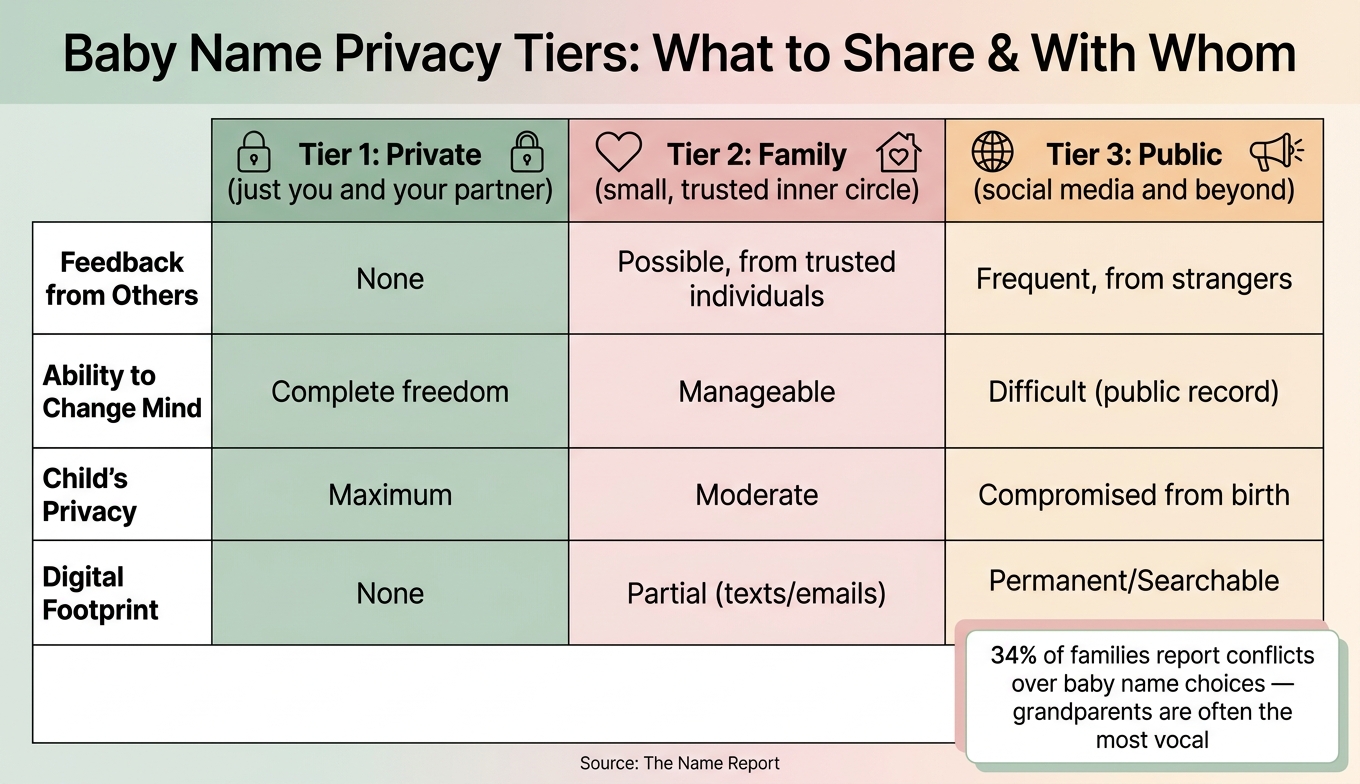
Baby Name Privacy Tiers: What to Share & With Whom
Once you’ve established your baby name decision checklist, it’s time to decide which parts of your process stay private and who you’re comfortable sharing them with.
Decide What to Share Online
Sharing a shortlist of names can spark debates, while announcing your final choice usually limits feedback. Sophie Kihm of Nameberry explains:
"Parents who go into the birth with a long list of contenders are more likely to wish they chose a different name than parents deciding between two or three names."
To avoid unnecessary scrutiny, consider adopting the "Done Deal" approach. This means waiting until after your baby is born to reveal the name. It keeps your options open and reduces public criticism before the name is officially recorded on the birth certificate.
Once you’ve determined what you’re comfortable sharing, the next step is deciding who gets access to your naming process.
Create a Privacy Plan for Your Baby's Name
To manage conversations and control feedback, think about creating clear sharing tiers. These tiers can help you decide who gets to know what:
- Private: Just you and your partner.
- Family: A small, trusted inner circle.
- Public: Social media and beyond.
Here’s a breakdown of how these tiers might look:
| Dimension | Tier 1: Private | Tier 2: Family | Tier 3: Public |
|---|---|---|---|
| Feedback from Others | None | Possible, from trusted individuals | Frequent, from strangers |
| Ability to Change Mind | Complete freedom | Manageable | Difficult (public record) |
| Child's Privacy | Maximum | Moderate | Compromised from birth |
| Digital Footprint | None | Partial (texts/emails) | Permanent/Searchable |
If you decide to share with a Tier 2 group, set clear expectations. For instance, you might say, "We’re sharing this with you, but we’d appreciate it if you kept it private." This approach can also prevent others from using your chosen name for their own children.
How to Handle Unwanted Opinions
Even with boundaries in place, unsolicited opinions are almost inevitable. About 34% of families report conflicts over baby name choices, with grandparents often being the most vocal. Having a few polite but firm responses ready can be helpful, such as:
- "We love it. It’s the right name for us."
- "Thanks for the suggestion, but we’ve already decided."
The Name Report emphasizes:
"Power/control criticism needs boundaries, not debate. You don't need to convince your family the name is good. You need to be clear that this is your decision to make."
Criticism doesn’t need to turn into a debate. Stand firm unless someone raises a legitimate concern, like an awkward meaning in another language or initials that spell something unfortunate. By focusing on personal values rather than outside opinions, you can stay confident in your choice and keep the process meaningful.
Use Private Tools Instead of Public Opinion
Once you've set your boundaries for choosing a name, it's time to move the process into a private space. While it might be tempting to turn to social media for feedback, doing so can create unnecessary distractions - especially before you're fully confident in your choice.
Why Private Collaboration Tools Are Better
The main issue with crowdsourcing baby name ideas online isn’t the feedback itself - it’s the timing. Sharing a name too early opens the door to opinions that might shake your confidence in a name you genuinely love. By keeping the process private, you give yourself the freedom to make a decision without outside interference.
Private tools also help you and your partner focus on shared preferences instead of getting stuck in endless debates. The Namekin team explains it well:
"The couples who find names most easily are the ones who approach it as a discovery process rather than a negotiation. You are looking for the overlap in your tastes, not trying to win an argument."
These tools allow you to center the decision on what matters most to you, rather than being swayed by what’s trending online.
How NameHatch Simplifies the Process
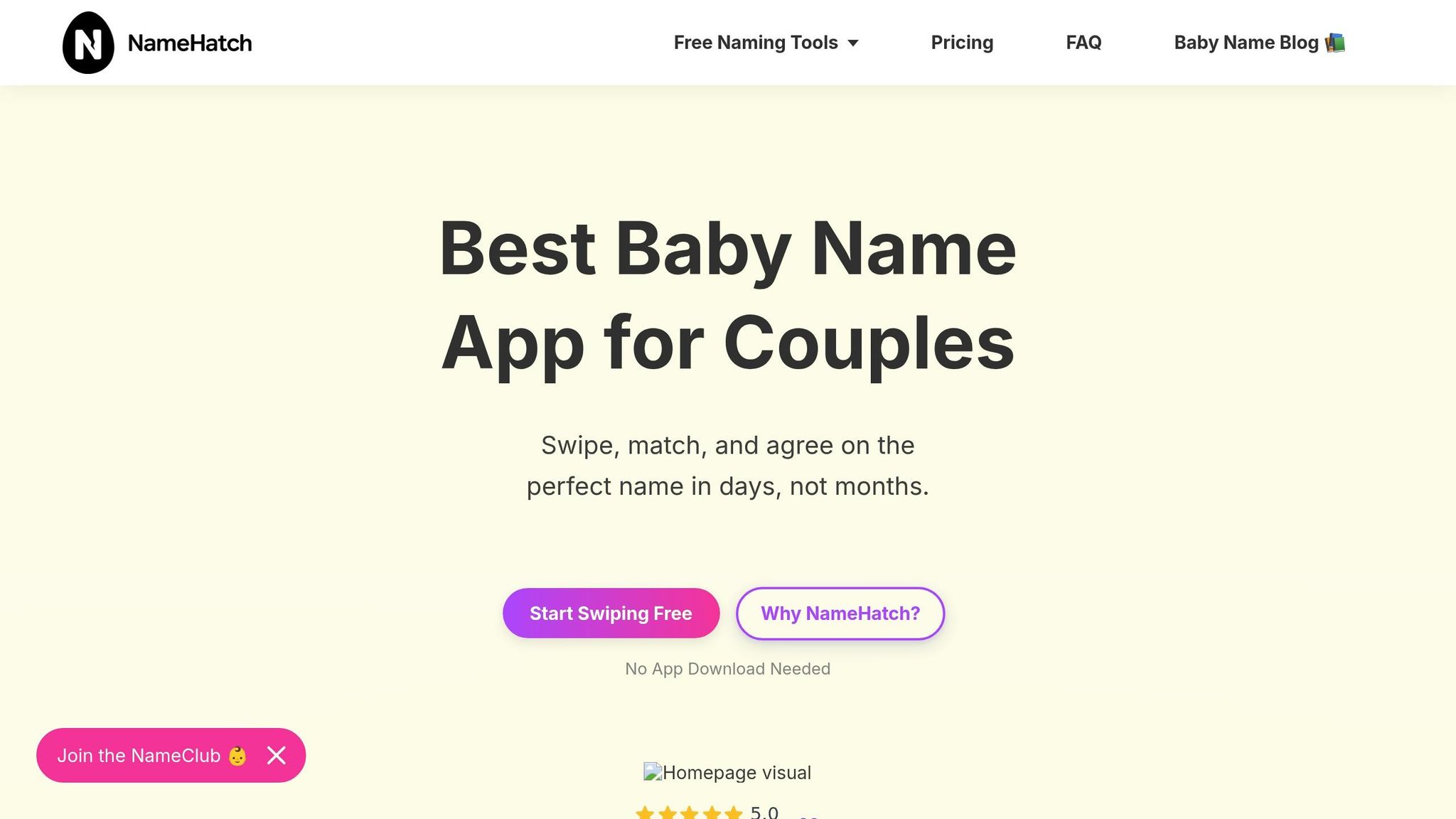
NameHatch offers a private and stress-free way to explore names. Its swipe-based interface lets each partner browse independently, revealing only the names you both like. This avoids unnecessary disagreements while keeping things fun and collaborative. The app also uses AI to tailor suggestions to your preferred style - whether you lean toward timeless classics, modern picks, or something else entirely.
For even more precision, premium filters let you narrow down options by categories like Nature-Inspired, Global, or Mythical names. It’s accessible on both mobile and desktop, with basic features available for $0, and advanced options starting at $3/month or $12 for six months.
This focused, private approach ensures you can confidently choose a name before sharing it with others.
Start Offline, Then Share When You’re Ready
Begin by defining your non-negotiables offline - things like cultural heritage, how the name works with your last name, or specific spelling preferences. Use a private tool like NameHatch to build a shortlist and only share your choice when you’re completely sure of it. This way, your decision stays true to your values and preferences.
Protect Your Child's Identity When Sharing Their Name Online
Once you've chosen your child's name, the next step is safeguarding their identity online. Deciding how much personal information to share is just as important as the name itself.
What Oversharing Can Cost Your Child
Sharing a baby's full name alongside details like their birthdate, location, or recognizable landmarks creates a digital footprint that can last forever. This opens the door to potential risks, like identity theft. Since most minors don’t have credit histories tied to their Social Security numbers, they’re particularly vulnerable. As Leah Plunkett, a faculty member at Harvard Law School, explains:
"Kids' Social Security numbers, when combined with date of birth, name and address, are often good targets for identity theft."
But the dangers don’t stop there. Photos of young children have even been used to train facial recognition software. Once this information is out there, it’s nearly impossible to fully erase it.
Simple Steps for Safer Online Sharing
A good rule to follow is the "Holiday Card-or-Less" rule: only share what you’d feel comfortable sending on a holiday card or showing to someone like your boss.
Here’s how you can put that into practice:
- Use nicknames or initials instead of full names.
- Avoid posting exact birthdates on social media.
- Double-check that your social media accounts are set to private.
- Regularly review and delete posts that might share too much.
It’s also wise to set boundaries with family and friends. A simple request like "We’re sharing this privately, so please don’t post it" can help keep your child’s information within your control.
These small actions go a long way in setting the foundation for your child to eventually take charge of their own digital identity.
Give Your Child Control Over Their Own Story
As your child grows, giving them a say in their online presence is key. Leah Plunkett highlights why this matters:
"If the world is figuring out significant things about who they are online and making projections about who they're going to be, it can undercut their ability to figure that out for themselves."
Start by involving your child in decisions about what to share. Even asking something as simple as "Are you okay with me posting this?" reinforces that their story is theirs to tell. Protecting their digital identity isn’t just about safety - it’s a way to show them respect.
Conclusion: Choose a Name That Reflects What Matters to You
Naming your child is a highly personal experience, yet social media often turns it into a public spectacle. The key is tuning out that noise to make a decision that feels right for you. By defining your values, setting boundaries, and keeping outside opinions at bay, you create the space needed to select a name that truly reflects your family's story. This guide has focused on helping you avoid fleeting trends so you can preserve that personal meaning.
Simple strategies, like the 40-Year Test or visualizing the name on a school form, can help you rely on your instincts rather than outside pressures. With these tools in hand, you’re better equipped to streamline the naming process in a way that feels deliberate and meaningful. Understanding how long it takes to choose a baby name can also help you manage expectations and reduce stress.
For a private and focused approach, consider using NameHatch. Its swipe-based interface allows you and your partner to explore names independently before coming together to create a shared shortlist. This keeps the process intimate and free from the distractions of social media polls or unsolicited opinions in comment sections. It aligns perfectly with the privacy and authenticity this guide emphasizes, letting you make the decision together, on your terms.
The name you choose will accompany your child through every stage of life - from school rosters to job applications and beyond. Protecting that choice from passing trends ensures it holds meaning for years to come. As the NamesPop Editorial Team wisely puts it:
"A name becomes right when it feels right to the people who will say it every day for the rest of their lives." - NamesPop Editorial Team
FAQs
How can I tell if a name is just a social media trend?
To identify a social media-driven trend, consider whether the name gained traction because of a celebrity, influencer, or a viral moment. These trendy names often lose their appeal just as quickly as they rise. Here's a tip: Would you still feel drawn to the name if you hadn’t encountered it online? Names rooted in history, personal meaning, or deeper connections tend to have lasting appeal.
When should we tell family or post our baby’s name online?
When it comes to sharing your baby’s name, there’s no universal rule - it’s all about what feels right for you. Some parents choose to share the name early to generate excitement, while others wait until the baby is born to avoid unsolicited opinions or pressure from others.
If you’re still deciding, tools like NameHatch can help you and your partner privately narrow down your options. And if you prefer to keep the name under wraps, it’s important to set clear but kind boundaries. Let friends and family know you’ll reveal the name once the baby arrives, and most will respect your decision.
How can we share our baby’s name without risking privacy?
Keeping your baby's name under wraps until they’re born can be a smart way to safeguard your privacy. It helps you sidestep unsolicited opinions, potential judgment, or even the risk of someone else using the name. When people ask, a polite but firm response like, “We’re keeping it a surprise until the baby arrives,” works well. Also, avoid posting the name on social media or using personalized signs in photos. This prevents leaving a lasting digital trail tied to your child before they even get a say.