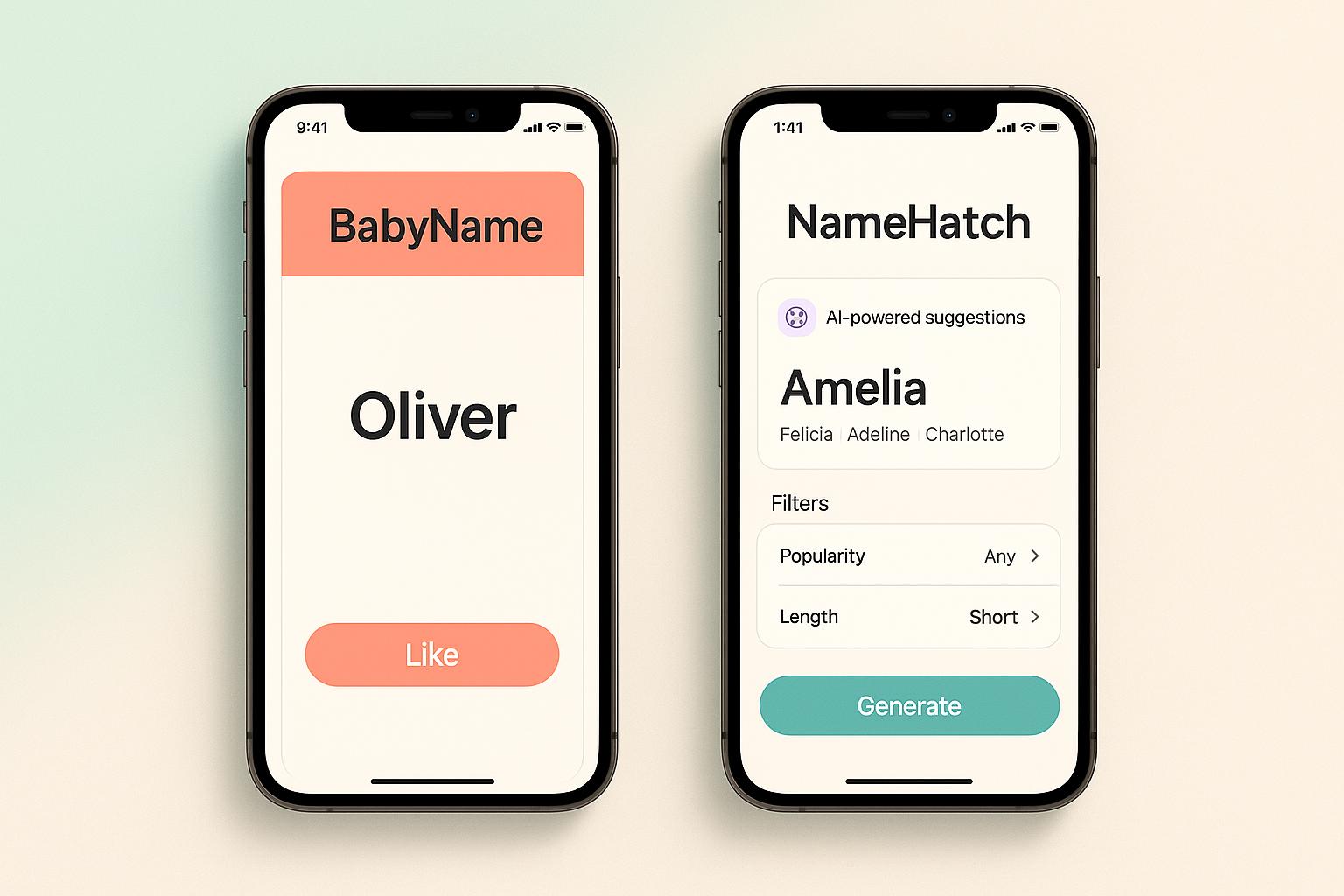
Choosing a baby name has evolved. Parents now rely on apps, AI tools, and digital platforms to simplify decision-making, prioritize creativity, and even secure domain names for their child's future online presence. This shift reflects how technology is reshaping parenting priorities, particularly for Millennials and Gen Z.
Key insights:
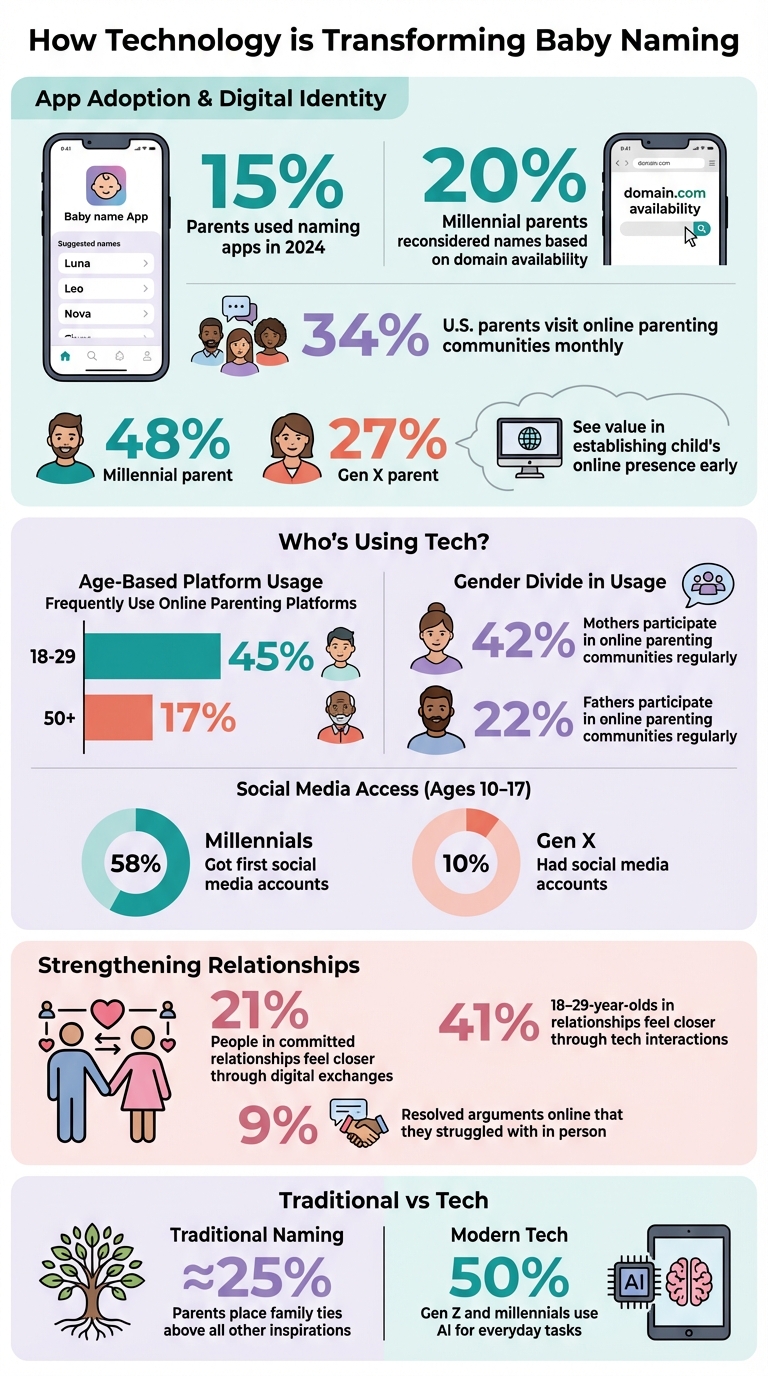
- 15% of parents used naming apps in 2024, surpassing pop culture influences.
- 20% of Millennials reconsidered names based on domain name availability.
- Apps with swipe-based features and AI-driven suggestions reduce stress and make collaboration easier.
- Tools like NameHatch offer personalized recommendations, partner syncing, and filters for style or themes like "Soft" or "Mythical."
For today's parents, naming isn't just about tradition - it's about personalization, efficiency, and building a child's digital identity.
How Parents Use Technology for Baby Naming: Key Statistics and Trends
Study Overview: How Couples Use Technology for Baby Names
Modern parents are transforming the baby-naming process with the help of technology. Research has delved into areas like digital identity, AI-driven personalization, and how partners collaborate during this significant decision. One study from the University of Texas at San Antonio involved 46 in-depth interviews with U.S. Mexican-origin parents, focusing on how identity and power dynamics shape collaborative naming choices. Another academic approach used game theory to analyze the strategies behind baby naming. Together, these studies shed light on emerging trends and behaviors.
A survey conducted by GoDaddy and OnePoll, which included 2,000 parents (split evenly between Millennials and Gen X), highlighted generational shifts in parenting priorities. For instance, 20% of Millennial parents admitted to reconsidering a baby name if the corresponding domain name wasn’t available - marking a departure from traditional naming practices tied to family heritage or sentimental value. Melissa Schneider, a Trends Expert at GoDaddy, explained:
"Parents today are claiming their child's name and online identity to make sure that they're set up for success down the line".
The survey also revealed that 48% of Millennial parents see value in establishing their child’s online presence early, compared to just 27% of Gen X parents. Additionally, 58% of Millennials got their first social media accounts between ages 10 and 17, while only 10% of Gen X parents had similar experiences during that age range. These findings underscore the growing influence of digital tools in shaping parenting decisions, including naming.
Further studies explored how couples use technology in the naming process. Apps with swipe-based functionality and real-time syncing between partners have turned what was once a solitary task into an interactive experience. However, the research also highlighted that women often take on the majority of decision-making responsibilities, reflecting traditional gender roles in collaborative choices.
Key Trends in Technology Use for Baby Naming
Growth of Baby Name Apps and AI Tools
The way parents choose baby names has transformed significantly, moving away from traditional books to mobile apps and AI-driven tools. Now, parents can explore databases with over 30,000 names, complete with details like popularity, origins, and even celebrity connections. Many apps have adopted swipe-based interfaces, making the process feel less like a chore and more like a fun, interactive experience. Couples can swipe left to dismiss a name or right to save it, turning what was once a long, tedious search into a quick and engaging activity.
AI has added a new layer of customization. Tools like ChatGPT are being used to create unique, influencer-style names that aren't found in conventional databases. Abby Sandel, the creator of Appellation Mountain, shared her thoughts on this trend:
"We love to talk about parents using AI tools to come up with influencer-style, one-of-one names for their children".
Despite the buzz, many parents remain hesitant. Isolde Quirante, Assistant Editor at The Bump, pointed out:
"While expectant parents may dabble with baby name generators, they've yet to fully warm up to the idea of using advanced tech in their final baby-name decision-making".
This cautious approach often stems from a concern that AI-generated names may lack the personal or familial significance of traditional names. Still, these tech-driven tools are shaping the features that modern parents value most.
Features Couples Prefer Most
Today's parents are looking for tools that simplify decision-making and reduce conflicts. One popular feature is real-time partner syncing. Apps now allow both partners to swipe independently, and when both like the same name, they receive a "Match Alert." This feature helps streamline the process and avoids unnecessary disagreements. Grace Draznin, Junior Editor at Today's Parent, highlighted the benefits:
"Baby name apps are a wonderful creation that can alleviate some of the baby-naming stress from parents".
Another sought-after feature is smart filtering. Instead of scrolling through endless lists alphabetically, parents can filter names by categories like style or vibe - think "Soft", "Strong", or "Modern." Other options include themes like Nature-Inspired, Mythical, or Ancient. Some apps even let users check if a name's corresponding domain is available, which could be handy for parents thinking about their child's digital presence. These tools also provide insights into popularity trends, meanings, and unique metrics like political or professional associations linked to certain names.
Usage Statistics from the Study
Recent survey data highlights how technology is reshaping baby-naming habits. In May 2025, the Pew Research Center surveyed 3,054 U.S. parents with children aged 12 and under. The findings revealed that 34% of parents visit online parenting communities at least once a month to share experiences and seek advice. Interestingly, mothers are more active in these spaces, with 42% participating regularly, compared to just 22% of fathers. Among parents with children under five, this number jumps to 47%.
Age also plays a significant role in how parents adopt technology for baby naming. Among parents aged 18–29, 45% frequently use online parenting platforms, while only 17% of those aged 50 and older do the same. This generational divide mirrors broader trends in AI adoption. For example, half of Gen Z and millennials already use AI for everyday tasks like fitness tracking and travel planning, and now they're extending these habits to baby naming. Another factor is the rise in U.S. streaming usage, which increased by 71% over the past year, helping parents discover trending names online.
How Technology Improves Couple Collaboration
Real-Time Partner Syncing and Matching
Modern baby name apps have completely changed how couples collaborate, thanks to features like real-time partner syncing. With these tools, one partner can start a naming session and invite the other via a unique link, allowing both to explore the same name database simultaneously. Each partner can swipe through names independently, and when both swipe right on the same name, they receive an instant match notification confirming their shared choice.
This approach eliminates the hassle of comparing separate lists or debating over names one partner has already rejected. Instead, couples can focus on a shared shortlist. Jeremy, the founder of NameHatch, shared his perspective:
"I had no idea naming would be so hard... we built NameHatch to help couples build a better name list, discover hidden gems, and land on a name they love, confidently".
Beyond simple matching, AI-driven personalization takes things a step further. By analyzing a couple's swiping patterns, the system suggests names that align with their mutual style preferences - whether that's Classic, Modern, or Nature-Inspired. This feature acts as a "relationship saver", reducing disagreements and keeping discussions centered on names both partners like. The result? A smoother, faster decision-making process.
Making Decisions Faster and Easier
Technology has made the baby-naming process much quicker and more efficient. What used to take weeks can now be done in under 30 minutes, thanks to swipe-based interfaces and smart filtering options. Couples can align on a specific vibe - like Soft, Strong, or Mythical - before they even start browsing. Filters also allow them to narrow down names by cultural origin, starting letters, or other preferences, saving time and effort.
AI doesn't just match names; it refines suggestions based on evolving preferences. Couples can revisit their swiping history and update their choices as their ideas shift throughout the pregnancy. This adaptability ensures that the process stays relevant and efficient.
Less Stress, More Enjoyment
One of the most significant benefits of these tools is how they turn what could be a stressful task into an enjoyable experience. The swipe-based interface adds a playful, game-like element to the process, making it fun and interactive.
Interestingly, 21% of people in committed relationships say digital exchanges have made them feel closer to their partner, and 9% have resolved arguments online that they struggled to settle in person. By allowing partners to swipe privately and only see names they both like, these apps help minimize conflict and keep discussions positive and focused on shared excitement. For younger couples, the impact of technology is even more pronounced - 41% of 18-29-year-olds in serious relationships report feeling closer to their partner through tech-mediated interactions. This highlights how digital collaboration not only simplifies the naming process but also strengthens the bond between partners.
How AI Personalizes Baby Name Suggestions
AI-Powered Name Matching
AI tools are reshaping how parents choose baby names by sifting through countless options using inputs like gender, origin, syllable preferences, and even categories such as Classic, Modern, Soft, Strong, Nature-Inspired, Global, Mythical, or Unique.
Thanks to natural language processing (NLP), parents can skip endless dropdown menus and simply describe their ideal name in plain text. Phrases like "strong but rare" or "soft and ethereal" allow the AI to interpret these descriptions and generate tailored suggestions. The process becomes even more interactive as couples swipe left or right on names, enabling collaborative filtering to refine recommendations based on shared preferences.
This shift toward AI-driven personalization aligns with broader trends. By 2025, 60% of millennials reported using AI tools to streamline workplace tasks, and half of Gen Z and millennial users rely on AI for everyday activities like fitness tracking and travel planning. Baby naming is now another space where couples are embracing smart, personalized solutions.
While AI excels at narrowing down options, the final decision still requires a human touch.
Balancing AI Suggestions with Personal Choices
Even with AI’s efficiency, parents need to balance algorithmic suggestions with their own values. As noted in a Yahoo Life report:
"While they agreed that GenAI definitely helps to narrow down choices, they also felt that no machine can replace the human touch that goes into pinning down the perfect name".
AI can suggest names based on style or "vibe", but it’s up to parents to test each name aloud and check initials to avoid unintended meanings or awkward combinations. Additionally, verifying meanings in different languages or cultural contexts ensures the name reflects the intended significance.
The real power of AI lies in simplifying the overwhelming process of scrolling through endless name lists, giving couples the freedom to focus on personal and cultural elements. Filters for specific origins or heritage can be combined with family traditions, honor names, or spiritual considerations. This hybrid approach - where AI handles the heavy lifting and parents make the final call - delivers the best results. Tools like NameHatch combine smart algorithms with the flexibility to honor what matters most to each family.
sbb-itb-f13f980
Technology vs. Traditional Naming Methods
Pros and Cons of Tech Tools
When it comes to naming, traditional methods often lean on legacy and emotional connections, while tech tools prioritize personalization, digital identity, and collaborative decision-making. For instance, nearly 1 in 4 parents place family ties above all other inspirations when choosing a name. On the other hand, technology-based tools appeal to factors like domain name availability, with 20% of Millennial parents reconsidering names if the domain isn’t available.
Each method has its strengths and challenges. Traditional naming fosters emotional bonds and honors family heritage, but it can also stir family conflicts or create gendered imbalances, where one partner shoulders the emotional labor to meet familial expectations. Meanwhile, tech tools simplify the process with features like AI-driven matching and real-time syncing between partners. However, they come with drawbacks, such as over-reliance on algorithms that might emphasize uniqueness over cultural or familial significance.
| Feature | Traditional Methods | Technology-Based Tools |
|---|---|---|
| Primary Motivation | Family heritage and emotional connections | Personalization, uniqueness, and digital utility |
| Decision Process | Emotional effort and navigating family dynamics | AI-driven matching and collaborative swiping |
| Pros | Builds deep emotional meaning; strengthens family bonds | Convenient; reduces stress; ensures digital compatibility |
| Cons | May lead to family conflicts or gendered power imbalances | Algorithm dependence; risks less culturally grounded choices |
These differences show that combining both methods can offer a more balanced and thoughtful approach to naming.
Combining Technology with Traditional Methods
Instead of sticking to just one approach, many parents are now blending traditional methods with tech tools. A hybrid strategy allows couples to use AI tools to filter names based on specific cultural roots or family traditions while still incorporating personal or spiritual elements. For example, apps can sort names by heritage filters, and parents can then add honor names or other meaningful considerations to the mix.
This combination takes care of the tedious work - like scrolling through endless name lists - while preserving the emotional depth of the process. Parents can swipe through AI-generated suggestions that match their style or preferences, then cross-check the finalists against family expectations, cultural relevance, and even how the name sounds when spoken. The result? A carefully curated shortlist that balances personal significance with practical considerations, blending modern efficiency with timeless values.
Case Study: How NameHatch Simplifies Baby Name Choices
Features Built for Modern Couples
NameHatch was created out of founder Jeremy's personal frustration while naming his son. Tired of clunky apps filled with confusing features and constant upgrade prompts, he decided to design an app that truly meets the needs of modern couples looking for a stress-free way to choose baby names together.
The app's swipe-based interface makes building a shortlist quick and intuitive - no endless scrolling required. Each partner can swipe privately on their own device, and when both select the same name, they get an instant Partner Match Alert, making decision-making easier. What makes NameHatch stand out is its AI-powered personalization. Couples can describe their ideal name in their own words, and the AI generates tailored suggestions. For added flexibility, users can filter names by style - like Classic, Modern, Soft, or Strong - or dive into niche categories such as Nature-Inspired, Global, Mythical, or Unique. This thoughtful design reflects research showing that parents value tools that adapt to their preferences while making collaboration simpler.
The app also offers flexible pricing to suit different needs. The free plan includes 30 swipes and basic filters, while premium plans unlock unlimited swipes and advanced features. Couples can choose between a $7 monthly subscription or a six-month plan for $29, which offers a 30% discount. Plus, new users can try premium features for one month free with the code TRYHATCH.
These features don’t just simplify the process - they transform what can be a stressful decision into an enjoyable and collaborative experience.
Success Stories from NameHatch Users
Feedback from users highlights the app's real-world impact. Jeremy’s own experience underscores why NameHatch works:
"I had no idea naming would be so hard, especially for a boy. Other baby name apps felt outdated, confusing, and pushy with upgrades that didn't even make sense. So we built NameHatch to help couples build a better name list, discover hidden gems, and land on a name they love, confidently." - Jeremy, Founder, NameHatch
The app’s compatibility with both desktop and mobile devices ensures couples can browse and collaborate whenever and wherever it suits them - whether during a quick lunch break, winding down before bed, or waiting for an appointment. NameHatch turns a daunting task into a smooth, shared journey.
Conclusion: The Future of Baby Naming with Technology
Gone are the days when choosing a baby name meant flipping through worn-out books or scribbling endless lists. Today, couples are turning to digital platforms powered by AI, reshaping how this timeless tradition unfolds. This evolution highlights just how much technology is influencing even the most personal decisions.
Modern parents aren’t just looking for random name lists anymore - they want something that reflects their individual styles, whether that’s Classic, Nature-Inspired, Soft, or Mythical. Platforms like NameHatch cater to this demand by blending AI-driven suggestions with swipe-based discovery, making the process not only easier but also more enjoyable. It transforms what could be a stressful task into a fun, shared experience.
As we look ahead, the future of baby naming will likely focus on reducing disagreements, offering more tailored options, and fostering collaboration. With technology becoming a bigger part of parenting decisions, tools like NameHatch are set to play a central role, helping couples make this special choice with ease, confidence, and a little less stress.
FAQs
How does technology influence the emotional side of choosing a baby name?
Technology has reshaped the emotional journey of picking a baby name, giving parents-to-be more options and tools than ever before. With online databases, social media polls, and AI-powered apps, couples now have instant access to an endless stream of name ideas. What used to be a more private decision has become an interactive and, at times, collaborative experience. While this wealth of choices can make it easier to move away from traditional or family-specific names, it can also feel a bit overwhelming.
AI tools, like name generators, can sometimes introduce subtle biases or make the process feel less personal. On the other hand, apps like NameHatch aim to make the experience more enjoyable by offering couples a way to explore name suggestions together in a relaxed, playful environment. By blending structure with creativity, technology is helping modern parents navigate the emotional process of finding the perfect name with a little more ease and confidence.
Why do Millennials prioritize securing a domain name when choosing a baby name?
Millennials are putting a modern twist on baby naming by considering domain name availability. For many, a child’s digital footprint is seen as a key part of their future, and locking down a unique domain early on gives their child a head start in creating an online identity.
This trend highlights how today’s parents are leaning into technology to set their kids up for success in a world where personal branding and a strong online presence matter more than ever.
How do AI tools help couples discover the perfect baby name?
AI tools make choosing a baby name much easier by offering suggestions tailored to your specific preferences. They take into account factors like your favorite name style, background, desired meanings, and even practical things like how easy the name is to pronounce.
Some apps go a step further by letting couples sync their preferences. You can filter through options together and create shared shortlists, simplifying the process of finding a name that feels perfect for both of you. This approach not only saves time but also ensures the names suggested are meaningful and relevant to your needs.