When you hear a name like "Emily" or "Darnell", do you subconsciously make assumptions? Research shows that names often trigger implicit bias - unconscious judgments that influence how children are treated in schools, on playgrounds, and in other social settings. Here’s what you need to know:
- What is implicit bias? It’s an automatic, unconscious association that affects decisions and actions. Studies reveal that even those who consciously value equality can exhibit these biases.
- Names as labels: Names provide quick clues about someone's background and can activate stereotypes. For example, teachers may unknowingly expect less from children with names tied to minority groups.
- Impact on kids: Biases tied to names can shape a child’s confidence, friendships, and academic performance. Over time, these effects can influence their identity and opportunities in adulthood.
- What parents can do: While you can't eliminate bias completely, you can choose names thoughtfully and teach your child about empathy and diversity to help them navigate these challenges.
Names carry weight, and understanding their influence is the first step in addressing the biases they can trigger.
Research on Implicit Bias and Names

How Name-Based Implicit Bias Affects Children: Key Statistics
Studies reveal that names can unconsciously influence how adults perceive and evaluate children, often triggering implicit biases.
Yale Study on Preschool Teachers' Bias
In September 2016, Walter Gilliam and his team at Yale University's Edward Zigler Center in Child Development and Social Policy conducted research involving 135 preschool teachers. The study presented teachers with scenarios that differed only by the names of the children. Some names, like Jake and Emily, were typically associated with White children, while others, such as DeShawn and Latoya, were linked to Black children.
When no background information was provided, teachers' evaluations of behavior were shaped by racial expectations associated with the names. Adding context about challenging home environments increased empathy - but only when the teacher and child shared the same race. In cases where the teacher and child were of different races, the added context often led to harsher judgments.
The study also incorporated eye-tracking technology during video observations of children. Even when no misbehavior occurred, both White and Black teachers focused more on the Black boy in the videos. Specifically, 42% of teachers identified him as needing the most attention, compared to 34% who focused on the White boy. As Gilliam aptly put it:
"Implicit bias is like the wind. You can't see it, but you sure can feel its effects".
Discipline recommendations also varied significantly. Black teachers tended to recommend stricter, exclusionary discipline for all children compared to their White counterparts, holding Black students to particularly high standards. This aligns with broader trends in preschool discipline: Black children make up 19% of public preschool enrollment but account for 47% of suspensions.
Research on Racial Categorization in Children
Implicit bias isn't limited to adults - children's ability to categorize by race plays a role in how biases develop. In June 2017, Peipei Setoh and colleagues at Nanyang Technological University studied 158 Chinese and Indian children in Singapore, aged 3–7, using a preschool-friendly version of the Implicit Association Test (IAT). The research found that majority Chinese children displayed significant bias favoring their own race. Importantly, a child's ability to accurately group faces by race predicted their level of implicit bias.
This suggests that implicit bias begins with social categorization. Children first learn to classify people into groups before forming biased associations. Notably, while racial categorization was linked to implicit bias, it often had little connection to explicit bias, which is shaped more by conscious socialization and parental influence.
Bias in Online Education: Instructor Perceptions
Implicit bias extends into higher education, particularly in online learning environments where names often serve as the primary identifier. In 2015, Wendy Conaway and Sonja Bethune at Ashford University explored this phenomenon by studying 147 online instructors. Using the Brief Implicit Attitudes Test (BIAT), they assessed responses to stereotypical names - Jamal and Tyrell for African American students, Maria and Javier for Hispanic students, and Steven and Jennifer for Caucasian students. The test revealed measurable biases based on name associations.
This is especially relevant in online settings, where instructors lack visual cues and form impressions largely from names alone.
Together, these studies highlight how name-based biases influence perceptions across various stages of education, from preschool to college. They provide valuable insights into how early biases shape social interactions and influence identity development over time.
sbb-itb-f13f980
How Name-Based Bias Affects Children's Development
Names carry weight - sometimes far more than we realize. For children, a name can shape friendships, influence classroom interactions, and even impact future self-esteem. When names come with stereotypical associations, they can affect both day-to-day experiences and long-term growth in surprising ways.
Social Dynamics in Play and School Settings
Teachers often make unconscious assumptions about children based on their names, which can influence how they interact with and evaluate students. A 2005 study by David N. Figlio revealed that children with stereotypical names tended to underperform compared to their siblings. Figlio explained:
"Teachers may use a child's name as a cue for parental education, leading to lower expectations for those with stereotypical names".
These lowered expectations can subtly shape how children are treated in the classroom, creating a ripple effect on their academic performance and confidence.
Beyond the classroom, names also influence social dynamics among peers. Names often signal group membership or social class, which can affect how children are perceived and treated. For instance, children with names that cross racial or ethnic boundaries may find themselves ridiculed or labeled as outsiders. A CNN profile highlighted the experience of a white woman with a "Black-sounding" name, who frequently faced ridicule and had to prove her identity.
These early social experiences can leave lasting impressions, influencing how children see themselves and their place in the world.
Long-Term Effects on Confidence and Identity
The impact of name-based bias doesn’t stop in childhood - it follows individuals into adulthood, shaping their self-esteem and identity over time. Names are deeply tied to how we view ourselves; as researchers have noted, they are a "central aspect of the self-concept". When children face bias tied to their names, it can chip away at their confidence and sense of self.
In response to discrimination, some individuals choose to "whiten" their names by anglicizing them. While this might help them navigate certain social or professional spaces, it often comes at a personal cost. A 2017 study by Xian Zhao and Monica Biernat found striking evidence of this bias. Emails sent to faculty at top U.S. universities received a 62% response rate when signed by "Alex", but only a 52.8% response rate when signed by "Xian." Among associate professors, the disparity was even starker: 39.4% agreed to meet with "Alex", compared to just 17.5% for "Xian".
This pressure to alter or hide one’s name can erode pride in one’s racial or ethnic heritage. For example, Chinese students who adopted anglicized names reported lower self-esteem, which negatively affected both their mental and physical health. The effects of name bias can even extend into the job market. Between May 2019 and 2021, researchers found that job applications with distinctively Black names received 2.1 percentage points fewer callbacks compared to those with white names.
What begins as subtle bias in childhood can snowball into larger challenges later in life, underscoring the profound role that names play in shaping identity and opportunity.
How Parents Can Reduce Name-Based Bias
Understanding how names shape children's experiences is just the beginning. Parents can take practical steps to minimize bias, from carefully considering names to fostering empathy and understanding at home. These choices can have a lasting impact.
Choosing Names with Awareness
Naming a child is deeply personal, but it’s worth considering how a name might be perceived in different contexts. Research shows that names act as social category labels. This doesn’t mean abandoning cultural or family traditions - it’s about making an informed choice.
For many bicultural families, the decision can feel like a balancing act: honor cultural roots with a traditional name or choose an anglicized name to reduce potential discrimination. Both options come with trade-offs. While an anglicized name might shield a child from some biases, a heritage name can strengthen their connection to their identity and culture. Monica Biernat, a psychology professor at the University of Kansas, captures this complexity:
"Names are vital signifiers of identity and tools for communication. They may convey the wishes and desires of parents and reflect important gender, racial, and cultural associations".
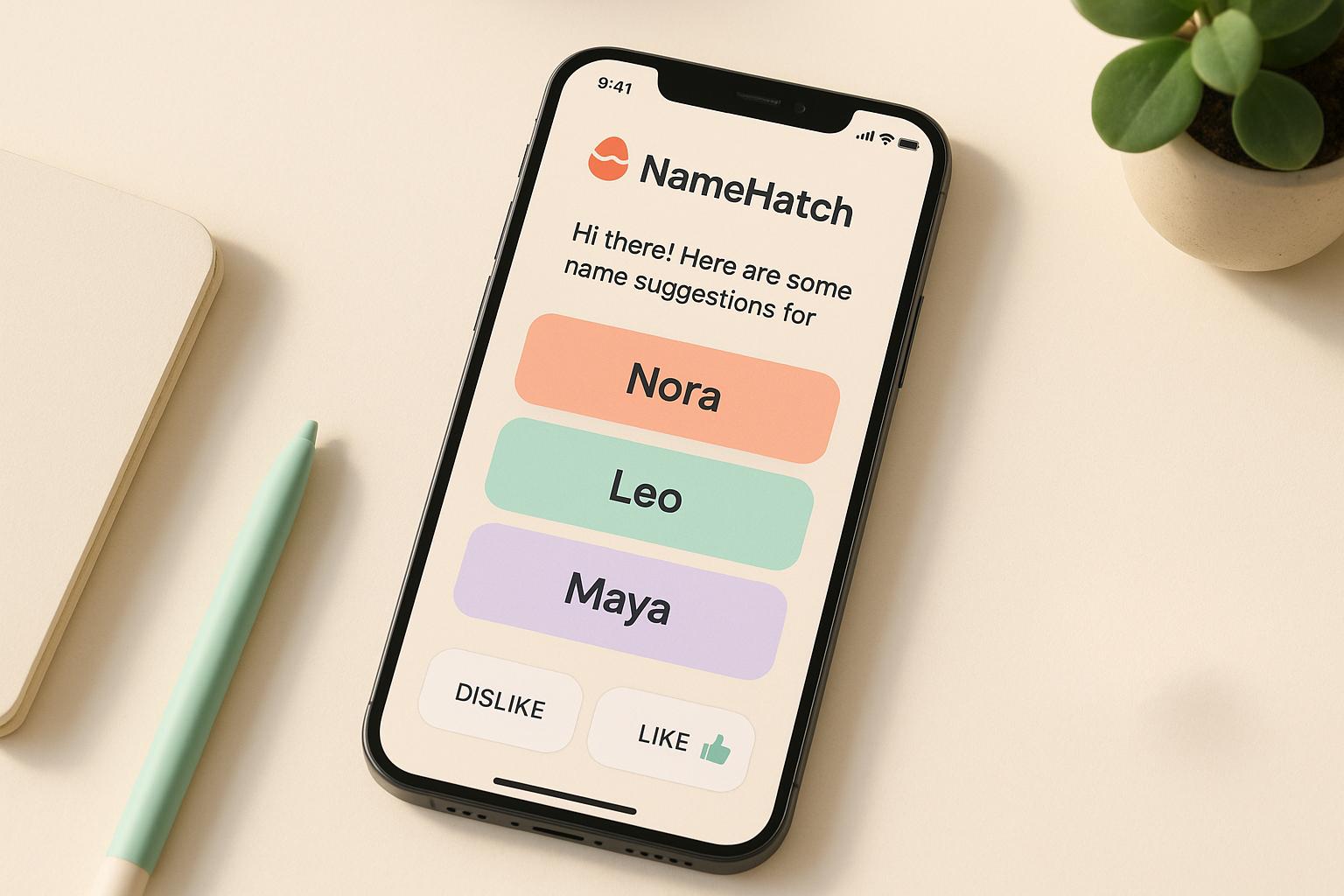
If you choose a heritage name, it’s important to ensure it’s pronounced correctly and to share its story with your child as they grow. Campaigns like #SayMyName and #MyNameMyID emphasize the importance of learning and using names properly - small acts that promote inclusion and respect. Tools like NameHatch can also help parents explore names from various origins and styles, making the process feel less overwhelming. Whether you’re drawn to traditional, modern, or culturally significant names, discussing their meanings and histories can instill pride and resilience in your child.
But thoughtful naming is just one piece of the puzzle. Teaching empathy and embracing diversity at home is just as important.
Teaching Diversity and Empathy at Home
Even the most carefully chosen name can’t eliminate bias entirely. That’s why fostering empathy and awareness at home is crucial. The old "colorblind" approach - avoiding discussions about race or differences - doesn’t work. In fact, it can backfire. Children naturally notice differences, and silence from adults can lead them to adopt biased ideas from the world around them.
Because early biases can emerge regardless of naming choices, it’s essential to talk openly about diversity in age-appropriate ways. Kids develop a sense of fairness early on - by age 3, they understand that hurting others is wrong, and by age 5, they begin to share resources equally. Use this natural sense of justice to frame name-based teasing or exclusion as unfair. Louise Derman-Sparks and Julie Olsen Edwards, authors of Anti-Bias Education for Young Children and Ourselves, explain:
"Differences do not create bias. Children learn prejudice from prejudice - not from learning about human diversity. It is how people respond to differences that teaches bias and fear".
When your child hears an unfamiliar name or encounters a different pronunciation, treat it as an opportunity to learn. For example, in November 2019, a preschool teacher used a snack-time incident to teach linguistic diversity. When one child said "Agua" and another mocked it, the teacher validated both terms and later created a chart showing the different words children used for family members - like Abuelita, Oma, and Nana - highlighting that all are equally valid.
At home, expose your child to diverse representations. Choose books and toys that show people from various backgrounds engaging in everyday activities, like going to school or playing, rather than focusing solely on historical struggles. Your own actions matter, too - research shows that the diversity of a parent’s social circle influences children’s attitudes more than words alone. If your child witnesses or experiences name-based teasing, address it calmly but directly. Explain why the behavior is hurtful and give them the tools to respond constructively.
Fostering empathy doesn’t require grand gestures. It’s the small, consistent conversations and actions that help children appreciate different perspectives and build a more inclusive mindset.
Conclusion
Research indicates that names can activate unconscious biases, shaping children's academic experiences and social interactions. These biases often extend into adulthood, influencing how individuals are perceived and the opportunities available to them. But recognizing these biases is the first step toward addressing them.
Parents who thoughtfully select names - balancing awareness of these biases with a commitment to preserving their cultural heritage - can provide their children with a solid foundation. This approach allows families to honor their identity while helping children navigate a world that often makes judgments based on first impressions.
At home, fostering empathy and embracing diversity can empower children to challenge bias within themselves and others. When kids understand that prejudice stems not from differences but from how people respond to them, they gain the tools to confront unfair treatment. Conversations about inclusion, exposure to diverse role models, and promoting inclusive behavior can all help children rise above stereotypes.
While implicit bias can affect children, it doesn't have to define them. Thoughtful naming, intentional parenting, and open discussions about diversity can pave the way for a more just and equitable environment - one where every child is recognized for their individuality, not the assumptions tied to their name.
For parents exploring naming options, resources like NameHatch offer AI-driven tools to help find names that honor cultural roots while meeting modern considerations.
FAQs
How can a child’s name influence their self-esteem and future opportunities?
Research highlights how a child’s name can influence the way they’re perceived and treated, often triggering unconscious biases. For example, teachers might hold lower expectations for students with names linked to minority or low-income communities. This can translate into less encouragement or fewer opportunities for academic challenges. Over time, these subtle biases can chip away at a child’s confidence, potentially discouraging them from fully engaging in learning or social activities.
But the impact doesn’t stop in childhood. Studies show that job applicants with names considered "White-sounding" are more likely to get interview callbacks than those with "ethnic-sounding" names - even when their qualifications are identical. This gap can limit career opportunities, reduce earning potential, and stall professional growth. By thoughtfully choosing names and exploring diverse options, parents can help navigate these societal biases. Tools like NameHatch offer a way to find meaningful names while being mindful of these complex social factors.
How can parents help protect their children from name-based bias?
Name-based bias can influence children in various ways, from how they’re perceived in the classroom to how they connect with peers. As a parent, there are steps you can take to help your child navigate these challenges while building their confidence:
- Have honest conversations about bias: Use simple language to explain that some people may make unfair assumptions based on names. Emphasize that their name is a meaningful part of who they are and something to take pride in.
- Demonstrate respect for names: Calmly correct others when they mispronounce your child’s name, and encourage your child to do the same. Lead by example to show them how to handle these situations with confidence and grace.
- Embrace your family’s heritage: Share stories, traditions, and books that highlight your cultural background. This helps your child understand the significance of their name and feel proud of their roots.
- Partner with educators: Communicate with your child’s teachers to ensure they pronounce and use your child’s name correctly. Advocate for an inclusive environment that values every student’s identity.
By encouraging open dialogue, celebrating your child’s background, and working with their school, you can empower them to face name-based bias with confidence and self-assurance.
Why is it important to teach kids about diversity and empathy to address name-based bias?
Teaching children about empathy and diversity can play a key role in addressing name-based bias - a phenomenon where judgments are influenced by someone's name. Research shows that names tied to ethnic minorities or lower socioeconomic backgrounds often activate stereotypes. These biases can shape how children are perceived by peers, teachers, and even potential employers, ultimately affecting their academic success, social experiences, and future opportunities.
Encouraging empathy and embracing diversity helps kids look past surface-level details like names, allowing them to focus on qualities like character and skills. This mindset fosters stronger relationships and creates inclusive spaces where every child feels valued and respected. For parents who want to instill these values early on, NameHatch offers an AI-powered tool that helps families discover a wide range of name options - supporting choices that celebrate individuality and inclusiveness.