Moon-inspired baby names are a popular choice for parents in 2026, blending celestial beauty with rich meanings from mythology, nature, and global traditions. Names like Luna, Selene, and Chandra symbolize qualities like renewal, wisdom, and quiet strength. Whether you're drawn to timeless classics, global influences, or modern unisex options, there's something for everyone.
Quick Highlights:
- Classics: Luna (Latin for "moon") and Diana (Roman moon goddess) remain favorites.
- Global Names: Mahina (Hawaiian, "moonlight") and Yue (Chinese, "moon") reflect diverse cultural roots.
- Mythical Choices: Artemis (Greek goddess of the moon) and Khonsu (Egyptian moon god) carry ancient stories.
- Modern Options: Gender-neutral picks like Nova (Latin, "new star") and Eclipse offer sleek, contemporary appeal.
For help narrowing down your options, tools like NameHatch can simplify the search by filtering names by style, origin, or theme. Whether you're inspired by mythology, global diversity, or modern trends, moon names offer a timeless connection to the night sky.
Moon-Inspired Baby Names by Culture & Meaning
1. Classic Moon Names
Classic moon names have roots in ancient Latin, Greek, and Sanskrit traditions, carrying meanings that go beyond fleeting trends. They often represent cycles, renewal, emotional resilience, and guidance - qualities many parents wish to instill in their children.
"Moon names endure because they speak to something deeply human - the need for light during darkness, rhythm during uncertainty, and beauty within transformation." - Emma Richardson, Author
Here are 10 timeless moon-inspired names to consider:
- Luna: Derived from Latin, meaning "moon", and associated with the Roman moon goddess. It has been a favorite, landing in the U.S. top 10 for baby girls in both 2022 and 2023.
- Selene: The name of the Greek moon goddess, literally translating to "moon." It exudes a sense of quiet sophistication.
- Diana: Known as the Roman goddess of the moon, hunting, and childbirth, this name conveys both strength and elegance.
- Artemis: The Greek equivalent of Diana, representing the goddess of the moon and independence.
- Phoebe: A Greek name meaning "bright" or "radiant", often linked to the moon goddess Artemis.
- Cynthia: Another name for Artemis in Greek mythology, referencing her birthplace on Mount Cynthus.
- Chandra: A Sanskrit and Hindi name meaning "moon", tied to a lunar deity in Hindu mythology.
- Selena: A Latinized version of Selene. After peaking at rank 91 in 1995, it has consistently stayed in the top 300 since 2016, ranking 245 in 2024.
- Lucine: An Armenian name with Latin roots, meaning "moon" or "light".
- Mona: A simple Old English name that directly translates to "moon".
These names carry a timeless appeal, blending mythology and meaning, and set the stage for exploring even more cultural influences in the next section.
sbb-itb-f13f980
2. Global Moon Names
While traditional moon names connect us to ancient customs, many cultures around the world offer their own interpretations, celebrating the moon's allure and significance. Across regions like the Pacific Islands and Central Asia, parents have chosen names inspired by the moon's quiet strength and beauty for generations. These diverse naming traditions add layers of meaning to the stories we associate with the moon.
Different languages and cultures highlight unique aspects of the moon. For example, Arabic names often emphasize lunar phases, such as Badr, meaning "full moon", and Hilal, meaning "crescent moon." Turkish names frequently combine "Ay" (moon) with elements of nature, resulting in names like Aygül (moon rose) and Aynur (moonlight). Sanskrit-based names depict the moon as a ruler or lord, while Greek names connect directly to moon deities.
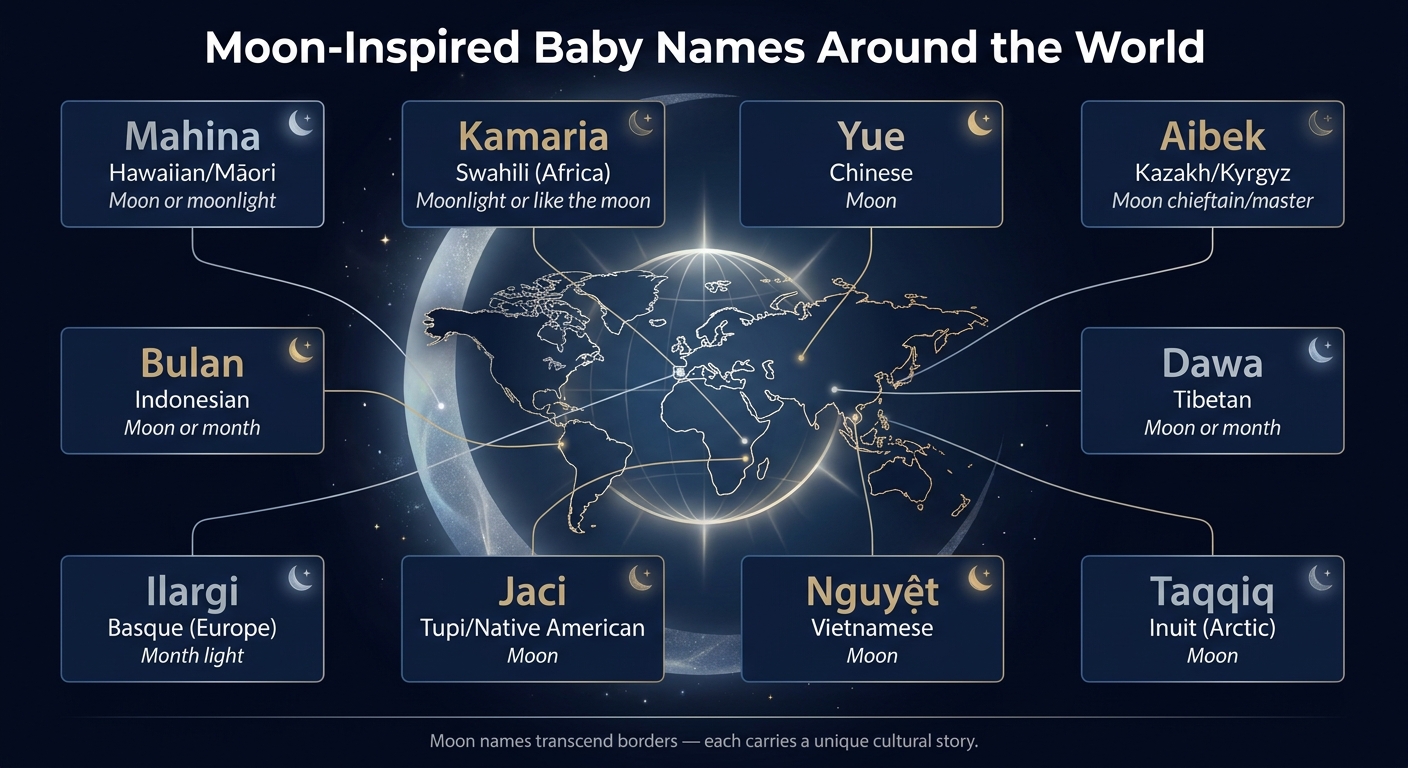
Here's a selection of moon-inspired names from around the globe, showcasing this rich diversity:
| Name | Origin | Meaning |
|---|---|---|
| Mahina | Hawaiian/Māori | Moon or moonlight |
| Kamaria | Swahili | Moonlight or "like the moon" |
| Yue | Chinese | Moon |
| Aibek | Kazakh/Kyrgyz | Moon chieftain/master |
| Bulan | Indonesian | Moon or month |
| Dawa | Tibetan | Moon or month |
| Ilargi | Basque | Moon (literally "month light") |
| Jaci | Tupi (Native American) | Moon |
| Nguyệt | Vietnamese | Moon |
| Taqqiq | Inuit | Moon |
Each name carries its own cultural significance. For instance, Taqqiq, from the Inuit tradition, reflects the Arctic's deep connection to lunar cycles. Jaci, originating from the Tupi people of South America, ties the moon to spiritual power. The Basque name Ilargi is especially poetic; its literal meaning, "month light", beautifully captures the moon's soft radiance on a clear night.
Many of these names also transcend gender distinctions within their original cultures, aligning with the growing trend in the U.S. toward gender-neutral naming. Up next, we’ll explore the moon’s role in mythology and how it has inspired names tied to deities and legends worldwide.
3. Moon Deities and Mythic Names
Across cultures, the moon has long been seen as a divine figure, embodying themes like fertility, time, and mystery. While many Western traditions view the moon as feminine, other cultures highlight powerful male moon gods. These names, drawn from mythologies around the world, reflect the moon's enduring symbolism.
"A lunar name carries layered symbolism that transcends any single culture." - Fatima Asad
Here are 10 moon deity names inspired by global myths:
- Luna - The Roman goddess of the moon, celebrated for her timeless beauty and influence on Western lunar traditions.
- Selene - A Greek goddess who rode a silver chariot across the night sky, shaping the archetype of lunar divinity in ancient myths.
- Artemis - Known as the Greek goddess of the hunt and protector of the moon, Artemis represents strength and independence, traits that still resonate today.
- Diana - The Roman counterpart to Artemis, she remains one of the most iconic moon goddesses in Western mythology.
- Phoebe - A Greek name tied to the moon and radiant light, often associated with wisdom and illumination in mythic lore.
- Chang'e - This Chinese goddess of immortality lives on the moon, her story rich with themes of transformation and poetic beauty.
- Arianrhod - A Welsh goddess whose name means "Silver Wheel," linked to the full moon and destiny. This rare name carries a lyrical and mystical quality.
- Khonsu - An Egyptian moon god, also known as "the traveler," associated with time and moonlight. A compelling choice for those drawn to ancient Egyptian heritage.
- Mani - The Norse personification of the moon and sibling to the sun. This short, memorable name works well in any cultural setting.
- Metztli - An Aztec moon deity, currently ranked #3,368 in the U.S. but gaining popularity, particularly among those reclaiming indigenous heritage.
Each of these names carries unique stories and meanings. Take time to explore their origins to ensure they align with the significance you're seeking.
4. Modern and Unisex Moon Names
Modern, gender-neutral moon-inspired names are becoming a popular choice for those seeking something fresh and meaningful. Naming consultant Emma Richardson highlights this trend:
"Moon-inspired names have quietly surged in popularity across the United States over the last decade. Parents, creators, and even entrepreneurs gravitate toward lunar symbolism because it represents change, mystery, femininity, and quiet strength."
Short and minimalist names are particularly gaining traction. Names like Lux (Latin for "light") and Halo (symbolizing the glowing ring around the moon) carry a sleek appeal. Another favorite, Nova, meaning "new star", is celebrated for its simplicity and universal charm.
Here’s a curated list of ten modern, unisex lunar names that blend simplicity with deeper meaning:
| Name | Origin | Meaning |
|---|---|---|
| Moon | Old English | Earth's natural satellite; ranked #3,455 in the U.S. in 2025 |
| Nova | Latin | New star; celestial burst of light |
| Lux | Latin | Light |
| Halo | English | Ring of light around the moon |
| Amaris | Latin | Child of the moon |
| Nyx | Greek | Night |
| Zenith | English | Highest point the moon reaches in the sky |
| Soma | Sanskrit | Moon; sacred nectar in Vedic tradition |
| Lumen | Latin | Unit of light; modern and scientific-sounding |
| Eclipse | English | The celestial event of shadow crossing |
These names strike a balance between modern appeal and everyday usability. If you're considering a unique choice like Eclipse or Zenith, try saying it out loud in practical scenarios - like calling it out on a playground or introducing it to a teacher. This simple step can help ensure the name feels natural in daily life.
Another tip: double-check the initials of the full name to avoid any unintended combinations.
For couples navigating the decision-making process, tools like NameHatch (https://namehatchapp.com) can help. This app offers a swipe-based system where both partners can independently rate names, including celestial and unisex options, and discover overlapping favorites. It’s a stress-free way to build a shortlist together.
Conclusion
Moon-inspired baby names bridge mythology, tradition, and modern trends, offering a timeless connection to something far greater than any single culture or era. As Sherri Gordon, CLC, eloquently explains:
"Choosing a baby name inspired by the moon - or by one of the many moons orbiting other planets - will evoke the same mystery and beauty we experience whenever we glimpse the night sky."
Whether it’s the cultural depth of Turkish Aylin or Hawaiian Mahina, or the sleek modernity of Nova, this category offers a diverse range of options. And it doesn’t stop with Earth - NASA has officially recognized 421 moons in our solar system. Names like Callisto or Titania carry the celestial charm of these distant worlds.
Still searching for the perfect name? NameHatch might be a helpful tool. Its swipe-based interface lets you and your partner discover shared favorites, with filters like Nature-Inspired, Mythical, and Global to refine your search.
"The meaning behind a name shapes how it feels, how it resonates, and the story it tells." - NamesAcross
The name you choose will mark the beginning of your child’s unique journey.
FAQs
Which moon baby names work best for bilingual families?
For families that speak more than one language, names inspired by the moon can be a perfect fit, offering meaning across different cultures. Luna is a beautiful example - well-known in Western countries and tied to Latin, Spanish, and Italian roots. Other options include Ayla, a name cherished in both Turkey and the U.S., and Qamar, which connects Arabic traditions with English familiarity. Sanskrit names like Indu and Himanshu also bring distinctive charm while remaining easy to pronounce.
Are any moon-inspired names considered unisex in the U.S.?
Yes, many moon-inspired names in the United States are considered unisex. Examples include Moon, Aydan, Ariel, Dal, Dawa, Dione, Janus, Jericho, Luan, Indu, Lior, and Qamar. While some of these names may have historically leaned feminine due to mythology or linguistic roots, modern naming trends are increasingly embracing gender-neutral options. For those searching for celestial-themed names, tools like NameHatch can help couples find and share unisex moon-inspired names with ease.
How can I check a moon name’s pronunciation and cultural use?
To dive into the pronunciation and background of a moon name, check out platforms that offer detailed profiles. These resources typically cover the name's origin, its significance, and even provide phonetic guides to help with pronunciation. Another handy tool is NameHatch, which lets you explore and discover moon-inspired names tailored to your preferences. Taking the time to explore these resources ensures you grasp both the heritage and the proper pronunciation of the names you're considering.