Finding the perfect baby name often turns into a frustrating experience for couples. Baby name lists, while offering thousands of options, fail to address the emotional and personal dynamics involved in making a shared decision. Here’s why these lists fall short and what works better:
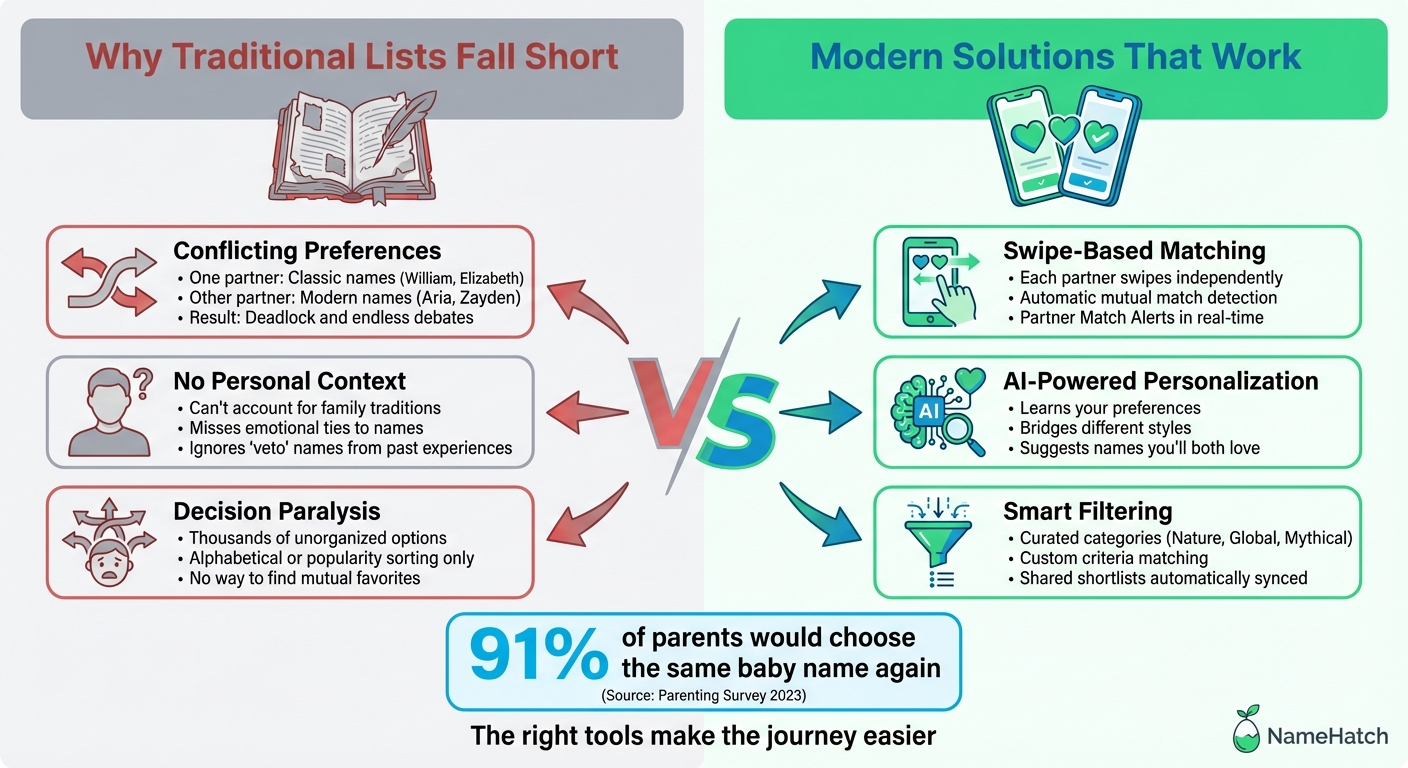
- Conflicting Preferences: Partners may have vastly different tastes - one might prefer classic names like William, while the other loves modern picks like Aria. Lists don’t help resolve these differences.
- Lack of Personal Context: Generic lists can’t account for emotional ties, family traditions, or personal deal-breakers tied to specific names.
- Overwhelming Options: Thousands of choices can create decision paralysis, making it harder to narrow down a name both partners love.
Instead of relying on outdated methods, tools like NameHatch use swipe-based matching and AI-driven suggestions to simplify the process. These modern solutions focus on collaboration, helping couples find names they both like without the stress of endless debates.
Traditional Baby Name Lists vs Modern Name-Finding Tools Comparison
Why Traditional Baby Name Lists Don't Work for Couples
Different Preferences Create Deadlocks
Picture this: one partner loves timeless names like Elizabeth or William, while the other leans toward trendier picks like Zayden or Aria. Traditional name lists, often organized by popularity or alphabetical order, fail to address the personal preferences and emotional weight behind each choice. For instance, one partner might prefer names that honor family traditions, while the other wants to avoid names tied to their own childhood or past experiences.
These lists also can't account for "veto" names - those tied to negative memories or associations. This can lead to uncomfortable conversations or even hurt feelings when a seemingly perfect name is rejected for reasons that a generic list could never predict. Without a way to incorporate personal context, these tools often leave couples stuck in endless debates.
Generic Lists Don't Match Personal Priorities
Another problem? Traditional name lists don't align with what truly matters to couples. While many baby name databases let you filter by origin, meaning, or popularity, they rarely consider the deeper, more personal factors that make a name special. For example, a list might suggest a hundred Irish names but won't highlight which ones carry unique family connections or reflect shared values as new parents.
As OhioHealth points out, “Giving details about why a particular choice is so important to you can help your partner better understand the story behind a name and gain a new appreciation for it”. Without this emotional context, names are just words on a screen, stripped of the stories and meaning that make them resonate. This lack of depth means couples often have to do extra work to reconcile cultural traditions, family expectations, or even how a name sounds when spoken aloud.
Too Many Options Make Decisions Harder
If that wasn’t enough, the sheer number of options on traditional lists can overwhelm couples. Endless suggestions can lead to decision paralysis rather than clarity. Research shows that being bombarded with unorganized choices creates confusion, making it harder to settle on a final name. Add in unsolicited suggestions from well-meaning family and friends, and the process becomes even more chaotic.
Interestingly, 91% of parents surveyed said they would choose the same baby name again if given the chance. This suggests that while the naming journey can be stressful, the final decision is usually one both partners feel confident about. However, getting to that point often feels like navigating a maze without a map.
sbb-itb-f13f980
Better Ways to Choose a Baby Name Together
Traditional methods of picking baby names can feel overwhelming and even spark disagreements. Thankfully, modern tools are making this process smoother and more enjoyable.
Swipe-Based Matching Highlights Shared Favorites
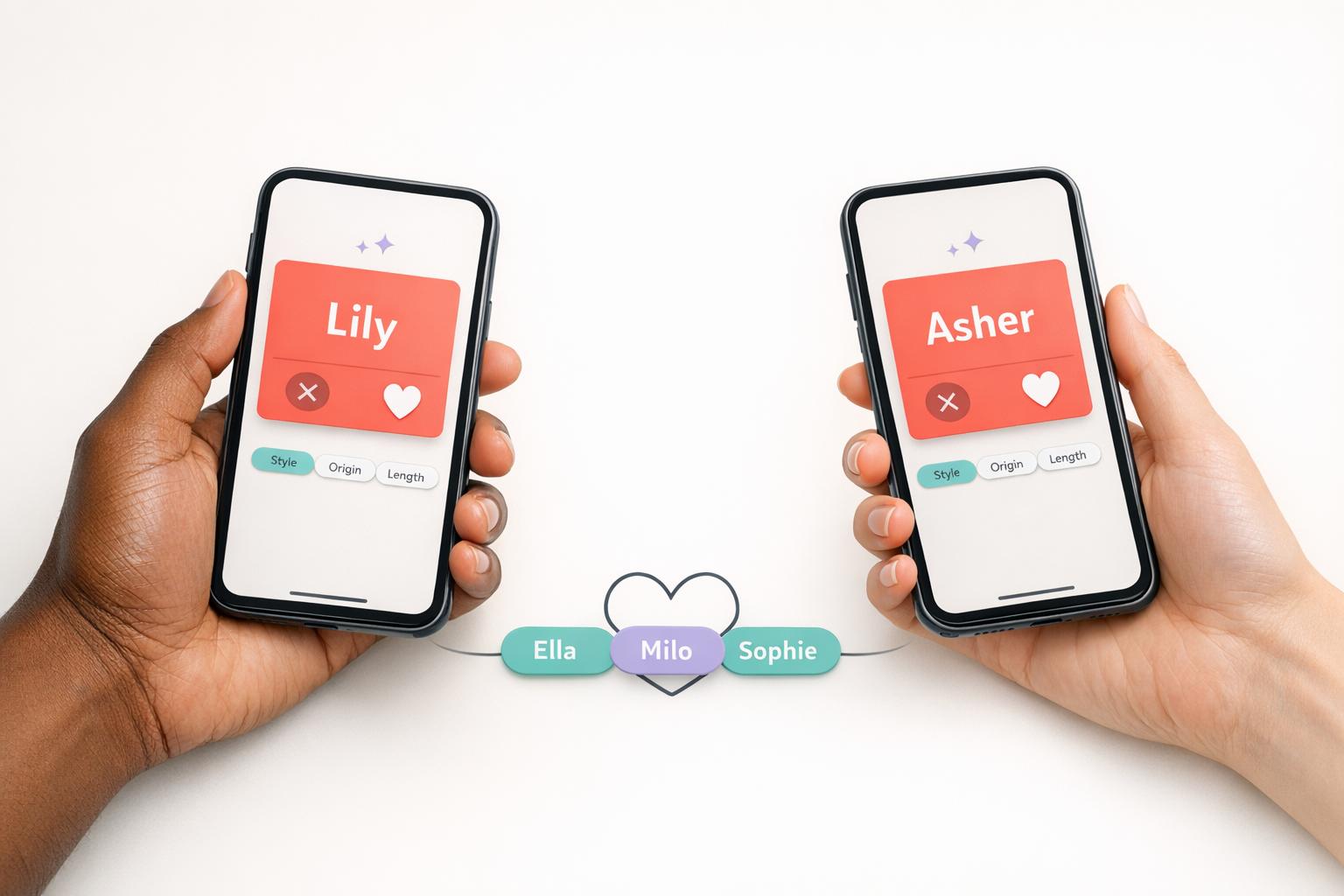
Some naming tools now use a swipe-based system, similar to dating apps. Here's how it works: you swipe right if you like a name and left if you don't. Your partner does the same privately. When you both swipe right on the same name, it’s automatically added to a shared shortlist. These tools even send real-time notifications - called Partner Match Alerts - when mutual favorites pop up. This approach eliminates the need for clunky spreadsheets or handwritten lists, saving you from endless back-and-forth discussions. Instead, you can focus on names you both genuinely like.
AI-Powered Suggestions Tailored to Your Preferences
Taking it a step further, AI tools analyze your swiping patterns and preferences to suggest names that meet both of your criteria. Say one of you loves nature-inspired names, while the other leans toward mythological ones - AI can bridge these interests and recommend names that combine both styles. You can even describe your "ideal name" to the system and let it do the heavy lifting. Bonus features, like Compatibility Checkers, help ensure the name flows well with your last name and initials, while Trend Analyzers show how a name’s popularity has changed over the last two decades.
Synced Accounts for Effortless Collaboration
Some platforms, like NameHatch, allow partners to sync their accounts, making collaboration even easier. You can swipe independently on your own time - whether on your phone or computer - and the system automatically merges your selections into a shared shortlist. As NameHatch puts it, "When both you and your partner like the same name, it's saved to a shared match list - making the name picking process more collaborative and fun." This setup eliminates the hassle of comparing notes manually. Plus, with features like the "Match & View Journey", you can periodically review your progress and focus on names you’ve already agreed on, cutting down on unnecessary debates.
These tools transform what could be a stressful task into an organized and enjoyable experience, helping you find the perfect name together.
How NameHatch Addresses These Problems
Features Built for Two-Person Decision Making
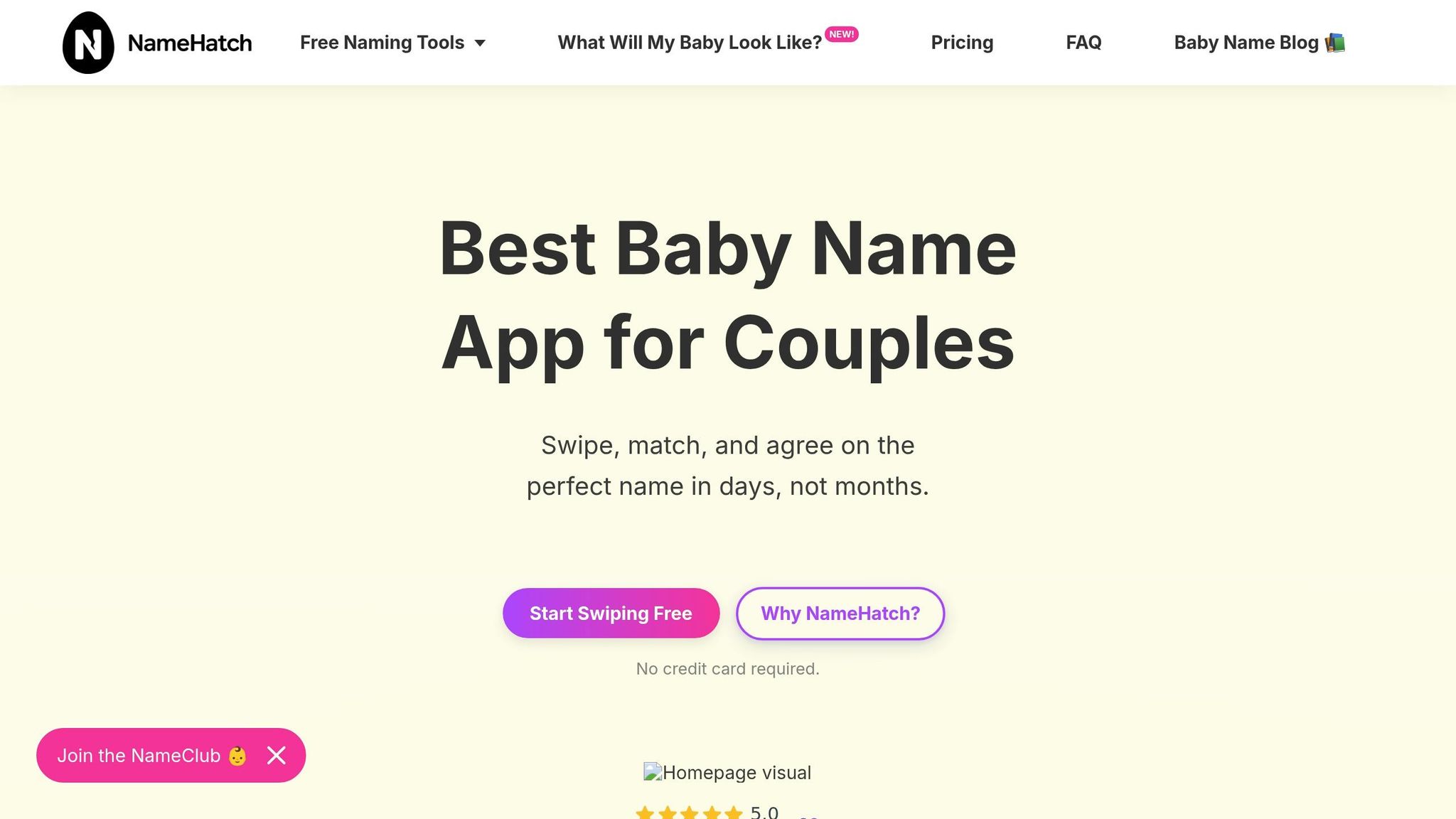
NameHatch simplifies the often tricky process of choosing a name by letting each partner swipe independently. When both partners swipe right on the same name, the app sends a Partner Match Alert - no need for awkward conversations about rejecting each other's favorites. The swipe-based discovery system lets you browse names at your own pace: swipe right to like, left to skip. Any name that gets a mutual thumbs-up is instantly added to a shared shortlist.
To make things even easier, NameHatch includes smart filters that cut through the clutter of endless name lists. You can explore curated categories like Nature-Inspired (e.g., Aspen, River), Global (e.g., Luca, Aiko), or Mythical (e.g., Apollo, Freya). These filters focus on what matters most to you both, replacing generic lists with tailored suggestions. Plus, the AI-powered suggestion engine learns from your swiping habits and preferences, bridging differences in styles to recommend names that appeal to both partners. Together, these tools create a smoother, more enjoyable naming experience.
Pricing Options for Different Needs
NameHatch offers three pricing tiers to match different budgets:
| Plan | Price | Key Features Included |
|---|---|---|
| Free | $0/month | 30 swipes, basic filters, shared shortlists |
| Premium 6-month | $29 for 6 months | Unlimited swipes, advanced filters (Nature, Global, Mythical), AI suggestions, real-time alerts, priority support |
| Monthly | $7/month | Same as Premium |
If you go with the six-month plan, you’ll save about 30% compared to paying monthly, making it a smart choice for couples planning ahead.
Helping Couples Agree on What Matters
NameHatch goes beyond just matching names - it helps couples figure out what’s most important to both of them. Whether it’s filtering by popularity (like top 100 U.S. names versus something more unique), origin (e.g., Irish or Japanese), or style (classic versus modern), the app lets you set clear priorities. This approach eliminates endless back-and-forth debates by focusing on criteria you’ve both agreed upon. The result? A collaborative process where you only spend time on names you both like, turning what could be a source of conflict into a shared, enjoyable experience.
Conclusion
Traditional baby name lists can feel overwhelming. They bombard you with an endless array of options, often ignoring what truly matters to you and your partner. The sheer volume of choices can lead to endless debates, making the process more stressful than it needs to be.
Modern tools offer a smarter, more collaborative way to tackle this challenge. With swipe-based matching, each partner can explore names independently while automatically flagging the ones you both like. AI-driven suggestions adapt to your preferences, blending different styles seamlessly. Shared shortlists ensure all your favorite options are easily accessible in one place.
NameHatch simplifies the entire process with features like mutual matching alerts, customizable filters, and tailored recommendations. Whether you stick with the free plan (offering 30 swipes) or upgrade to a premium subscription for unlimited access and advanced tools, NameHatch helps reduce frustration and keeps the focus on finding a name you both love.
Choosing a baby name doesn’t have to be a source of tension. With tools like NameHatch, it becomes an enjoyable, collaborative experience. Why not give it a try and turn what could be weeks of back-and-forth into a journey you’ll both cherish?
FAQs
How do we break a baby-name stalemate?
Revisiting your saved list of baby names can help resolve a naming stalemate by aligning with your evolving preferences and cutting down on decision fatigue. Collaborative tools, like AI-powered apps, offer personalized suggestions and filtering options to uncover mutual favorites. Establishing clear criteria - such as preferred styles or meaningful origins - can also simplify the discussion. Together, these approaches can make the process smoother and more enjoyable for both partners.
What naming “rules” should we agree on first?
When choosing a name, start by agreeing on some shared criteria. These might include preferences for name style, ideal length, or even honoring family traditions or meaningful connections. Establishing ground rules can make the process easier - try creating a judgment-free list where both parties can freely suggest names, take turns proposing options, and use tools like name generators or polls to narrow things down objectively.
It’s also helpful to understand why certain names resonate with each other. Discussing the reasons behind your choices can build empathy and help you align on shared values, making the entire experience feel more collaborative and less stressful.
How can we narrow options without fighting?
Couples can steer clear of disagreements by taking a collaborative and organized approach. Begin by making a shared list of names in a judgment-free environment and agree on clear criteria, such as preferred style or personal significance. Tools like NameHatch can simplify this process by generating tailored suggestions, showcasing mutual favorites, and keeping everything well-organized. Revisiting saved names and narrowing down options with filters can further help couples focus on shared preferences, making the decision-making process much easier.